
By Danielle Fulmer
As extreme weather events and widespread electrification put unprecedented pressure on our power grids, utilities are seeking support from their customers to navigate through the challenges of high demand and avoid power outages. While many utilities are growing and diversifying their demand response portfolios to address these challenges, they are also increasingly utilizing public conservation messaging. This approach has been a part of the energy industry’s toolkit for a long time, although implementations have transformed with technology. Now utilities can leverage social media, emails, and text messages to reach and motivate large numbers of customers with calls to action. For example, during the August 2023 and July 2024 heat waves that stressed grids in many areas of the country, Portland General Electric encouraged all their residential customers to reduce air conditioner usage and avoid charging electric vehicles. Similarly, ERCOT issued voluntary conservation notices to Texans for 11 days in 2023, including six consecutive days during the August heat wave. The effectiveness of these conservation strategies hinges on their ability to not only reach the intended audience but also actively motivate them toward behavioral changes. Recognizing this, the California Public Utilities Commission (CPUC) engaged us to evaluate the success and efficacy of the Flex Alerts Marketing, Education, and Outreach (ME&O) campaign. Our objective was to identify how well the campaign achieved these critical aspects and where improvements might be made.
Understanding Customer Responses
Customer responses to conservation messaging can be complex. Conservation messaging often leverages social norms by highlighting the importance of reducing energy usage to prevent potentially disruptive outages that could affect vulnerable community members. This messaging aims to empower customers to act and make a difference. However, conservation is voluntary, and multiple requests during extreme heat or cold events may cause some customers to feel inconvenienced or uncomfortable. This challenge underscores the need for a nuanced understanding of how customers receive and act upon such messaging. However, this task is complicated by a common issue in social science and policy research – the discrepancy between actual and reported.
A Tricky Measurement Problem
Evaluators often rely on customer self-reports of energy-saving actions and behaviors because the method is relatively easy to employ and inexpensive. However, the gap between self-reported survey data on energy conservation and actual energy use data poses a significant challenge. This discrepancy can often be traced back to social desirability bias, where respondents can feel pressured to answer questions in a manner that they believe is more socially acceptable or favorable rather than reflecting their true behaviors or beliefs.(1) Respondents might overreport their engagement in energy-saving practices to be seen in a positive light and appear more socially responsible or underreport if such actions are perceived as conflicting with the individual’s identity or social group norms.
Another factor contributing to the divergence between self-reported data and actual energy use is the lack of precise recall and understanding among respondents. Many customers do not have an accurate sense of their energy consumption or the effectiveness of their conservation efforts.(2) This can be due to a lack of detailed knowledge about their household’s energy use patterns or the technicalities of energy-saving measures. Thus, inaccuracies in self-perception and reporting contribute to the inconsistency between survey data and actual energy usage.
To bridge this gap, we conducted a mixed-methods study of a conservation messaging campaign, California’s statewide Flex Alert campaign during the summer of 2022. The campaign, which included 11 events in 2022, ten of which were on consecutive days(3) asks the public to voluntarily conserve electricity on extremely hot summer days, with notices typically issued a day in advance through a wide range of traditional and digital media outlets and direct customer notifications. By gathering and comparing both self-reported survey data and actual meter data from the same group of customers, we were able to identify discrepancies between claimed and actual behaviors. This methodology also helped us gain a clearer view of the real-world impact of the Flex Alerts campaign, enabling us to provide actionable insights into how and why customers save—as well as who saves more or less—which can inform future conservation messaging campaigns.
The insights gained from studying the Flex Alert campaign provide relevant takeaways and valuable lessons for future conservation messaging strategies, not only in California but also for other utilities and government agencies employing voluntary conservation campaigns during grid emergencies.
Survey Data: Talking the Talk
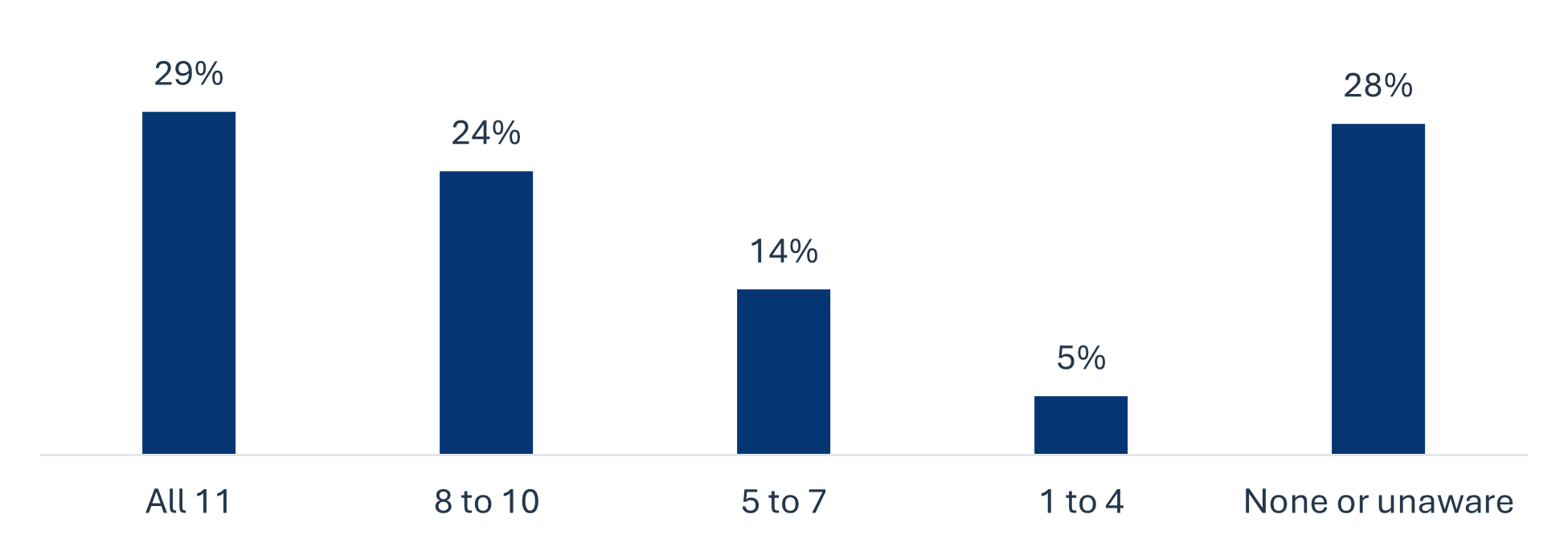
We surveyed over 2,700 Californians about their experience with Flex Alerts in summer 2022. About half of the survey respondents were from the statewide general population, while the other half were also enrolled in the Power Saver Rewards program, which provides bill credits to customers who reduce their energy usage during Flex Alerts. Awareness of the Flex Alerts campaign was high (93%) among survey respondents. Among those who were aware, nearly all respondents (90%) said they tried to reduce their usage during the summer 2022 events. When there are many conservation events, continued success requires customers to be willing to act in response to the messaging on as many days as possible. About half of respondents stated that they tried to reduce their electricity use for all or nearly all of the events in summer 2022, while about a quarter said they did so for no events or were unaware of them (Figure 1).
Figure 1. Self-Reported Number of Event Days with Attempted Reduction in Electricity Use
Respondents reported taking a variety of actions to reduce their energy usage during events, most commonly:
-
- Turning off appliances (35%)
- Turning off air conditioning (30%)
- Shutting off the lights (25%)
- Shifting energy use to another time (23%)
In addition, most respondents identified strongly with the social norms the campaign leverages in their messaging. Across a series of questions regarding energy efficiency, identity as a Californian, and climate change, 78% of survey respondents had positive attitudes, and only 6% expressed negative attitudes overall. For example, a majority agreed with the following statements:
-
- It is very or somewhat important for my household to do its part to make California more energy efficient (85%)
- I am motivated to save energy (82%)
- Environmental challenges like climate change are important issues (81%)
- It is possible for individual citizens to help address climate change by reducing their energy use (76%)
- By saving energy, I will be helping others in my community (74%)
Meter Data: Walking the Walk
We measured event performance based on the customer’s load reduction as a percentage of their baseline load. This approach allowed us to isolate customer sensitivity and responsiveness to conservation messaging from pre-existing differences in energy usage (i.e., due to some customers living in larger homes or having more electric end uses than others).
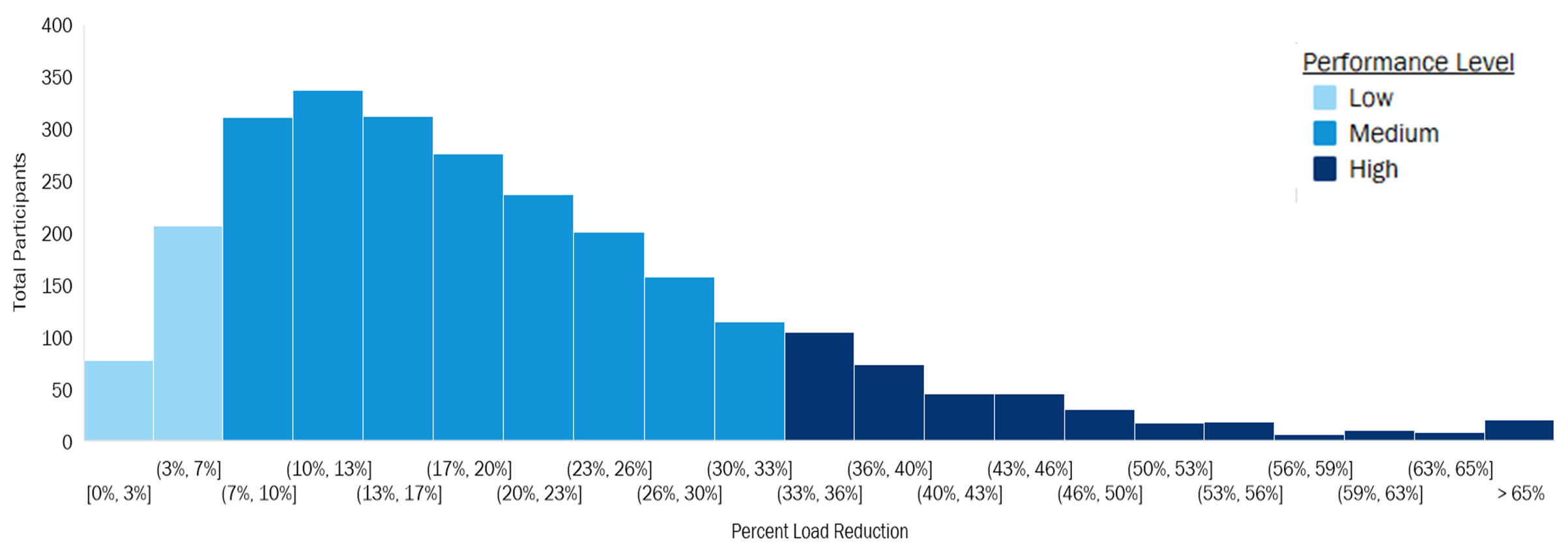
Across all events, the average customer achieved an estimated per-household, per-event load reduction of 20% of their baseline load, representing an average of 0.33 kW. Based on the average percent load reduction achieved across all events in the season, we categorized each customer as a low, medium, or high performer. Low performers had an average load reduction of 5% (0.08 kW), medium performers achieved an average load reduction of 18% (0.32 kW), and high performers reduced their load by 43% (0.60 kW) on average. The range of load reductions was wide, with the distribution having a positive skew, meaning that a small number of customers had much higher relative load reductions than the majority of customers (Figure 2).
Figure 2. Performance Distribution
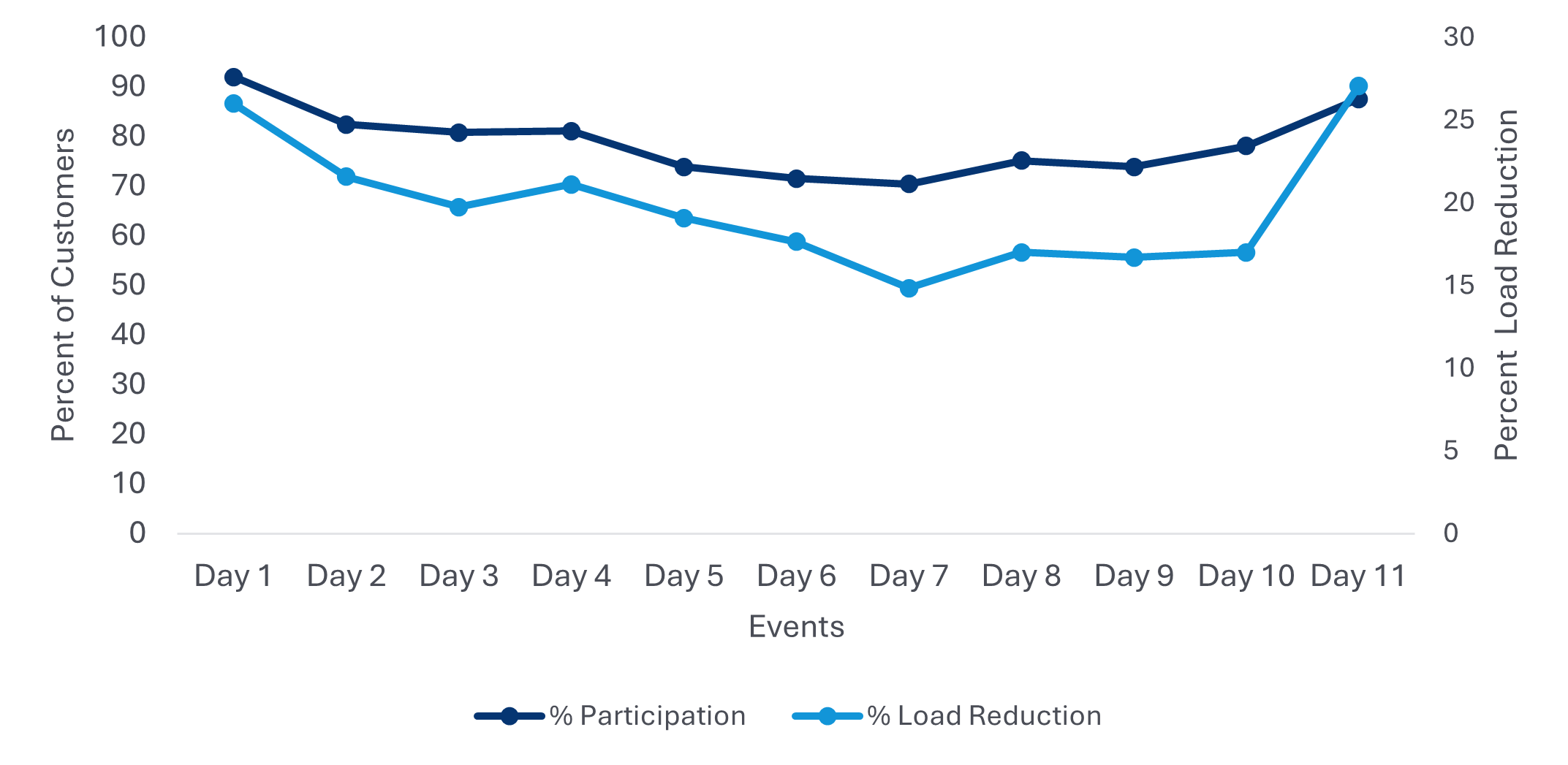
The survey results indicated that customers were receptive to participating in events to reduce their energy usage. Performance analysis revealed that most customers were able to reduce their household’s energy use by at least a bit during each event in the summer of 2022. However, we found that customers became fatigued after repeated conservation requests. This was evident in the proportion of respondents who reduced their energy use for each event and the average load reduction achieved per event. We found that the highest percentage of customers (92%) reduced their load on the first event day and the second highest (88%) on the final event day. Customers achieved similar load reductions on those days but lower load reductions on the middle event days, especially day seven (Figure 3).
Figure 3. Participants and Load Reductions by Event Day
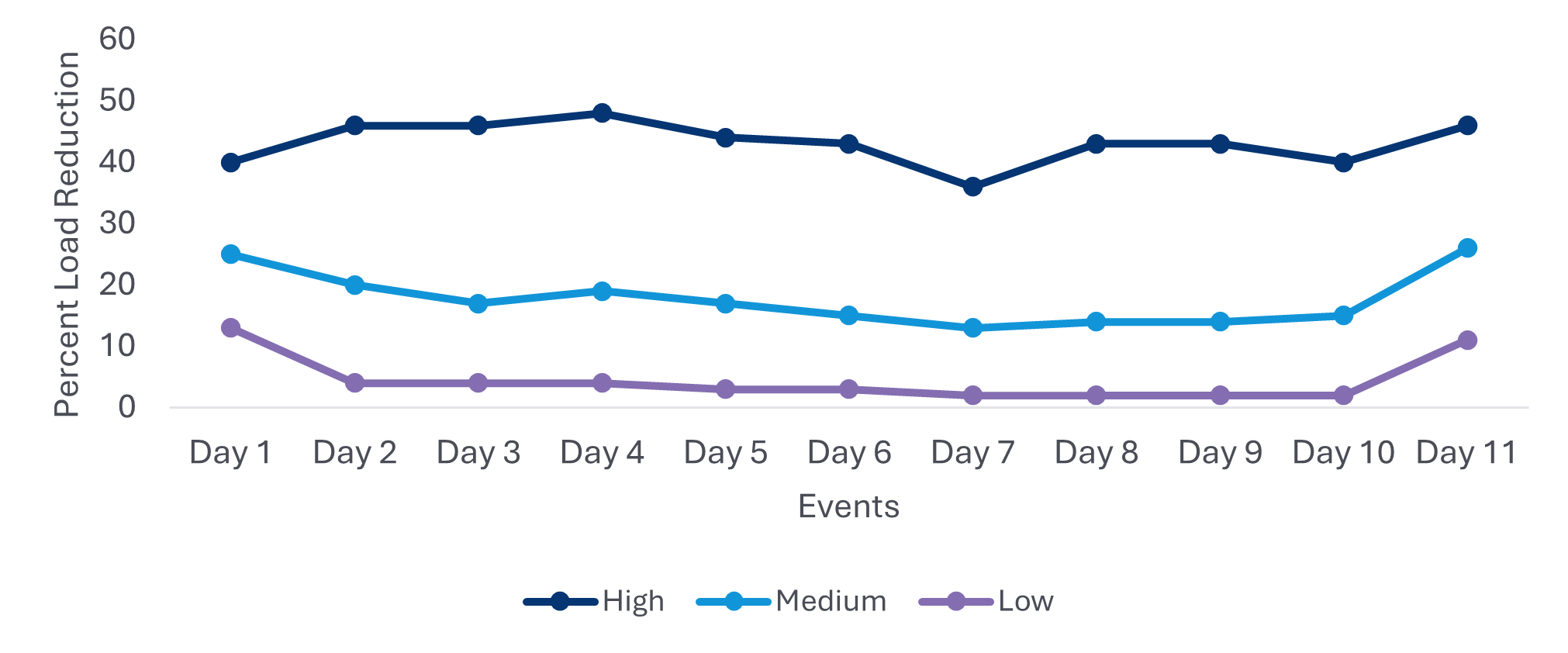
The performance trends varied between higher- and lower-performing customers. For high performers, performance increased slightly from the first to the second event, suggesting improved awareness or a learning effect among this group. In contrast, low and medium performers performed higher for the first than for the second event. Their average performance plateaued from the third event until the final event, suggesting these customers were more likely to experience conservation fatigue (Figure 4).
Figure 4. Percent Load Reductions by Performance Levels
Overall, our meter data analysis revealed that customers are willing and able to respond to conservation messaging by reducing their energy usage. However, there is a lot of variation in how much and how consistently they do so. In addition, while customers remain responsive to repeated calls to action, many also experience fatigue, leading to lower load reductions on average.
Putting it All Together
We found that the self-reported performance and meter data were directionally aligned, indicating that respondents were at least somewhat aware of their performance. A majority (67%) reported that their household consumed less electricity during event days than on a regular day. Higher performers were more likely to agree with this statement and were more consistent in reducing their energy usage during events as verified by meter usage data.
When asked if they did everything they could to reduce energy consumption on event days, most respondents stated they did all they could (60%) or even more than expected (12%). However, around 28% admitted that they could have done more. Despite these self-reported efforts, our analysis of the meter data revealed that most respondents had room for improvement in reducing their energy consumption. It is encouraging to note that high performers were less likely to say they could do more, showing that self-reported and revealed outcomes are directionally aligned among this sample of customers.
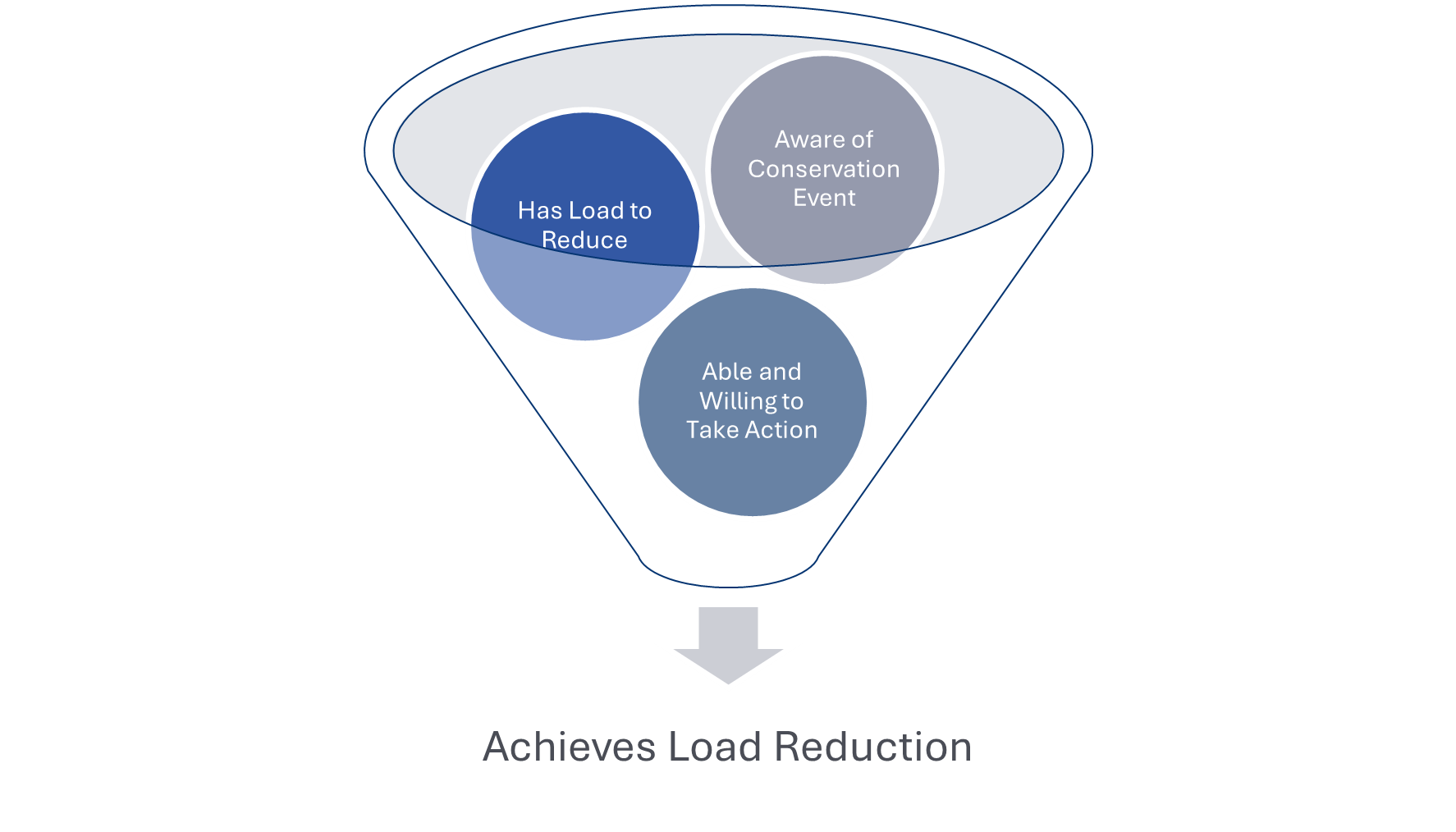
To assess why some customers reduced their usage more in response to conservation messaging than others, we examined how awareness, pre-existing energy consumption, and ability and willingness to take action differed among customers in each performance group. We hypothesized that these are three prerequisites to a successful response to the messaging (Figure 5).
Figure 5. Factors Affecting Responsiveness to Conservation Messaging
We did not observe any differences in awareness of the events between lower and higher performers. Awareness was very high among survey respondents; however, as such this finding might differ for research conducted with a broader or different population. Surprisingly, higher performance (as a percentage of baseline usage) came from customers who live in smaller homes with lower baseline energy consumption. Although some customers (32%) self-reported low energy use as a barrier to reducing their energy usage, analysis of meter data revealed that low performers tend to be the highest energy users with the greatest load reduction potential. The limited and surprising effects of awareness and baseline energy usage suggest that performance is driven more by interest, motivations, and barriers than these factors.
High performers were different from other customers in multiple ways, including the actions they took, their circumstances, and their beliefs. In addition to responding consistently to the conservation messaging, high performers reported taking more impactful actions, such as turning off their air conditioning. They were less likely than other customers to face barriers like health challenges and were the least likely to have children or seniors living in the home. They were disproportionately likely to be on a time-of-use electric rate, suggesting they are accustomed to thinking about when they use energy. In addition, these customers were highly motivated and aligned with the themes that underlie the campaign’s messaging. For example, they were more likely than other customers to feel it is very important for their household to do its part to make California more energy efficient.
Low-performing customers reported more difficulty in reducing their energy usage during events than other customers. This is likely because they were more likely to experience a variety of barriers, including discomfort due to the heat and concern for a household member’s health. They were most likely to have a senior in the home or a household member with a health condition. Low performers were also the most likely to say they have limited control over their household’s energy use, and they rarely think about it. Finally, low performers had more negative attitudes towards energy efficiency and a weaker identification with Californians as a group and, therefore, may not have been as motivated to save energy or as compelled by the campaign messaging.
What Next?
To improve energy conservation campaigns, utilities and policymakers can combine customer self-reported information on their actions, motivations, and challenges with meter data that measures energy reductions during voluntary events. This combination of data helps identify why some customers perform better than others and ascertain how to adjust conservation messaging to reach and engage more people. Our study of Flex Alert performance and self-reported experience among Californians has led to several insights that can be applied to other campaigns and settings.
-
- Leverage social desirability motivations in your favor. Customers have different social identities and motivations, so it is essential to adopt a wide range of messaging and, if possible, to target messaging to its intended audience. While many campaigns leverage messaging about the climate and environment and helping other members of a social group, this messaging does not resonate with everyone, and the lack of resonance is associated with poorer performance. Consider experimenting with various messaging (e.g., leveraging A/B campaigns that are geographically targeted) to determine which messaging resonates best with your customers overall and among subgroups.
- Meet customers where they are in their energy management journey. Customers exist on a spectrum regarding their readiness and willingness to take part in voluntary conservation events. In addition, not every customer can give 100% every time they’re asked, and that’s both understandable and acceptable.
- Customers with barriers and challenges: Provide a comprehensive range of options that may be accessible to customers without central cooling or other large end uses or who can’t safely modify those end uses. Focus on keeping customers positive and engaged and offering a variety of energy conservation tips.
- Consistent contributors: Do your best to know who they are, how they get information, and what resonates with them so you can keep them engaged!
- Engaged/savvy customers: Help them understand how voluntary energy conservation relates to the technologies they have (e.g., solar, electric vehicles, smart thermostats) and programs they already participate in (e.g., direct control demand response, time-of-use pricing, managed EV charging) while keeping messaging simple and clear.
- Be aware of data limitations and overcome them. Consider the strengths and limitations of various data sources, including self-reported survey data (which can teach you a lot about customer experience and motivations but may suffer from social desirability bias) and meter data (which tells you a lot about who reduced their consumption and by how much, but very little about why). Pursue research combining these data sources where possible to get the deepest and most actionable insights.
To assess why some customers reduced their usage more in response to conservation messaging than others, we examined how awareness, pre-existing energy consumption, and ability and willingness to take action differed among customers in each performance group. We hypothesized that these are three prerequisites to a successful response to the messaging (Figure 5).
Conclusion
Conservation messaging is an important strategy in the energy industry’s toolkit during times of grid constraint. By effectively navigating the complexities of stated versus revealed preferences, we gain invaluable insights that can help us refine this approach. Our assessment of the Flex Alert ME&O campaign showcases the potential of honest communication, tailored messaging, and addressing barriers to participation. The findings underscore a truth that is both encouraging and actionable: when messaging resonates authentically with an audience’s values and when barriers to action are thoughtfully addressed, people are willing and able to play a pivotal role in energy conservation during critical times.
This realization invites a future where utilities and their customers collaborate as partners, leveraging technological advances, data analytics, and behavioral science to achieve shared goals. As we refine our approaches and deepen our understanding, we forge toward a more resilient, efficient, and community-oriented energy landscape. The journey is complex, but with each step, we grow closer to a future where everyone has the tools, knowledge, and motivation to make meaningful contributions to our collective energy security.
The full text of our evaluation report is available online: 2022 Flex Alert Marketing, Education & Outreach Effectiveness Study: Performance Analytics Assessment
1 Koller, Katharina, Paulina K. Pankowska, and Cameron Brick. “Identifying Bias in Self-reported Pro-environmental Behavior.” Current Research in Ecological and Social Psychology 4, (2023): 100087. https://doi.org/10.1016/j.cresp.2022.100087.
2 Vedran Lesic, Wandi Bruine de Bruin, Matthew C. Davis, Tamar Krishnamurti, and Ines M.L. Azevedo, “Consumers’ Perceptions of Energy Use and Energy Savings: A Literature Review.” Environmental Research Letters, Volume 13, Number 3 (2018). https://doi.10.1088/1748-9326/aaab92
3 “Flex Alert: Energy Conservation Tips, Save Energy on High Demand Days.” California Independent System Operator, last modified September 18, 2024. https://www.flexalert.org/
For more information regarding the article, Contact:
Danielle Fulmer: dfulmer@opiniondynamics.com
Be in the know first!
Get in-depth insights delivered right to your inbox! We understand your inbox and time are valuable, and we only want to provide content that speaks to you on the topics you’re most interested in. We’ve got some incredible projects in the works; join our mailing lists to be in the know first about our findings!