
TECH CLEAN CALIFORNIA WIKI
Time 1 Market Assessment Final Report
Prepared for the California Public Utilities Commission
February 29, 2024
1. Executive Summary
The Technology and Equipment for Clean Heating (TECH) Initiative incentivizes the installation of air-source heat pumps for space-conditioning (HVAC heat pumps) and heat pump water heaters (HPWHs) for water heating in existing residences. TECH does this through a combination of market incentives, supply chain engagement, workforce development, consumer education, regional pilots, and Quick Start Grants. The initiative’s overall goal is full-scale market transformation of the heat pump market in California to ensure a thriving market for clean heating technologies in the next 10 years.
Opinion Dynamics is the independent evaluator for TECH, researching program impacts, market effects, policy developments, and technology advances. This report characterizes the conditions in the space- and water-heating markets for heat pumps in mid-2023, approximately a year and a half after the TECH Initiative launched. To assess the markets for space-conditioning and water-heating equipment, we surveyed a general population of homeowners in California as well as licensed HVAC and plumbing contractors who serve the California market. A primary goal for our analysis was to identify differences that have occurred in the market since completing the Technology and Equipment for Clean Heating (TECH) Baseline Market Assessment 2021 (baseline).[1] To inform this Time 1 Market Study, our key survey objectives were to investigate 1) the awareness and preferences of property owners who purchase heat pumps, 2) contractor readiness to install heat pumps, 3) contractor heat pump promotion efforts, 4) awareness of heat pump incentives, and 5) the availability and use of financing offerings.
[1] Opinion Dynamics. Technology and Equipment for Clean Heating (TECH) Baseline Market Assessment 2021 https://www.calmac.org/publications/TECH_Baseline_Market_Assessment_Final_Report.pdf
1.1 Key Findings
Below, we highlight key findings from our Time 1 Market Assessment.
1.1.1 HVAC Market
California HVAC Contractors
- National data shows that fewer heat pumps were shipped in the US in 2023 compared to 2022, and compared to baseline in 2022, our surveyed contractors sold fewer heat pumps in 2023. Their heat pump sales, however, represented a greater proportion of their total HVAC sales. On average, respondents reported 42% of their company’s jobs in the last year involved heat pumps (n=152), which was a 6% increase from baseline.
- Contractors seem to be installing HVAC heat pumps with Time-of-Use (TOU) controls more often.[2] Approximately half of HVAC contractors whose firm sold at least one heat pump last year (57 of 121; 47%) said that at least 50% of their heat pump sales included Time-of-Use controls, a 21% increase since baseline.
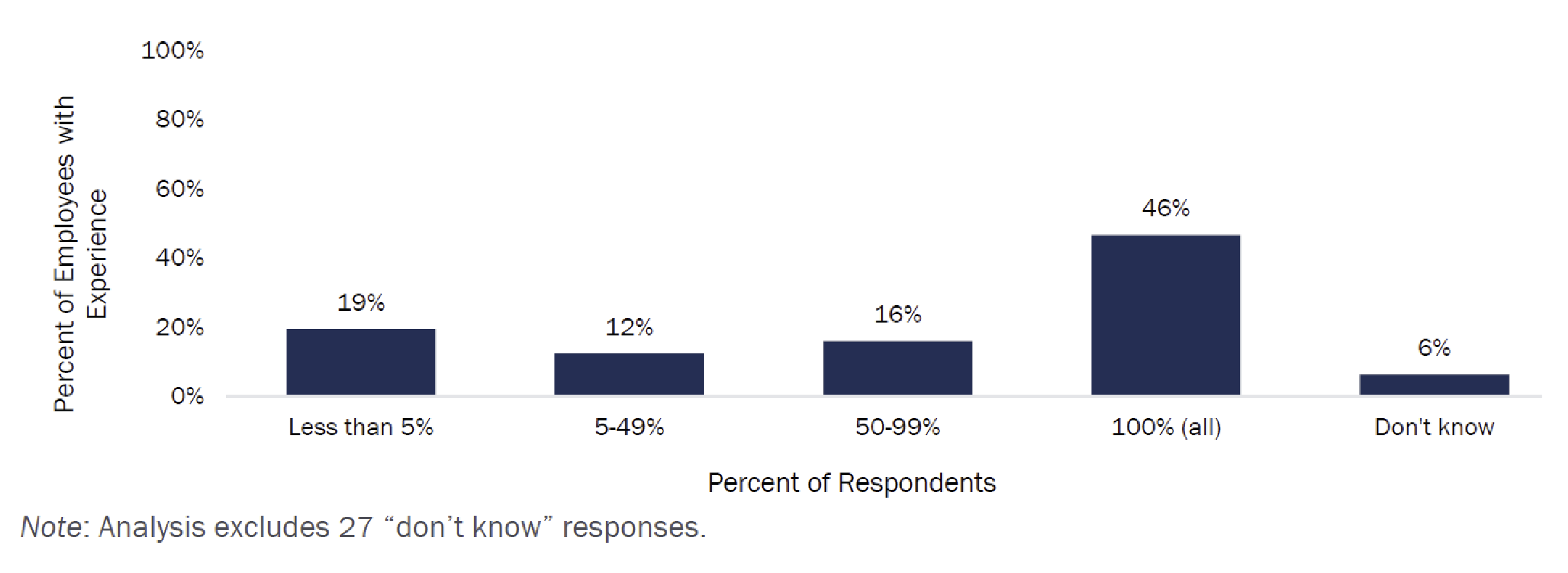
- Most contractors (71 of 114; 62%) said at least 50% of their staff have installed or worked on HVAC heat pumps in the past year. Almost half of respondents (53 of 114; 46%) said that all their staff had experience working with heat pumps in the past year.[3] These findings are from contractor firms with two or more employees.
- Larger firms are hiring more installers each year than smaller ones. All 22 surveyed contractors at firms with a revenue of $3 million or more hire at least six installers annually. Nearly half of firms with an annual revenue of less than $250,000 (23 of 51; 45%) hire zero installers in a typical year.
- Heat pump experience is desirable when hiring new technicians. More than half of contractors who hire others (81 of 148; 55%) said heat pump experience was “very attractive.”
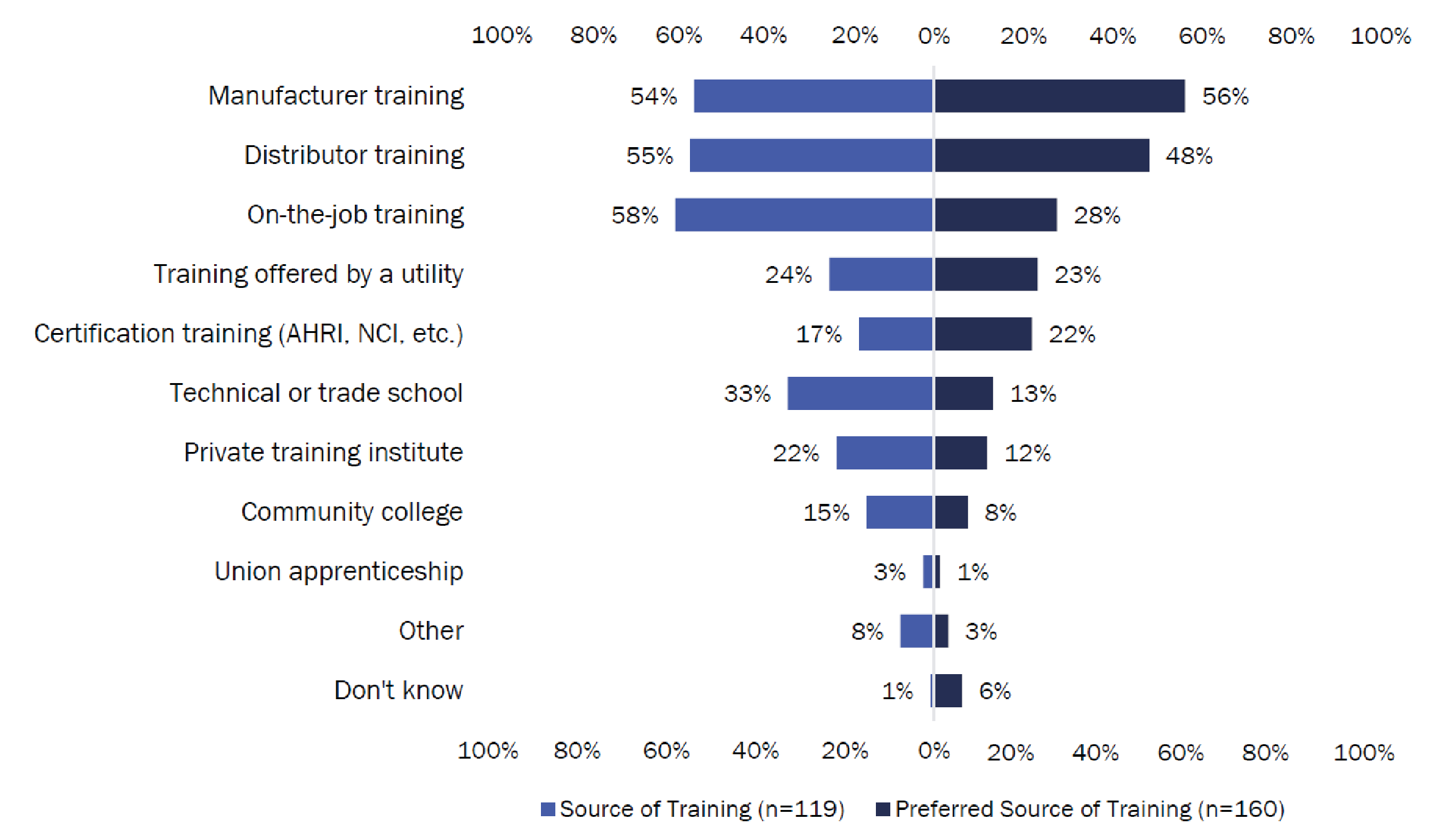
- Contractors most commonly received heat pump training on the job, but they prefer to receive it from a manufacturer or distributor. Nearly three-quarters of HVAC contractor respondents (119 of 160; 74%) received heat pump training (4% increase since baseline). Similar to baseline, most contractors who received heat pump training did so while on the job (69 of 119; 58%), although only about a quarter (44 of 160; 28%) preferred this source of training. Most contractors (124 of 160; 78%) valued in-person education, preferring training either fully in-person or through a hybrid online and in-person model.
California Homeowners
- Surveyed homeowners’ awareness of HVAC heat pumps has increased since the baseline measurement in July of 2022. Nearly three-fifths of homeowner respondents (291 of 500; 58%) indicated they were aware of HVAC heat pumps in this survey conducted in July 2023, representing a 9% increase.
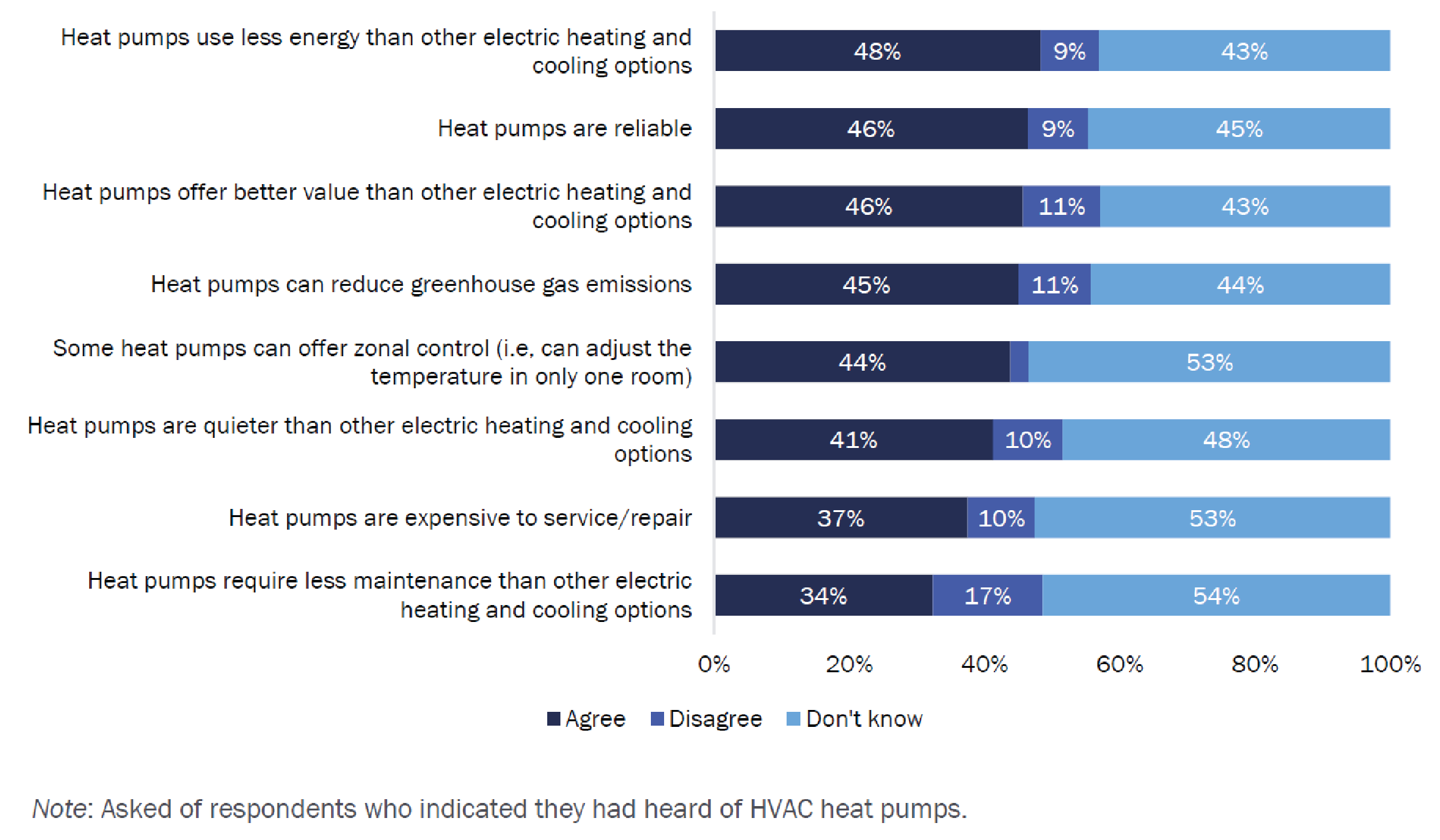
- There is uncertainty among homeowners about heat pump benefits when asked to agree or disagree with specific statements. Between 43% and 55% of respondents reported that they did not know the benefits of heat pumps, instead of agreeing or disagreeing, similar to that observed at baseline. Homeowners were most likely to agree that HVAC heat pumps use less energy than other electric heating and cooling options (140 of 291; 48%) and least likely to agree that heat pumps require less maintenance than other electric heating and cooling options (99 of 291; 34%).
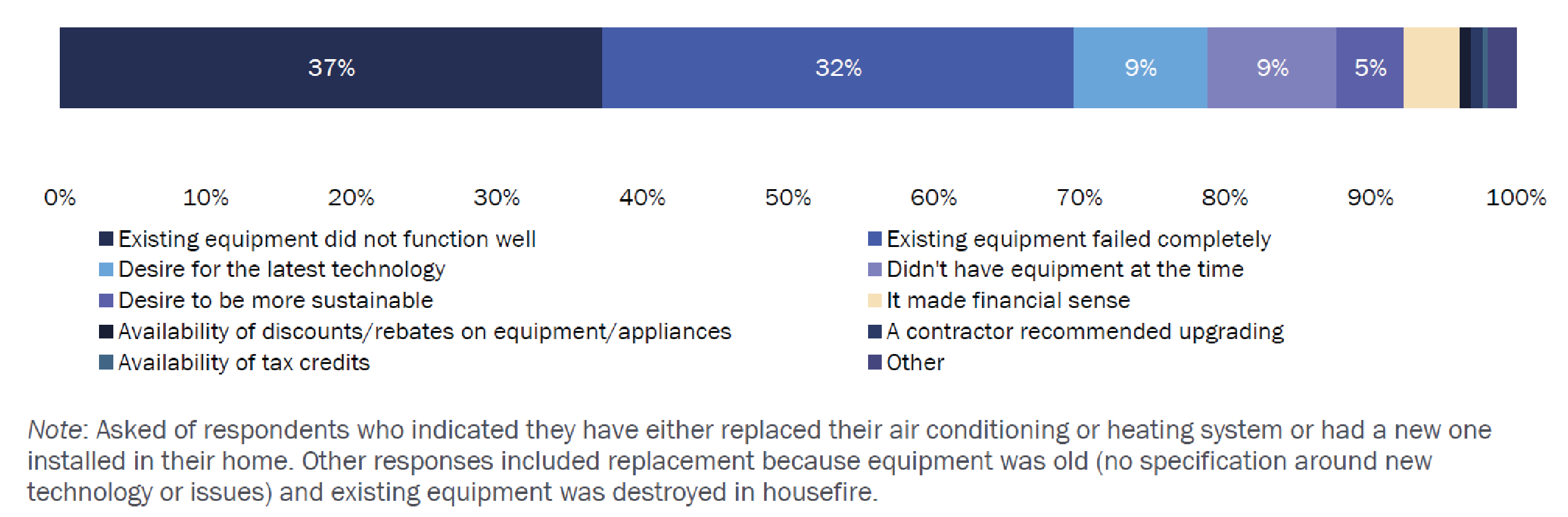
- Homeowners are more likely to replace their HVAC systems when they are not functioning well or broken compared to those choosing to update functioning equipment. Of respondents who had ever replaced their HVAC system, over two-thirds (181 of 261; 69%), said their prior equipment was not functioning properly (37%) or failed completely (32%), the same proportion observed at baseline.
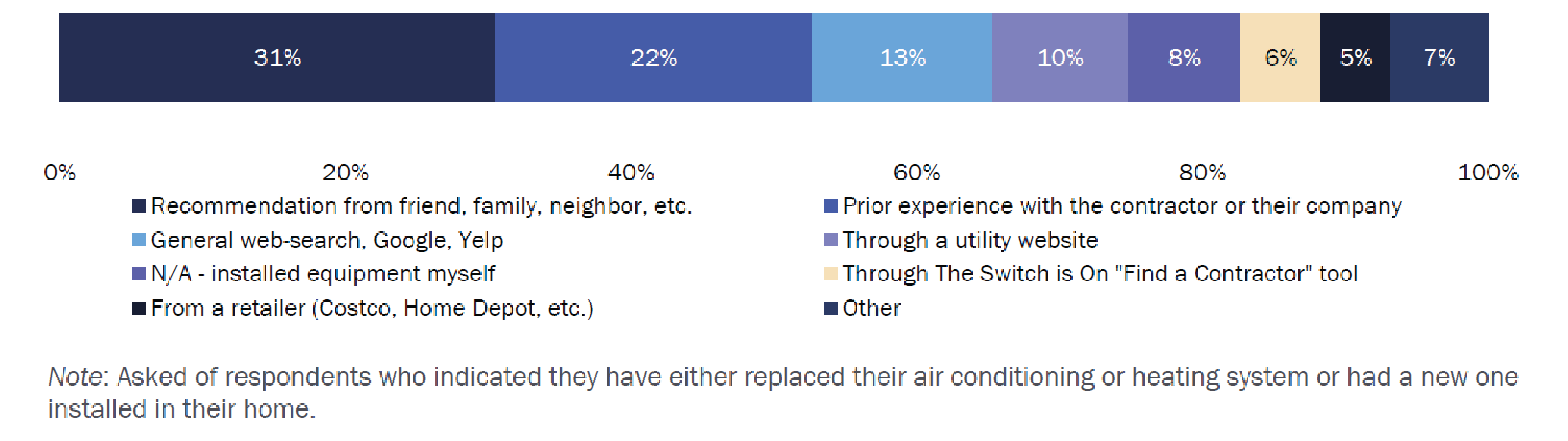
- The most common way respondents (137 of 258; 53%) found their contractor was through a personal referral or prior experience with them or their company. Nearly a third (29%) of surveyed homeowners found their contractor online, either through a general web search such as Google or Yelp, their utility’s website, or by using The Switch is On “Find a Contractor” tool.
- Similar to baseline, respondents most commonly cited the upfront cost of equipment, the possibility of needing an electrical panel upgrade or wiring remediation, and the possibility of increased utility bills as the top barriers for them if they were to consider purchasing a heat pump.
- As we observed at baseline, surveyed homeowners rated equipment reliability, cost, and performance as the most important factors in their purchasing decision if they were to replace their HVAC equipment. Respondents in DACs were significantly more likely to rate cost as an extremely important factor (238 of 331; 72%) if they were to replace their heating/cooling equipment than non-DAC homeowners (92 of 170; 54%).
[2] Time of Use controls are sometimes referred to as demand response controls.
[3] We did not define “experience” in the survey. We can presume it means a combination of selling, sizing, installing, or servicing HVAC heat pumps.
1.1.2 HPWH Market
California HPWH Contractors
- Experience with HPWHs is still rare among water-heating contractors. Nearly half of water-heating contractors who worked for a company with two or more employees (47 of 104; 45%) said five percent or fewer of their colleagues worked with HPWH equipment in the past year. About a fifth of these respondents (20 of 104; 19%) said none of their staff worked with HPWH equipment in the past twelve months (6% decrease since baseline).
- Contractors’ HPWH sales increased 4% from baseline to 20% of their total annual sales. We also saw a 4% decrease in contractors reporting they had not sold any HPWHs in the past year. Among the 81 firms where at least half of their business came from installation jobs, a minority (27%) reported no experience with HPWHs.
- Most surveyed contractor firms sold five or fewer HPWHs last year (93 of 127; 73%).
- HPWH contractors reported that, on average, 43% of their HPWH installations include a thermostatic mixing valve (TMV), 33% are connected to the Internet, 28% are programmed with TOU controls, and 10% enrolled a customer in a demand response program. Almost one-third of HPWH contractors reported they were unsure or did not know what a demand response program was, suggesting the need for education on this topic with plumbers.
- Over three-quarters (46 of 59; 78%) of surveyed contractors whose firm had installed at least one HPWH in the past year in a single-family or in-unit multifamily property discussed benefits of upsizing a water heater tank with at least some of their HPWH customers, while about half of these contractors (21 of 46; 46%) discussed these benefits with all of their customers.
- Contractors have encountered situations where customers need panel upgrades to accommodate a HPWH. Over half of respondents (42 of 72; 58%) had at least one HPWH installation in the last year that required an electrical panel upgrade to accommodate the HPWH.[4]
- All 46 firms with an annual revenue of less than $250,000 typically hire two or fewer installers per year, while all 15 of those with a revenue of $3 million or more hire at least six installers annually.
- As observed at baseline, about half of surveyed water-heating contractors (70 of 143; 49%) had received heat pump training. Water-heating respondents received their heat pump training most commonly through a manufacturer (57%) while training through a distributor (50%) or while on the job (50%) were also among the top three most common training methods.
California Homeowners
- In 2023, we found that 39% of California homeowners were aware of HPWHs, a 7% increase from the baseline survey conducted one year prior. The awareness of HPWHs is, though, notably lower than the 58% who had heard of HVAC heat pumps.
- Of the 196 respondents who were aware of HPWHs, more than half (111 of 196; 57%) were very or somewhat familiar with the equipment (7% increase from baseline).
- Among respondents who had heard of a HPWH, 39% reported that they did not know what benefits they offered. This figure represents a 44% decrease from baseline, where 83% said they did not know, and suggests a large increase in homeowner knowledge about HPWH equipment.
- The average age of homeowner respondents’ gas water heaters were older than the electric water heaters. More than one-third (126 of 354; 36%) of gas water heaters were nine years or older, indicating a significant proportion of California’s water heaters will likely need to be replaced in the next few years.[5]
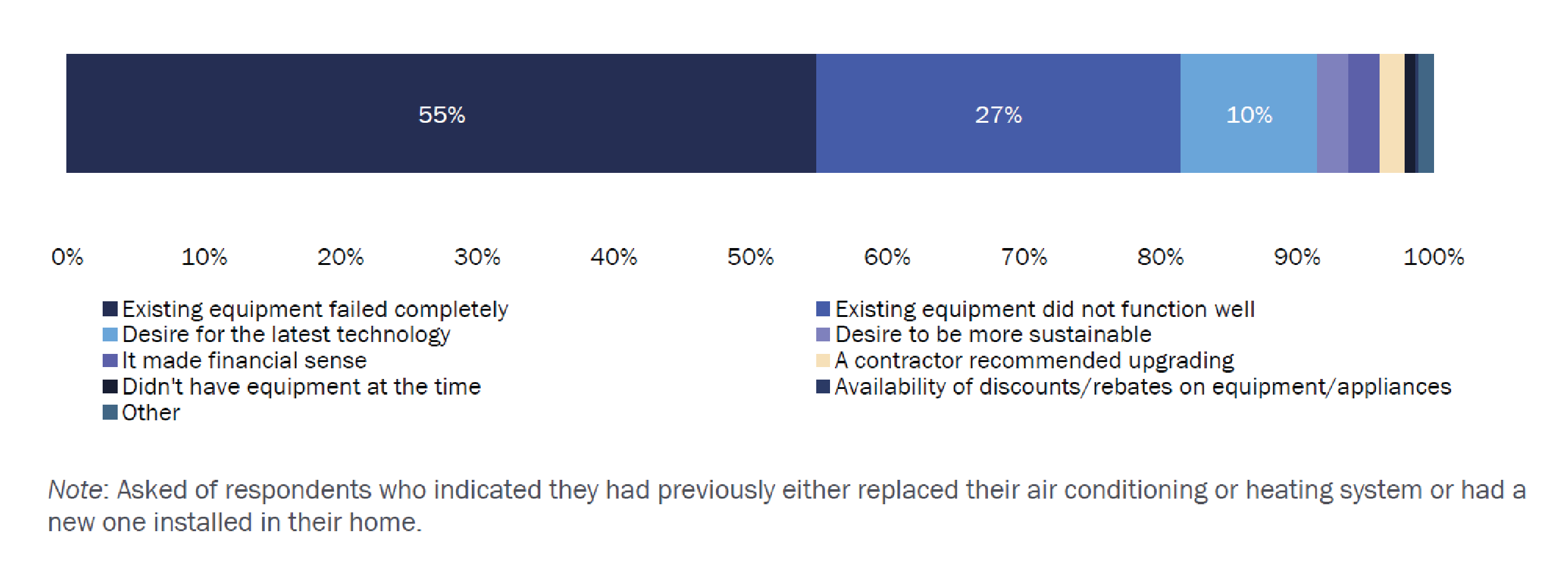
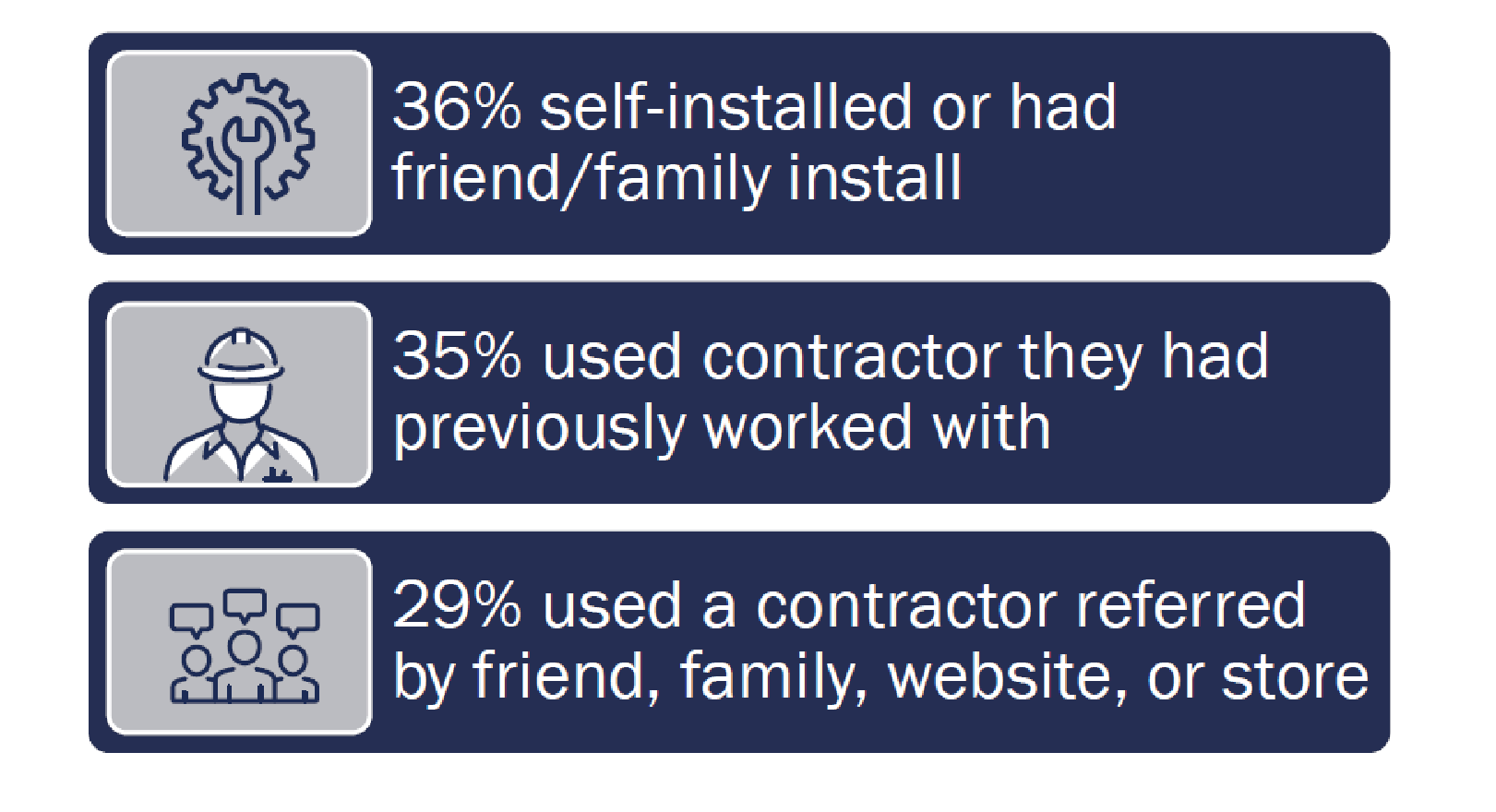
- Like we saw with HVAC systems, most homeowners who had installed a new water-heating system at some point in their home did so because the equipment either failed completely (166 of 304; 55%) or did not function properly (81 of 304; 27%). Ten percent or less reported replacing their water heater for reasons other than the functionality of the equipment. Just over one-third installed the water heater themselves or used a friend or family member; just over one-third used a contractor they previously worked with; while just under one-third used a contractor referred to them by a friend, family member, website, or store.
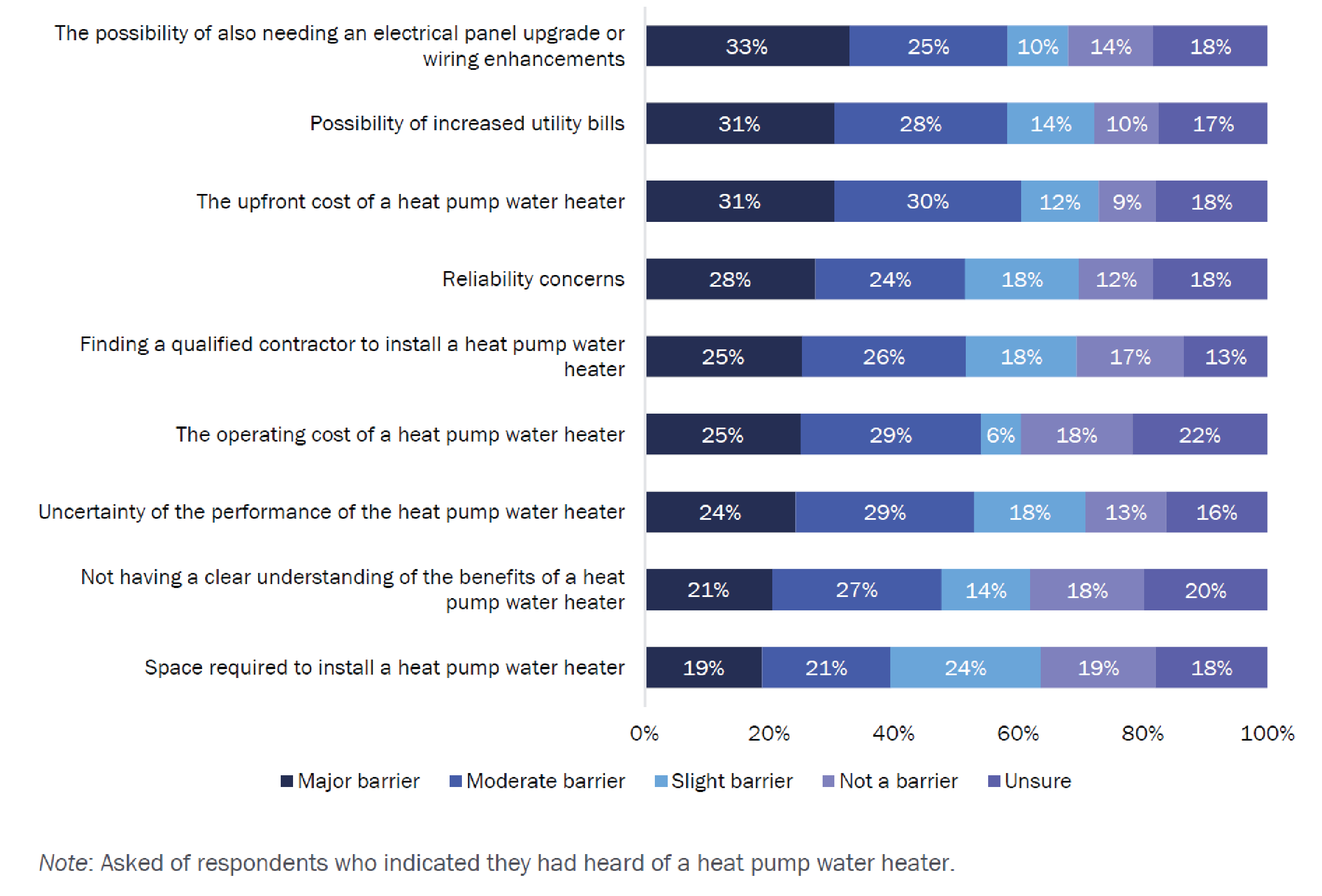
- Similar to an HVAC heat pump, respondents’ largest concerns with purchasing a HPWH were the associated costs and the possibility of additional home upgrade requirements. Respondents most commonly identified the possibility of needing an electrical panel upgrade or wiring enhancement, the possibility of increased utility bills, and higher upfront cost of equipment as top barriers for them if they were to consider purchasing a HPWH.
- As we observed at baseline, the most important factors to respondents when considering replacing their water heater were the reliability and performance of the system, along with the cost and energy efficiency level of the equipment.
- Nearly half of the homeowner respondents (90 of 196; 46%) reported they were aware of the incentive offerings for HPWHs, a 6% increase since last year. However, only 27% were aware they could receive a tax credit from the federal government for purchasing a heat pump for space heating and cooling.
[4] The survey did not ask who performed the electrical panel work in these cases.
[5] The effective useful life for a gas storage water heater is 11 years and gas tankless water heater is 20 years. Among our surveyed homeowners, 60% had a gas storage water heater and 7% had a gas tankless water heater.
1.1.3 Financing
- As observed at baseline, regardless of the equipment they worked with, the most common type of financing surveyed contractors offer to their customers is through a private lender. Contractors who worked with both types of equipment were most likely to offer GoGreen Home financing to customers.
- Heat pump customers most frequently utilized financing when purchasing equipment from a contractor who worked with both HVAC and water-heating equipment. Almost a third of contractors who worked with both HVAC and water-heating equipment and offer financing options (7 of 24; 29%) said 50% or more of their customers used financing to purchase their heat pump.
- Nearly half (232 of 500; 46%) of homeowner respondents were unaware of financing options available to them to purchase new space heating/cooling or water-heating equipment, while another 17% (86 of 500) were unsure whether they knew about these options. Homeowners were most likely to be aware of general financing options, such as a credit card or a loan through a banking institution.
- While just over half of homeowners were aware of some type of financing option (54%), just under half (46%) knew about incentives, and 38% were aware of tax credits for heat pump purchases.
- In 2023, California’s GoGreen Program financed 608 heat pump projects in 2023 as compared to the baseline of 62 heat pump projects in 2021.[6] There has also been a small increase in the number of GoGreen financed heat pump projects in DACs from seven in 2021 to 23 in 2023.
[6] The TECH program launched in December of 2021, and CAEAFTA began offering the expanded loan program funded by TECH dollars on April 1, 2022.
1.1.4 Marketing, Incentives, and Promotions
- Most firms that sell HVAC equipment promote heat pumps, while water-heating contractors were least likely to promote them; more than two-thirds said their company puts minimal to no effort into heat pump promotions. . Firms that provide both HVAC and water-heating services were most likely to promote heat pumps above and beyond other equipment options.
- Regardless of the type of equipment they work with, surveyed contractors’ companies most commonly promote heat pumps while on-site at a customer’s property. The other two common channels contractors use to promote heat pumps are online sources or direct mail inserts.
- Most surveyed contractors (136 of 229; 59%) were aware of rebates or incentives available in California for space-conditioning and/or water-heating heat pump installations, although this was 13% fewer than observed at baseline. Respondents who indicated working with both HVAC and water-heating equipment were most likely to promote incentives to their customers (45 of 47; 98%) compared to those who worked solely with HVAC (45 of 58; 78%) or water-heating equipment (21 of 31; 68%).
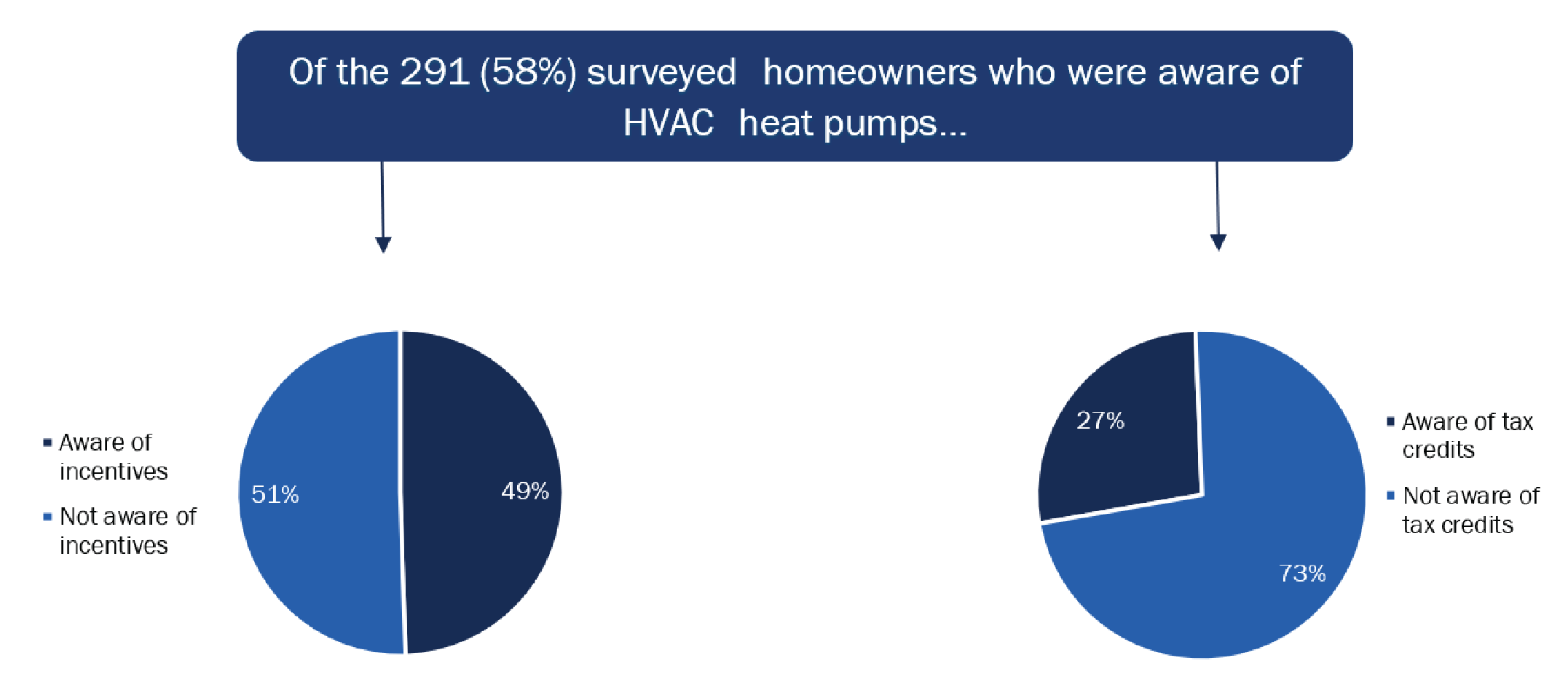
- Among homeowners who were aware of HVAC heat pumps, half of them (144 of 291; 49%) were also aware that some organizations offer financial incentives for installing a HVAC heat pump; an increase of 10% from baseline.
- Homeowners who were aware of the TECH Initiative or The Switch is On website were significantly more likely to be interested in purchasing an electric device compared to those unaware. Almost all surveyed homeowners aware of TECH Clean California or The Switch is On (100 of 105; 95%) expressed interest in purchasing at least one electric device that we asked about in the survey.
1.2 Conclusions and Recommendations
Based on the findings of this Time 1 Market Assessment, we offer the following conclusions and recommendations.
-
- Conclusion: Consumer marketing has been effective in increasing awareness, yet there is room to improve customers’ familiarity with heat pump benefits and financial assistance. We saw significant increases in the proportion of California homeowners reporting awareness and familiarity with HVAC heat pumps. Yet half or less than half of homeowners are aware of incentives and financing for heat pumps. And, financing uptake in DACs has been slow. Awareness of financial support will be important to address the upfront cost barrier that consumers reported for both HVAC and water-heating heat pumps.
- Recommendation: TECH-sponsored marketing and education to consumers should more heavily promote financing opportunities related to heat pumps and can highlight the tax credits offered through federal programs. TECH should explore ways to promote GoGreen Home financing in DACs to spur the uptake of financing for heat pumps in those communities.
- Conclusion: Installation practices that allow heat pumps to serve as a grid resource are more common among HVAC contractors than HPWH contractors. Contractors are programming HVAC heat pumps with TOU controls more often than before, indicating they are gaining familiarity with techniques that allow heat pumps to be a grid resource. However, HPWH contractors are less familiar with demand response programs and TOU controls than HVAC contractors. HPWH contractors though, are commonly discussing the benefits of upsizing the HPWH tank with customers. However, this discussion may be designed to avoid the customer running out of hot water rather than providing storage as a grid resource.
- Recommendation: There is a need to augment training for water-heating contractors to highlight how heat pumps can be a grid resource. The SGIP HPWH program with its requirement for enrollment in a demand response program may naturally help fill this need.
- Conclusion: The HPWH market is developing slower than the HVAC heat pump market. Contractor firms report few sales and little experience with HPWHs, while customer awareness of HPWHs is less than that of HVAC heat pumps. A majority of water-heating contractors encountered at least one situation in the past year where the customer needed an electrical panel upgrade to accommodate the HPWH.
- Recommendation: Future research should be conducted to determine if there are regional differences in the development stage of the HPWH market in California. If the market is more developed in some areas, then the TECH implementers should conduct outreach to increase the number of water-heating firms enrolled in TECH and selling HPWHs in the less-developed areas. TECH may need to review its value proposition aimed at water-heating firms to ensure TECH participation is enticing and attractive in the less active areas. For enrolled contractors, TECH should ensure its sponsored trainings emphasize lessons about panel optimization or panel upgrades to accommodate HPWHs.
- Conclusion: Even though HVAC heat pump sales declined in 2023 compared to 2022, they represent a higher proportion of overall HVAC sales, indicating some movement toward market transformation. While fewer heat pumps were shipped in 2023 than 2022, nationally more heat pumps were shipped than gas furnaces in both 2022 and 2023. Lower HVAC heat pump sales by TECH contractors in 2023 was consistent with national trends and milder weather conditions in California for summer 2023. Despite this trend, heat pump sales represented a higher share of overall HVAC sales, indicating that market penetration increased despite an overall “down market.”
- Conclusion: Consumer marketing has been effective in increasing awareness, yet there is room to improve customers’ familiarity with heat pump benefits and financial assistance. We saw significant increases in the proportion of California homeowners reporting awareness and familiarity with HVAC heat pumps. Yet half or less than half of homeowners are aware of incentives and financing for heat pumps. And, financing uptake in DACs has been slow. Awareness of financial support will be important to address the upfront cost barrier that consumers reported for both HVAC and water-heating heat pumps.
2. Introduction
The TECH Initiative, publicly known as TECH Clean California, launched in December 2021. TECH Clean California is an initiative designed to help advance the state’s mission to achieve carbon neutrality by 2045 by driving the market adoption of low-emissions space and water-heating technologies for existing single-family and multifamily residential homes. The initiative was created as part of California Senate Bill 1477 Through a combination of market incentives, supply chain engagement, workforce development, consumer education, and regional pilots, the initiative installs low-emissions space and water-heating technologies across California in existing homes.
The Initiative’s overall goal is full-scale market transformation of the heat pump market in California to ensure a thriving market for clean heating technologies in the next 10 years. To do so, the Initiative is designed to be a centralized program used to create best practices for statewide implementation for all existing and potential heat pump HVAC and HPWH programs. To achieve lasting scale, the initiative will pave a path for favorable decarbonization policy that makes heat pumps cost-competitive with incumbent technologies.
Opinion Dynamics is responsible for evaluating the TECH Initiative. Utilizing our Whole Independent Systems Evaluation (WISE™) framework, we maintain our third-party independent voice as we walk alongside Energy Solutions, the prime implementer for the Initiative, and its team of sub-contractors so that we can infuse real-time evaluation insights into every step of program design and implementation. This approach creates effective feedback loops to help all parties better understand complex market adoption patterns, effectiveness of program strategies, and opportunities for course correction.
We completed a baseline market assessment in the summer of 2022 that examined homeowner awareness of space-conditioning and water-heating technologies, their decision drivers for these equipment purchases, and awareness of incentives for this equipment. We also investigated the availability of a qualified workforce to sell and install heat pumps, including their experience and confidence working with heat pumps and their promotion of heat pump rebates and financing.
This report is an update to the baseline market assessment and characterizes the residential retrofit, space- and water-heating markets in California. To inform the current Time 1 Market Assessment, we repeated our surveys with licensed contractors and California homeowners in the summer of 2023, when the TECH Initiative had been underway for about a year and a half.
2.1 Study Objectives
Opinion Dynamics sought to characterize the residential retrofit, space- and water-heating market in California in 2023 and compare results with the baseline market assessment to assess market changes that have occurred over the past year. We examined homeowner preferences and decision-making around equipment replacement, as well as their awareness of home upgrade financing and heat pump rebates. We also investigated the availability of a qualified workforce to sell and install heat pumps, including their experience and confidence with heat pumps and their promotion of heat pump rebates and financing. Finally, we assessed the size of the heat pump market, looking into shipments and sales at the national level.[7] We compared findings between the single-family and multifamily markets, disadvantaged communities (DACs), and non-disadvantaged communities, as well as by climate zone.[8]
[7] Shipment data was not available at the state level.
[8] The TECH Initiative defines multifamily buildings as those with five or more units.
3. Research Methods
For this Time 1 Market Assessment, Opinion Dynamics conducted surveys with licensed contractors in California and with a statewide representative sample of California homeowners. All data collection instruments can be found in the Appendix. Below we explain each of these methods in more detail along with the research objectives for each survey.
3.1 Secondary Data
We used shipment data from Air-conditioning, Heating & Refrigeration Institute (AHRI). We also used data from the Contractors State Licensing Board (CSLB) to estimate the number of contractors licensed to work on heat pumps. Data on other heat pump incentive programs in California was provided by the Switch Is On website. Finally, information from the use of financing for residential equipment upgrades comes from the California Alternative Energy and Advanced Transportation Financing Authority (CAEATFA).
3.2 Market Survey of Licensed Contractors
Opinion Dynamics surveyed licensed contractors in California to gather information about contractor familiarity with heat pump technologies and the share of HVAC and water-heating jobs and sales that are heat pumps. More specifically, the research objectives of the market study of licensed contractors were to:
-
- Assess contractor confidence in selling, installing, servicing, and/or maintaining HVAC heat pumps and HPWHs
- Assess share of HVAC and hot water work and sales that are heat pump-related
- Gather information about the number of workers trained to work on heat pumps
- Gather information about the type of training contractors receive and prefer
- Collect information about the percent of available positions for working on HVAC heat pumps and HPWHs
- Assess the availability of heat pump financing offered through contractors
- Understand contractor promotion of heat pump systems and initiatives
Our sample frame was based on two groups: licensed contractors in California who either were or were not enrolled in TECH. Of the 4,190 contractors we invited to complete the survey, 605 were enrolled in TECH. We selected contractors who had one of the following California State License Board (CSLB) licenses: C-20 HVAC Contractor, C-36 Plumbing Contractor, or B General Building Contractor.[9] We prioritized the first two licenses, as those are the specialty licenses needed to install space- and water-heating heat pumps, though B General Building Contractors can also install heat pumps in some situations. Please note that many surveyed contractors held a combination of these licenses, and some held other licenses, such as C-10 Electrical Contractor and D-34 Prefabricated Equipment. A total of 66 contractors in our sample held more than one license. Only four respondents held none of these licenses. Table 1 below provides a breakdown of license type(s) held by survey respondents by TECH enrollment
[9] The Contractors State License Board (CSLB) protects California consulters by licensing and regulating the state’s construction industry. www.cslb.ca.gov
Table 1. Survey Sample License Type(s) by TECH Enrollment (n=229)

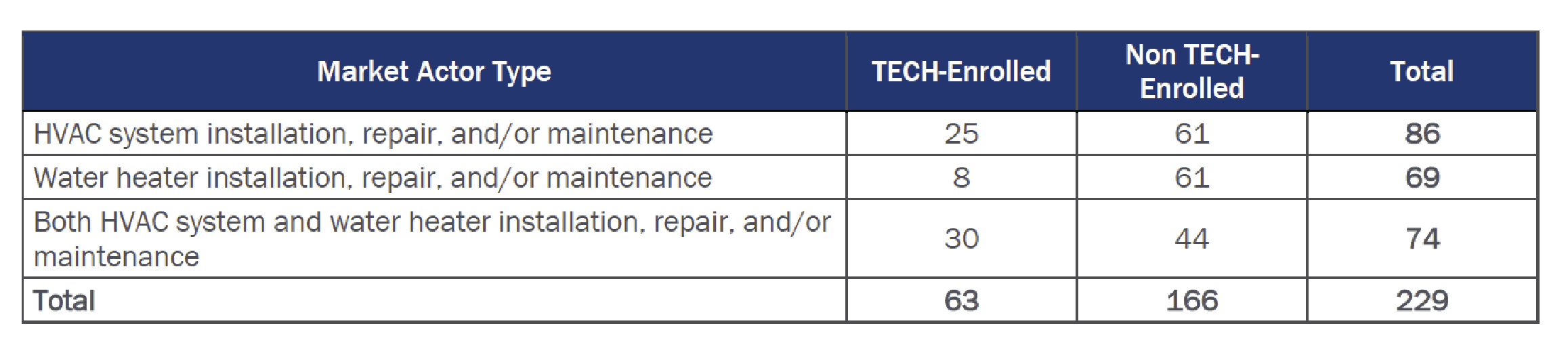
In July and August 2023, we contacted these contractors via email and a postcard up to two times. We screened them to ensure they offered residential installation or maintenance services for HVAC and/or water heating (Table 2). We achieved a total of 229 survey completes, resulting in a response rate of 6.5%, after accounting for undeliverable emails. Respondents received a $100 gift card as a token of appreciation for taking the time to participate in this research.
Table 2. Survey Completes by Contractor Services (n=229)
3.2.1 Licensed Contractor Sample
Nearly three-quarters of survey respondents’ companies (161 of 229; 70%) performed both retrofit and new construction work (9% increase since baseline), while the remaining 30% (68 of 229) worked only within the retrofit space.
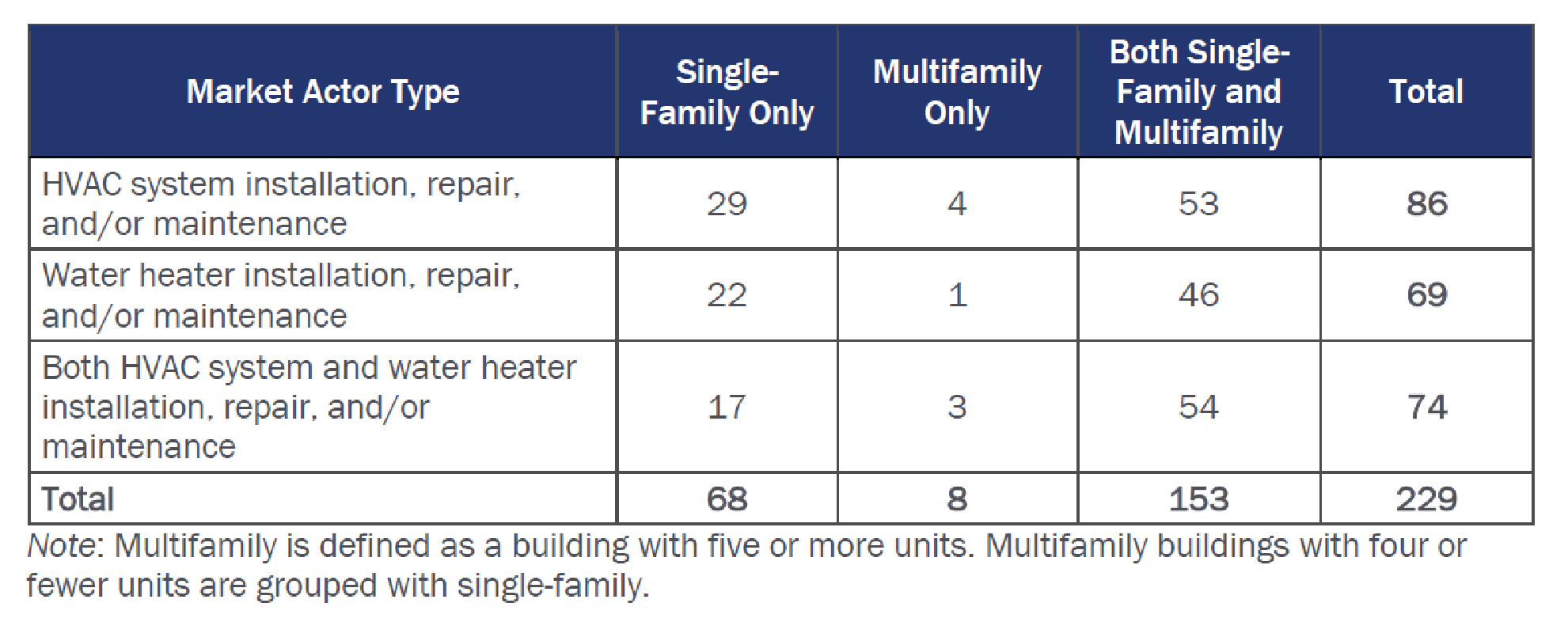
Almost all surveyed contractors (221 of 229; 97%) served the single-family market, and nearly three-quarters (161 of 229; 70%) served the multifamily market (23% increase from baseline survey); thus, there was substantial overlap with (153 of 229; 67%) of respondents serving both single-family and multifamily markets (Table 3). When asked about their role within their company, respondents reported they were the owner (158 of 229; 69%), president or CEO (71 of 229; 31%), general manager (55 of 229; 24%), service manager (41 of 229; 18%), or sales manager (35 of 229; 15%), and the remaining seven (of 229; 3%) respondents reported they hold a different position at their company.
Table 3. Survey Respondents by Sector (Multiple Responses Allowed; n=229)
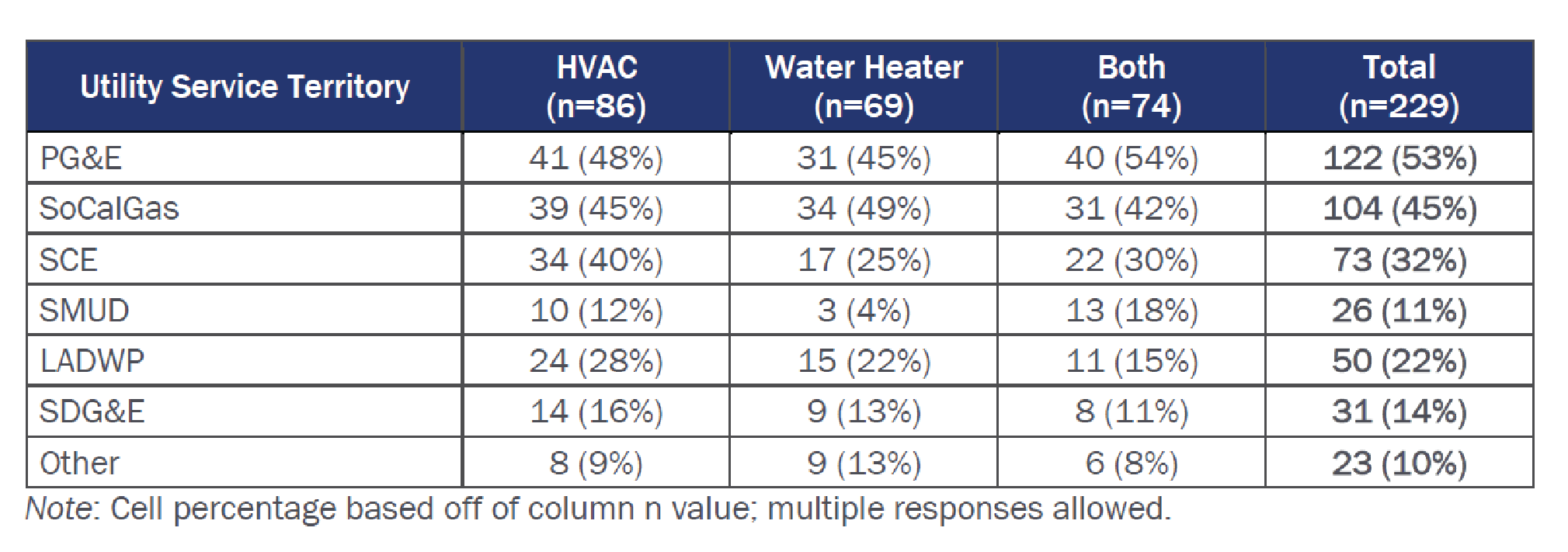
More than half of contractor respondents (122 of 229; 53%) worked in PG&E’s service territory (7% decrease since baseline); this was the most common utility service territory reported among both HVAC and water heater market actors (Table 3). Just over half (118 of 229; 52%) of surveyed contractors work in two or more utility service territories in California (14% increase since baseline).
Table 4. Utility Service Territory Where Respondents Work
Similar to baseline, most surveyed contractors (191 of 229; 83%) worked in a single-location facility. The remaining respondents said the facility they work in is the headquarters of a company with multiple locations (20 of 229; 9%), a branch or franchise location of a company based in California (3 of 229; 1%), a branch or franchise location of a company based outside California (2 of 229; 1%), or something else (8 of 229; 2%).[10]
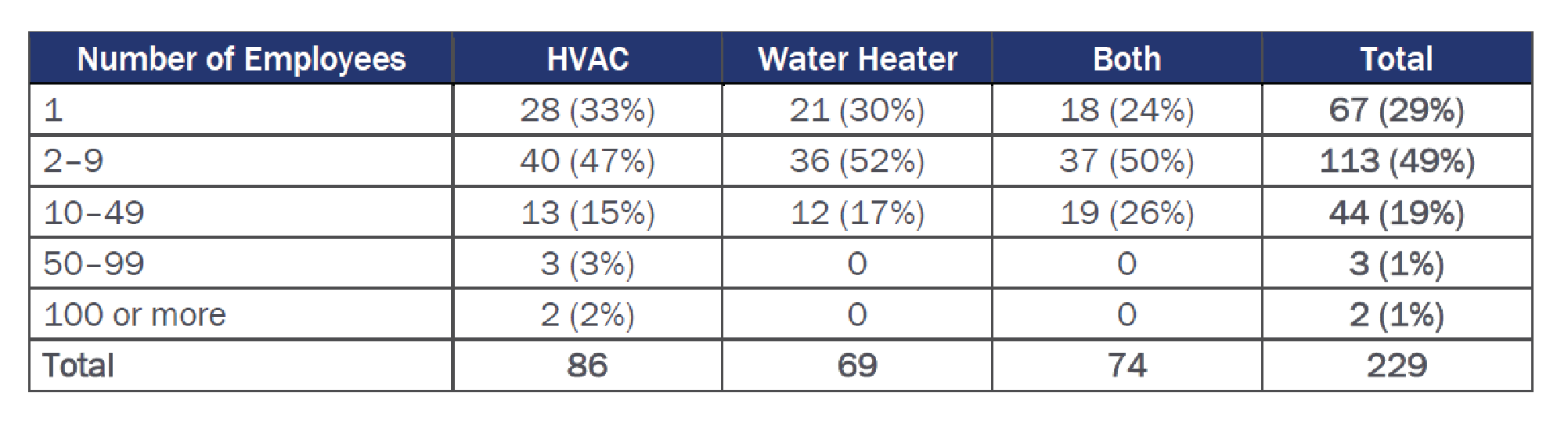
The majority of contractor respondents worked at a company with fewer than 10 employees (180 of 229; 79%), and nearly one-third were sole proprietors (Table 5). Similar to baseline, approximately half (113 of 229; 49%) said their company currently employs between two and nine people. The proportion of respondents who worked for companies with ten or more employees declined 14% since our baseline estimate. It was very uncommon for our surveyed contractors to work at a company with more than 50 people.
[10] Other responses included residential and commercial buildings where jobs are performed (seven mentions) and a company shop (one mention). Five respondents said they don’t know what type of facility it is.
Table 5. Number of Part- and Full-Time Employees by Service Type (n=229)
As observed at baseline, only a small portion of surveyed contractors reported their company’s employees are members of a union (4 of 229; 2%). Three of these four contractors were enrolled in TECH at the time of the 2023 survey. Among these four respondents, two worked solely on water-heating systems, one worked solely on HVAC systems, and the last respondent worked with both types of equipment. Each of these respondents reported membership in one or more labor unions, separated by respondent below:
-
- International Brotherhood of Electrical Workers (IBEW)
- SMART Sheet Metal Local Union 105, United Association (UA) Local Union 250, and UA Local Union 398
- Sheet Metal Workers Local 104 and UA Local Union 342
- UA Local Union 467 and UA Local Union 38
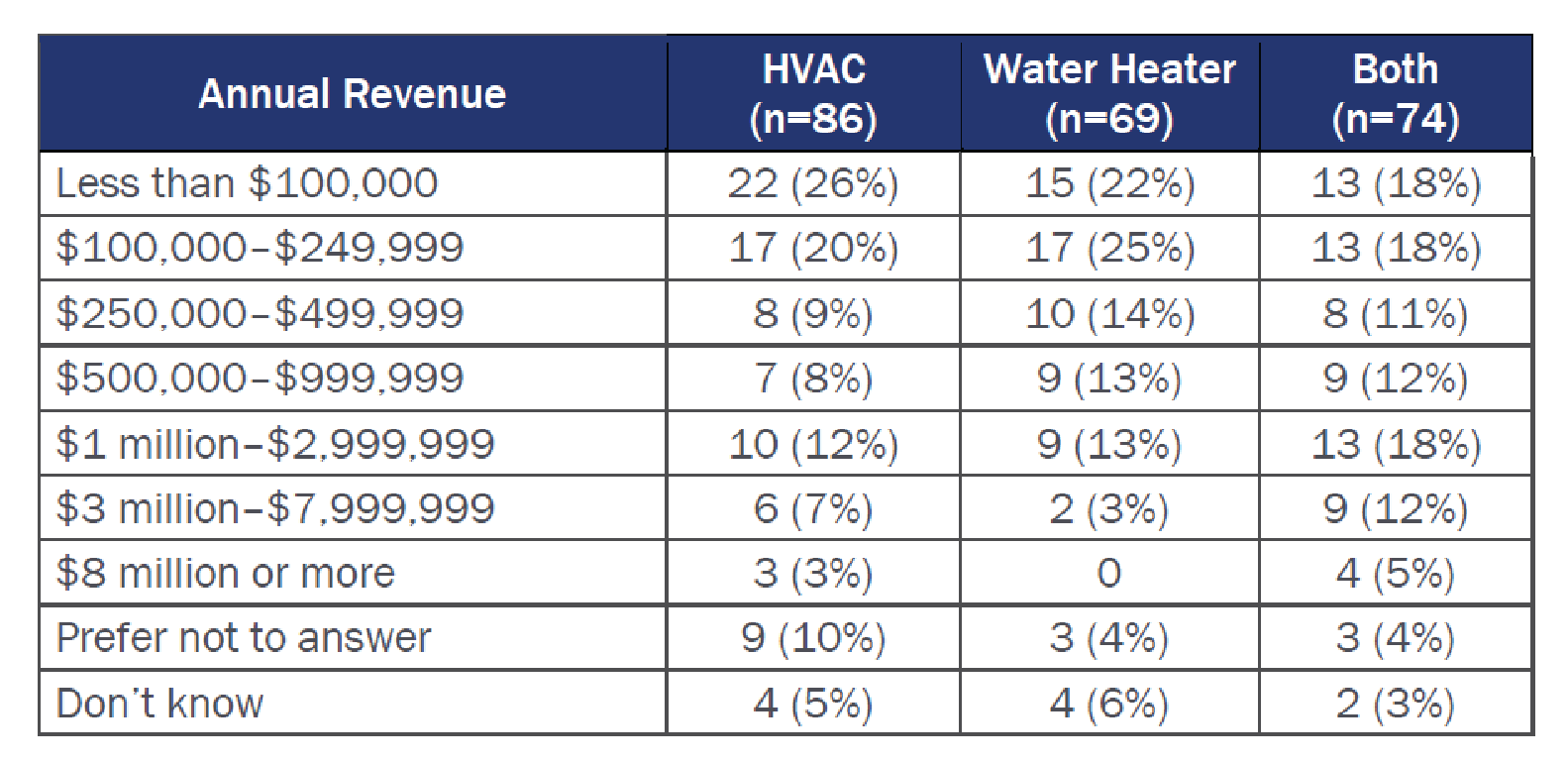
A quarter of contractor respondents (56 of 229; 25%) reported their company’s annual revenue is one million dollars or more, a 13% decrease since baseline. More than one-fifth (50 of 229; 22%) of respondents reported an annual revenue of less than $100,000. Fifteen respondents (of 229; 7%) chose not to disclose this information (5% decrease since baseline), and 10 respondents said they did not know (Table 6).
Table 6. Company Annual Revenue (n=229)
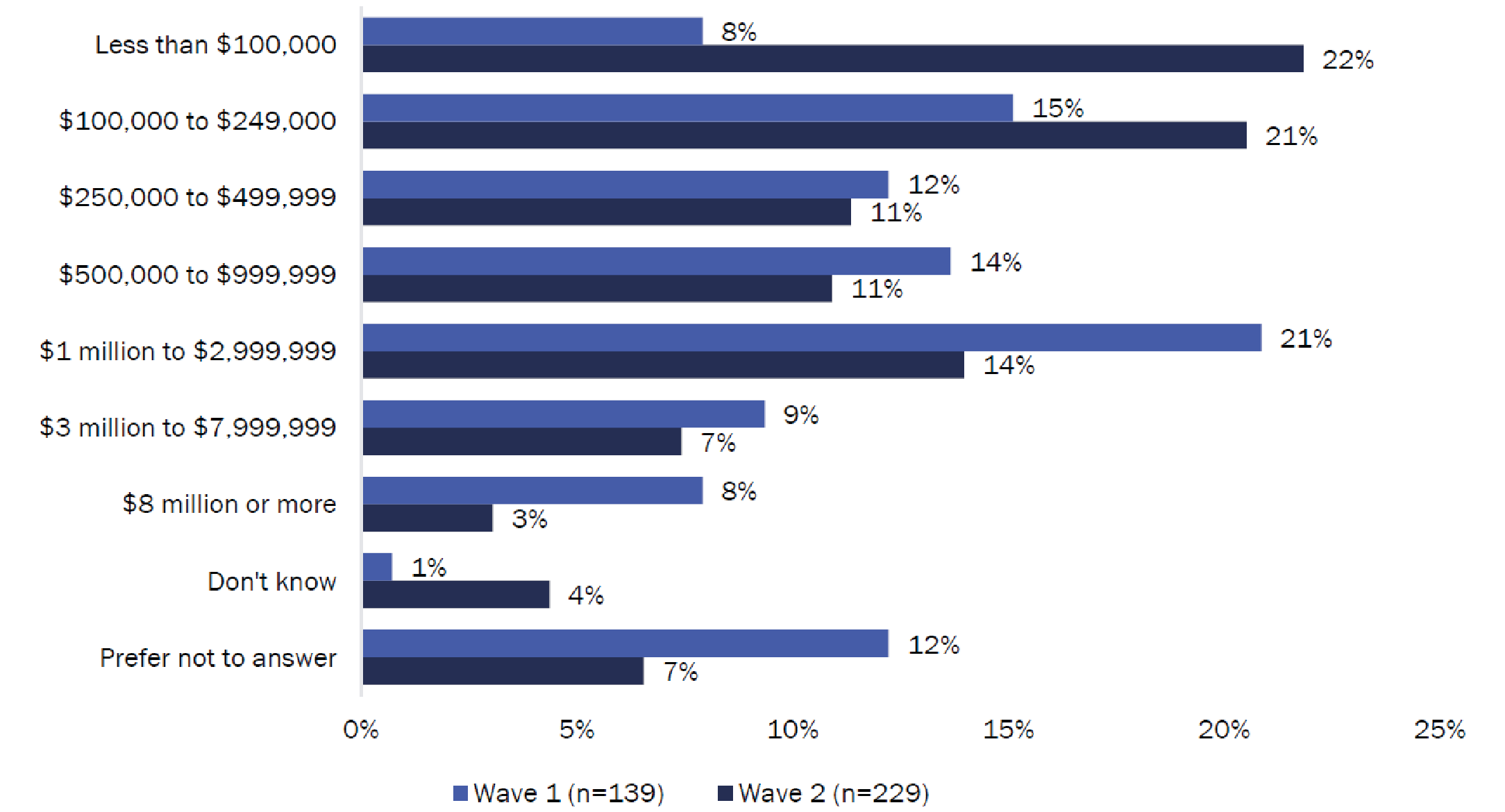
We compared key firmographics between the baseline survey’s sample of licensed contractors and the Time 1 survey sample. In the Time 1 survey, 29% of the sample were sole proprietors, 12% more than the proportion in the baseline survey sample (17%). Relatedly, the Time 1 survey sample also included more contractors whose firms generated an annual revenue of less than $250,000 (Figure 1). Taken together, this Time 1 survey sample had a larger proportion of smaller firms with lower revenue streams compared to the baseline survey.
Figure 1. Comparison of Survey Respondents’ Company Annual Revenue Between Baseline and Time 1
3.3 General Population Homeowner Survey
Opinion Dynamics fielded a survey to single-family homeowners in California to assess awareness of, familiarity with, interest in, and motivators for space conditioning and water-heating equipment. Specifically, the survey explored respondents’ perceptions and understanding of heat pump technologies with the following objectives:
-
- Explore respondent environmental belief systems and willingness to use electric appliances
- Gather information about homeowners’ space-conditioning and water-heating systems
- Explore customer decision drivers around space conditioning and water-heating equipment purchases
- Gauge awareness of and familiarity with HVAC heat pumps and HPWHs and the benefits and barriers to adoption
- Assess awareness of financing options and utility rebates for installing heat pump technologies
The survey was fielded in July 2023. We achieved a total of 500 survey completes, representing a response rate of 24%. By design, half of the sample was in DACs and half were outside of DACs. The sample data were weighted on US census data for gender, age, race, and education to ensure representation of the overall California population.
All homeowner findings in this report are based on analyses of survey data with weights applied. Please note that all n values are the unweighted count of respondents included in each analysis. In many cases, we conducted statistical testing to see if responses significantly varied between homeowners who reside in DAC and outside of DACs. Throughout this report, we use the term “significantly” to call out statistically significant differences using a significance threshold of p<.05.
3.3.1 Homeowner Sample
The homeowner sample had similar proportions of household sizes as the baseline survey sample, such that nearly half (49%) had a family size of one or two people, and 10% had a family size of five or more. The average family size was similar across DACs and non-DACs at 2.7 people.
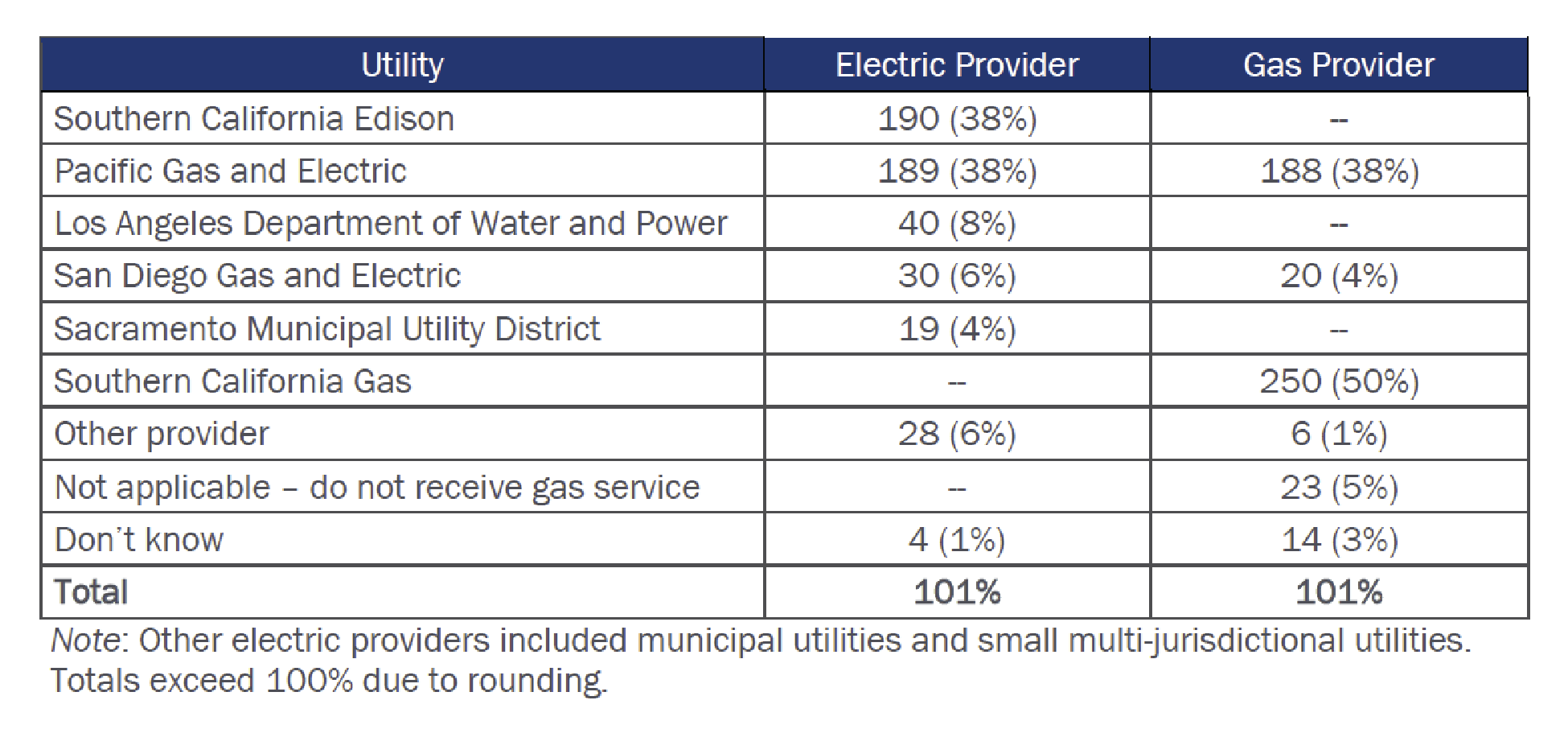
Pacific Gas and Electric (PG&E) and Southern California Edison (SCE) provided electric service to over three-quarters of surveyed homeowners, with each providing service to nearly two-fifths (38%) of respondents (Table 7). Half of respondents (250 of 500; 50%) reported their natural gas provider is Southern California Gas (SCG), while about two-fifths received gas service from PG&E. Five percent of surveyed homeowners (23 of 500) indicated they live in an all-electric home and do not receive gas service.
Table 7. Surveyed Homeowners’ Electric and Gas Providers (n=500)
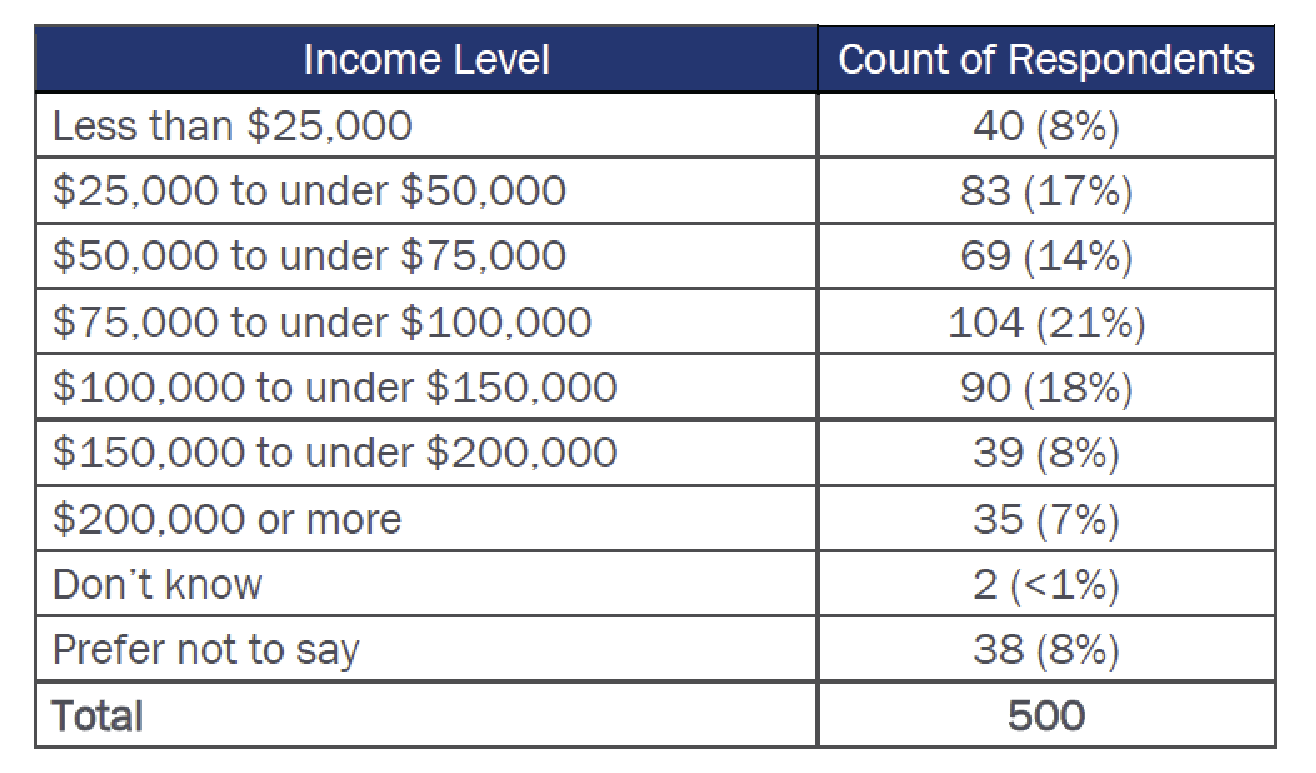
The majority of surveyed homeowners (296 of 500; 59%) reported a household income of less than $100,000, while a quarter (123 of 500; 25%) had an income of less than $50,000. Eight percent of respondents either reported they did not know their household income or preferred not to share this information (Table 8).
Table 8. Surveyed Homeowners’ 2022 Household Income (n=500)
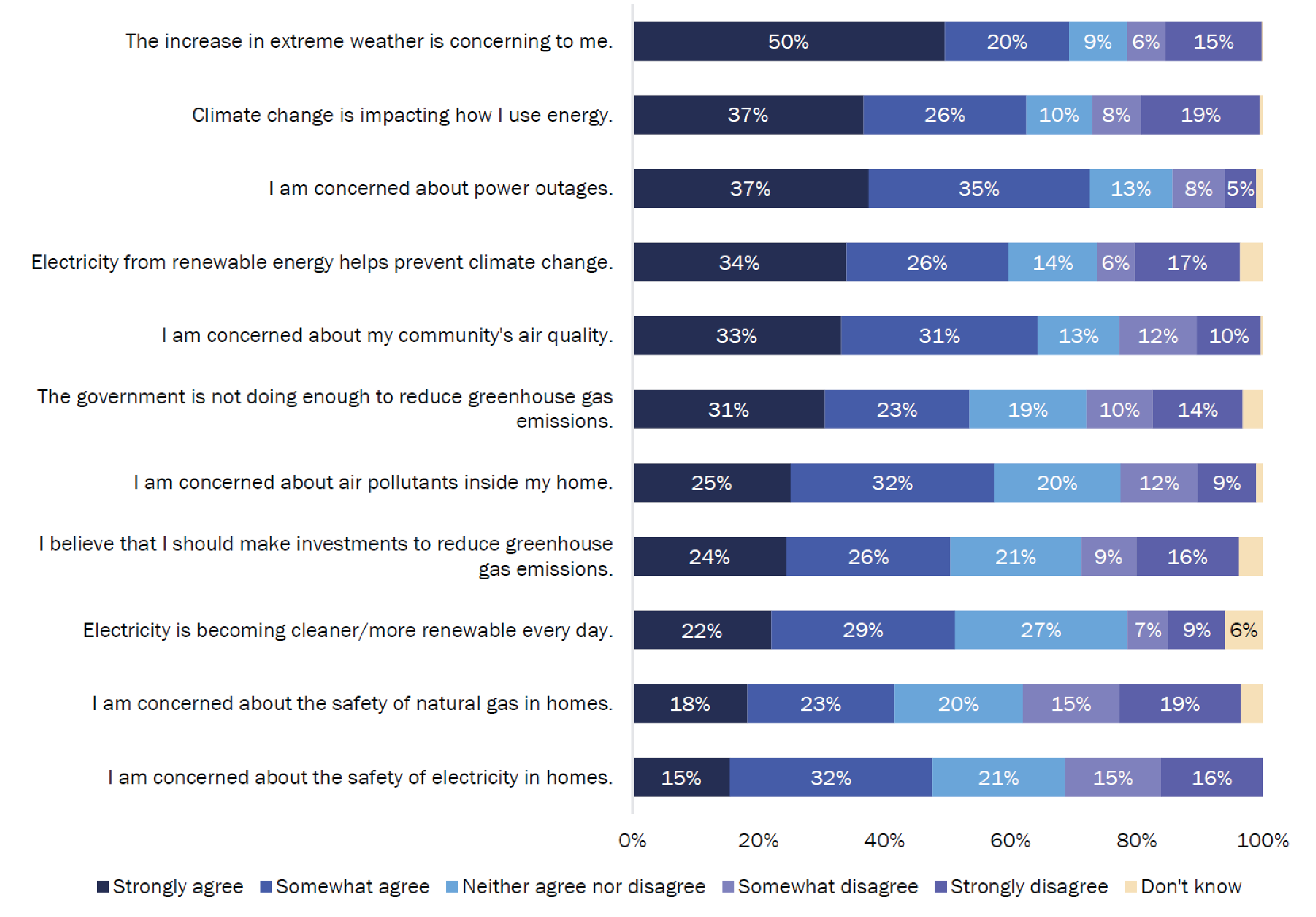
As we saw in the baseline survey, there was a subset of respondents in this survey (62 of 500; 12%) who appeared to be climate change skeptics; though it was a 3% decrease from the proportion identified at baseline. These respondents strongly disagreed that electricity from renewable energy helped to prevent climate change and strongly disagreed that climate change was impacting how they used energy (Figure 2). Half of respondents strongly agreed they were concerned about the increase in extreme weather, a 14% increase from baseline (36%). Approximately a third of respondents strongly agreed that the government is not doing enough to reduce greenhouse gas emissions and 25% strongly agreed that they are concerned about air pollutants inside their home.
Figure 2. Environmental Belief Systems (n=500)
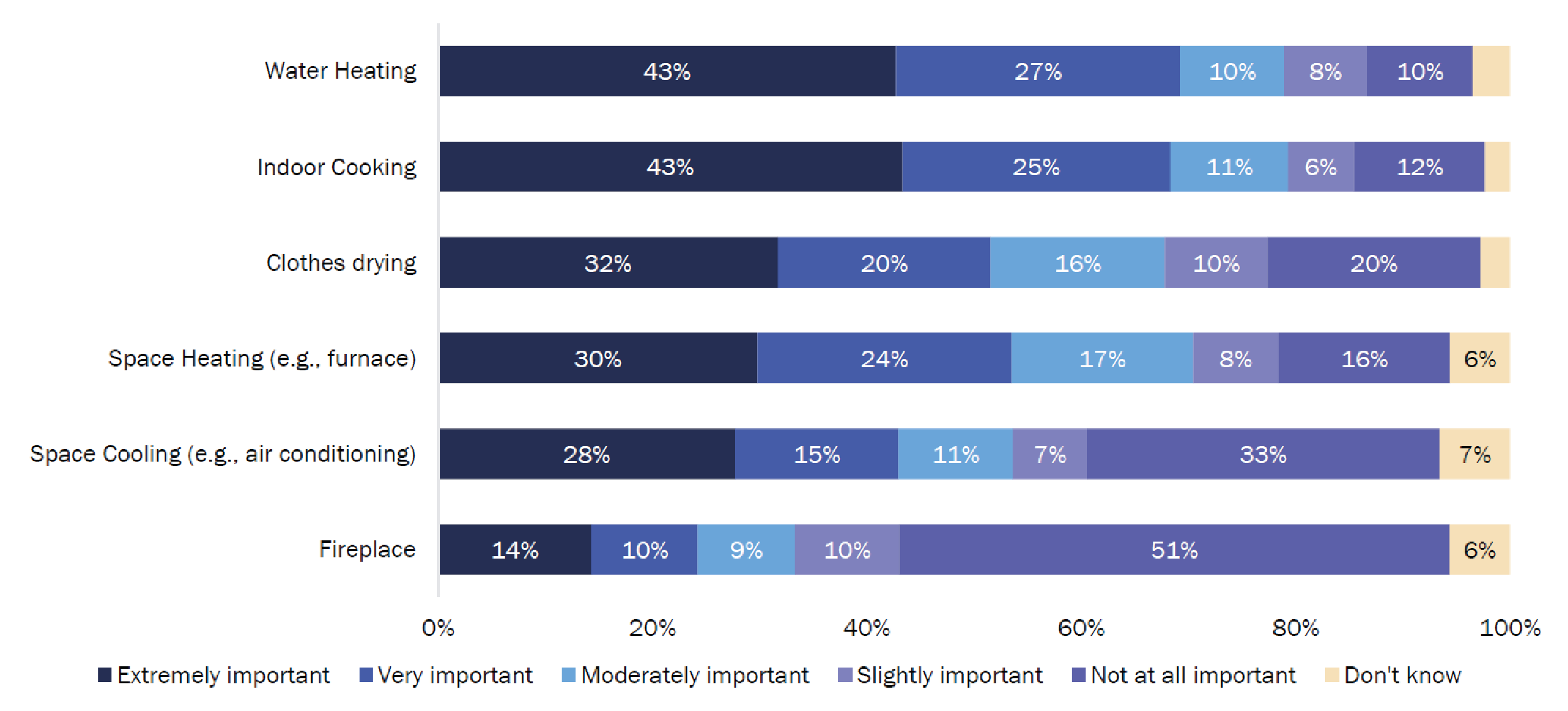
In terms of homeowners’ willingness to use electric appliances, preferences for fuel type were positively correlated, meaning that if a respondent had strong preferences for one natural gas appliance, they tended to prefer gas for other appliances as well. This correlation was present at baseline as well. Water heating and indoor cooking were the end-uses with the strongest preference for natural gas, with more than two-thirds saying that gas was extremely or very important for those uses (Figure 3). Respondents felt least strongly about using natural gas for indoor fireplaces.
Figure 3. Importance of Having an Appliance be Natural Gas (n=500)
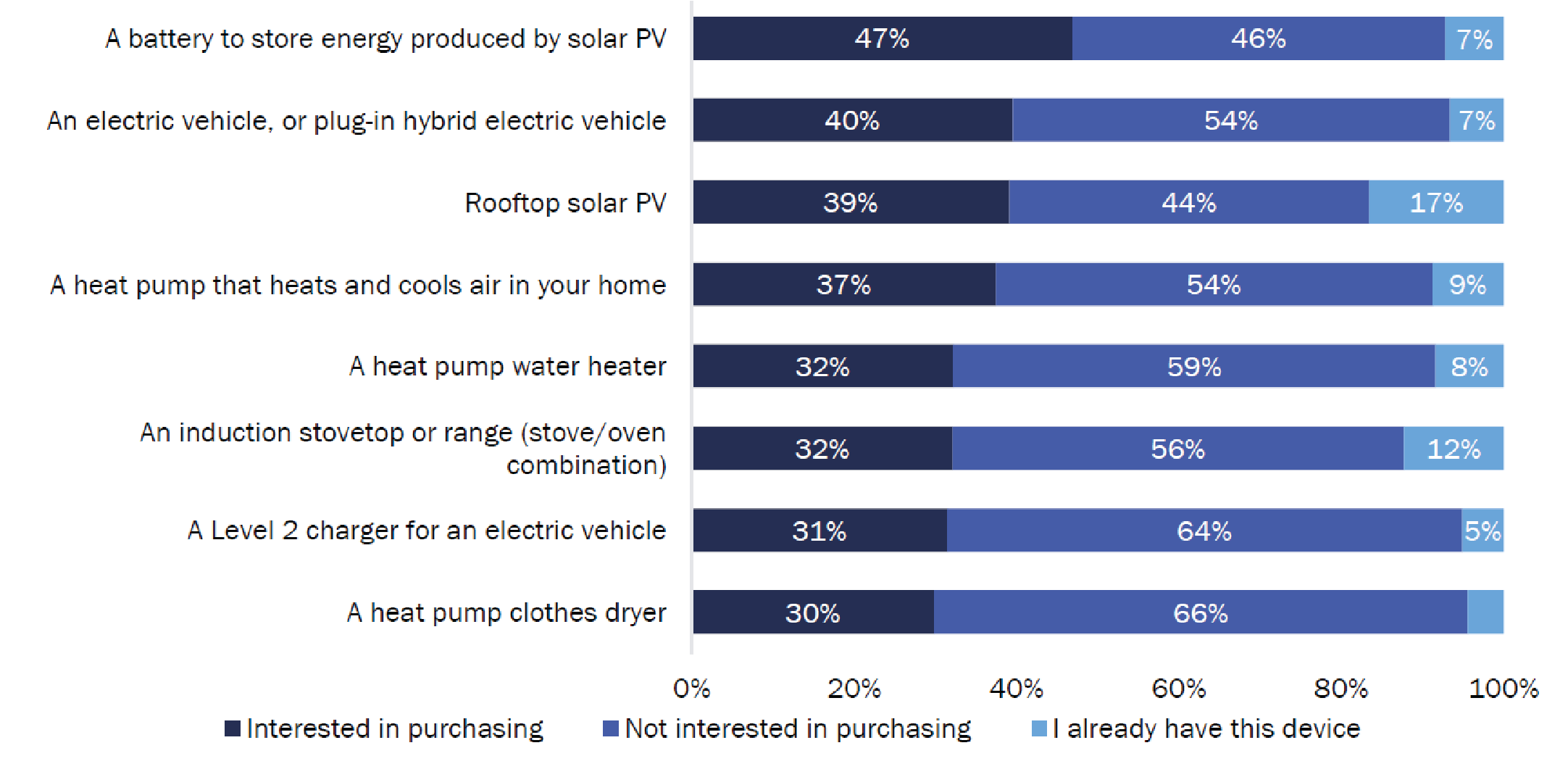
A minority of surveyed homeowners were interested in purchasing the electric devices we asked about in Figure 4. They were most interested in purchasing a battery to store energy generated by solar panels, followed by an electric vehicle. Seventeen percent already had rooftop solar. Homeowners were least interested in a heat pump clothes dryer.
Figure 4. Interest in Electric Devices (n=500)
3.4 Study Limitations
This market study uses a combination of data sources, some of which are self-report survey responses (i.e., the contractor and homeowner surveys). Self-reported data can have limitations such as respondents’ inaccurate reporting, incomplete reporting, or socially desirable reporting. Like all surveys, this study is also subject to survey nonresponse bias in which those who complete the survey are different than non-responders in ways that are correlated with our study variables. We attempted to minimize nonresponse bias by offering survey participation incentives and sending up to three reminder emails to encourage response. The study also uses cross-sectional data to compare the Time 1 findings from the summer of 2023 to the baseline findings collected one year earlier instead of longitudinal data. Longitudinal data requires collecting answers from the same set of respondents in both surveys, and can be considered more robust, but is more time-intensive and expensive to collect.
4. HVAC Heat Pump Market Detailed Findings
In this section, we review the HVAC market and present findings about surveyed HVAC contractors’ experience with heat pumps, their heat pump training, and the perceived value of training. We also discuss findings about California homeowners’ familiarity with HVAC heat pumps, their decision drivers for space-conditioning equipment, and their awareness of incentives for heat pumps.
4.1 Market Overview
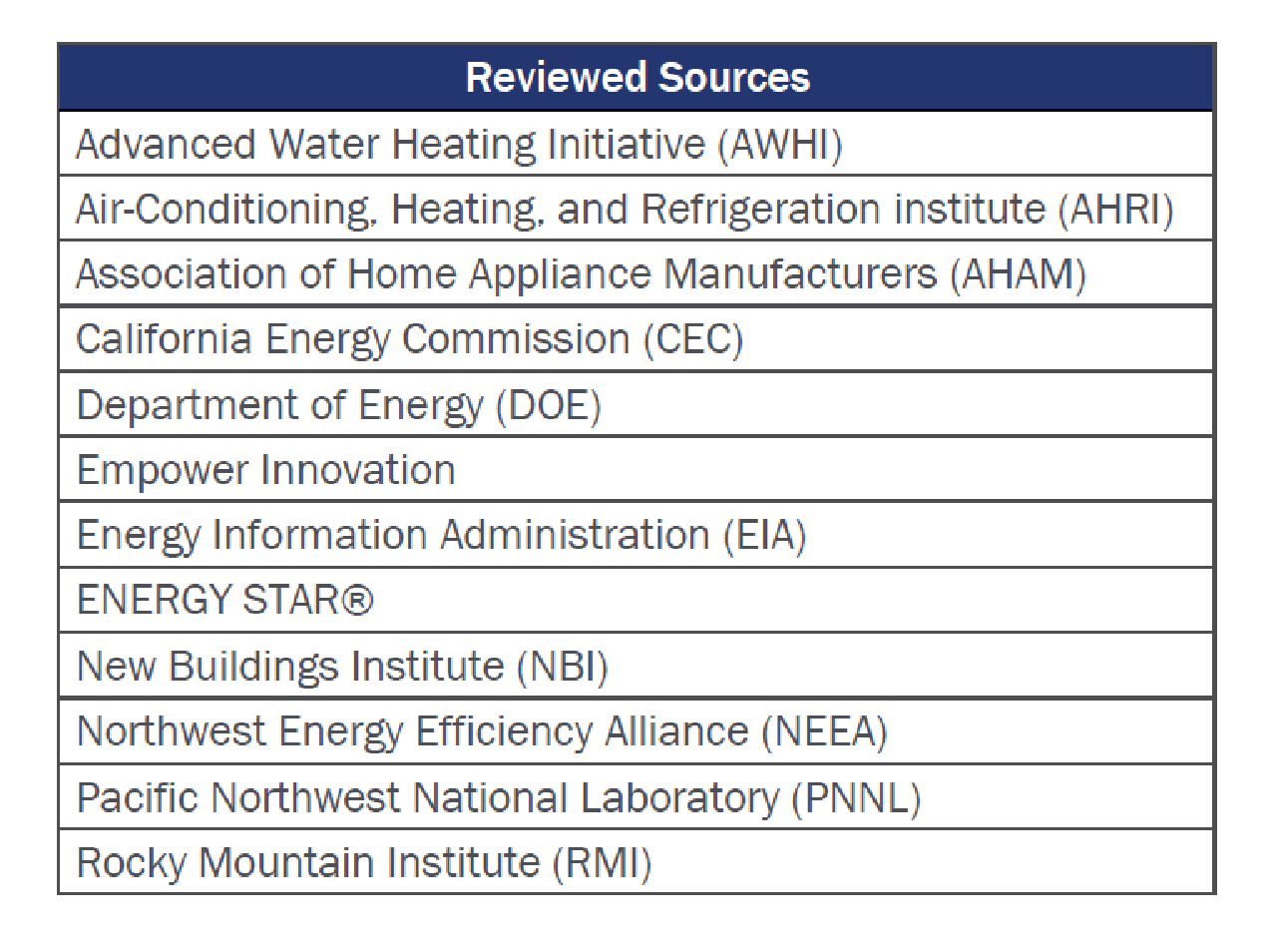
In the baseline market assessment, we used shipment data on gas furnaces, central air conditioners, and air-source heat pumps to study the relative volume of HVAC shipments into California between January 2019 and December 2021. Unfortunately, the Heating Air-conditioning & Refrigeration Distributors International (HARDI) organization has not made available state-level shipment data for 2022 or 2023. We explored alternative data sources for California-level shipment, stocking, or installation data (Table 9). After a thorough review of the datasets available, we concluded that national-level shipment data from the Air-Conditioning, Heating, and Refrigeration Institute (AHRI) was the best source available.
Table 9. Shipment Data Sources Investigated
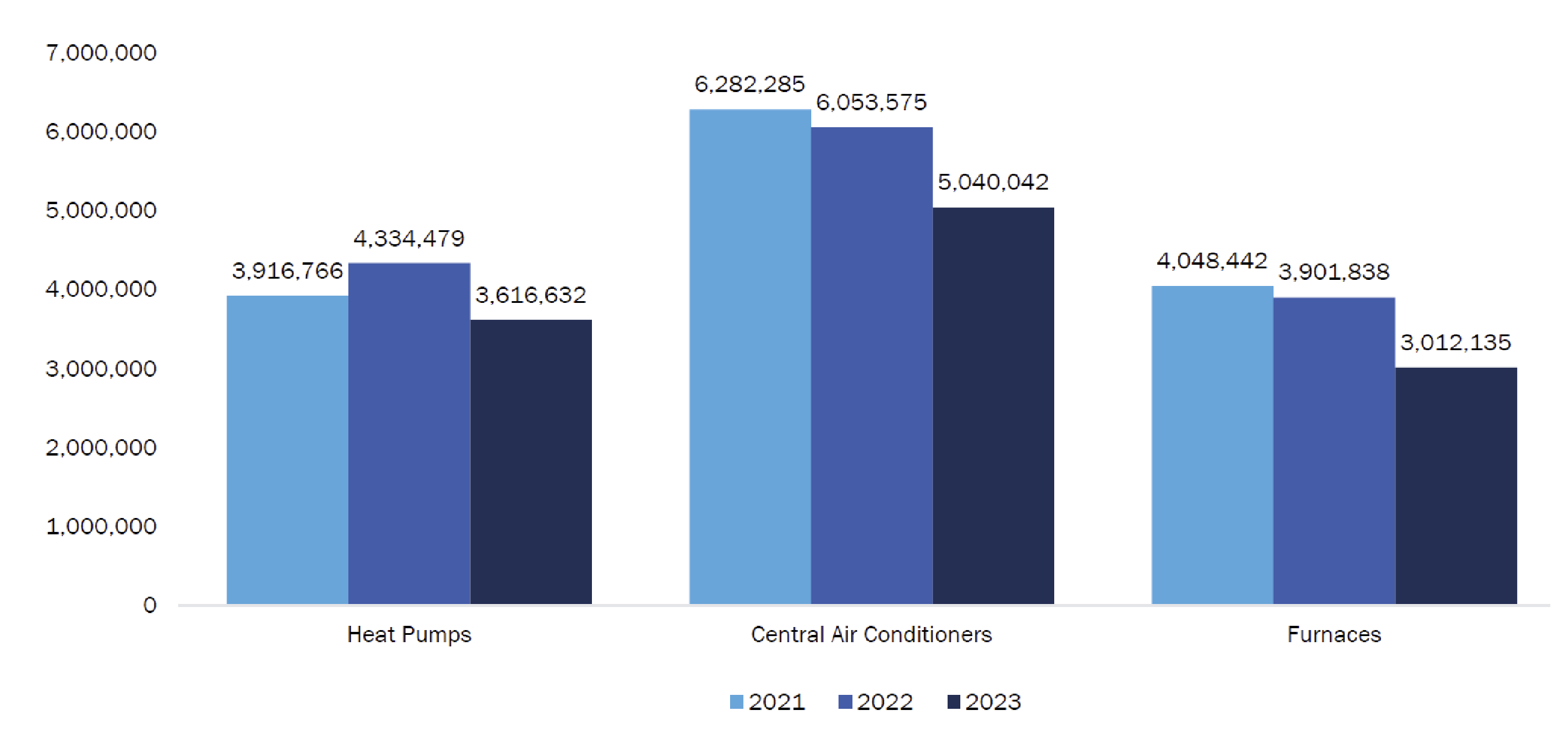
According to AHRI, there were nearly 12.3 million residential air source heat pumps shipped nationwide in 2023. As displayed in Figure 5, there was a decrease in furnace, central air conditioner, and heat pump shipments between 2022 and 2023.[11] Furnace shipments exhibited the largest year-over-year decrease: a 23% drop. Heat pumps showed the smallest year-over-year change at a 16.7% decrease. Notably, heat pumps are the only equipment type for which annual shipments have not consistently decreased since 2021. The overall decrease in HVAC shipments suggests that fewer customers in the US replaced or installed HVAC equipment in 2023 compared to 2022, regardless of the equipment type.
[11] Fossil fuel furnaces are included in furnace shipment counts since distributor sales of electric furnaces are often sold just as the electric insert.
Figure 5. US HVAC Equipment Shipments
4.2 Current HVAC Systems
The following sections describe what primary heating and cooling equipment surveyed homeowners have installed.
4.2.1 Space Heating
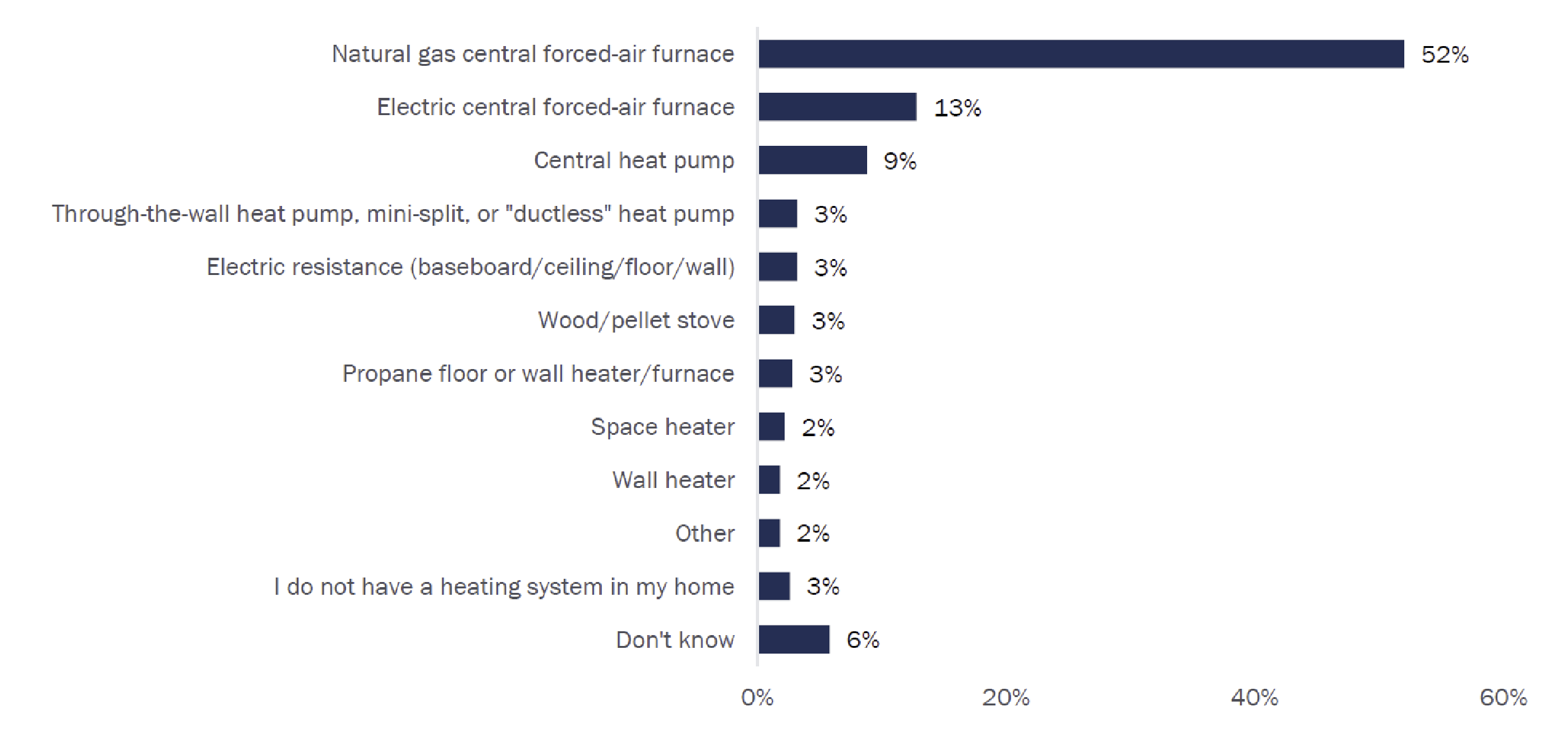
Over half of surveyed homeowners (260 of 500; 52%) use a natural gas central forced-air furnace as their primary heating system, by far the most common type of heating equipment (Figure 6). Only (60 of 500; 12%) of respondents use a heat pump as the main source of heating in their home. Notably, both the proportion of respondents who have a natural gas furnace and those who reportedly have a heat pump are the exact same observed at baseline.
Figure 6. Primary Heating System (n=500)
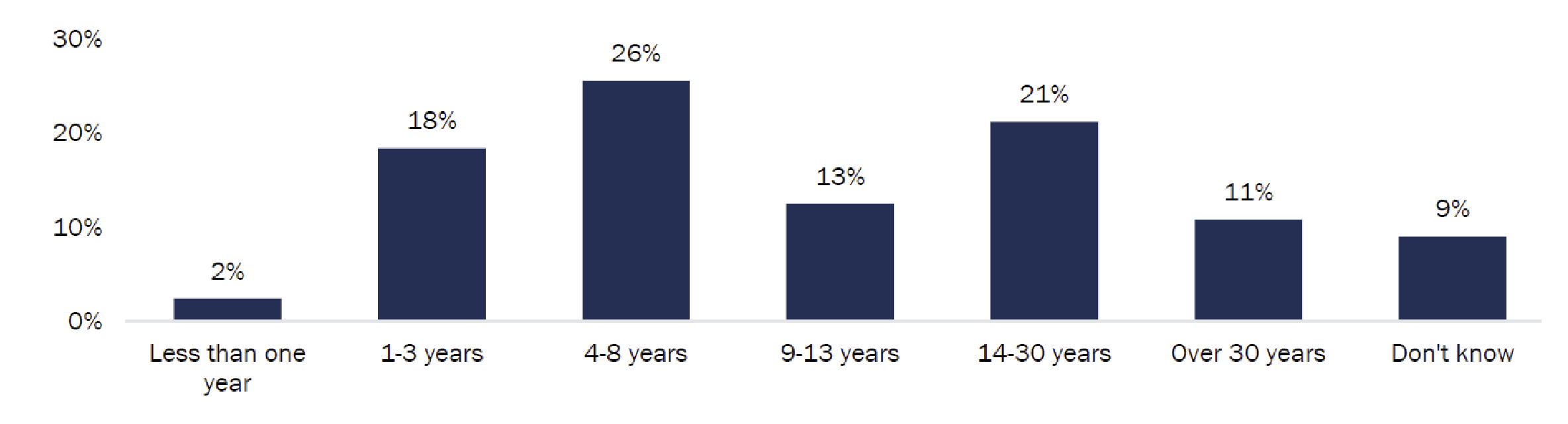
Nearly half (204 of 459; 45%) of surveyed homeowners’ primary heating systems are at least nine years old (Figure 7). One-fifth (95 of 459; 20%) of respondents had a fairly new heating system, reporting their equipment is less than four years old (same as baseline), while 11% (50 of 489) have a system that is more than 30 years old (4% increase since baseline). Overall, respondents’ heating equipment was newer compared to the baseline survey, with a six percent decrease in the proportion of systems that were nine years or older. Within DACs, the average age of survey homeowners’ primary heating system was 13 years, significantly older than systems in non-DACs where the average age was 11 years.[12]
[12] Statistically significant difference identified at p < .05.
Figure 7. Age of the Primary Heating System (n=459)
4.2.2 Cooling
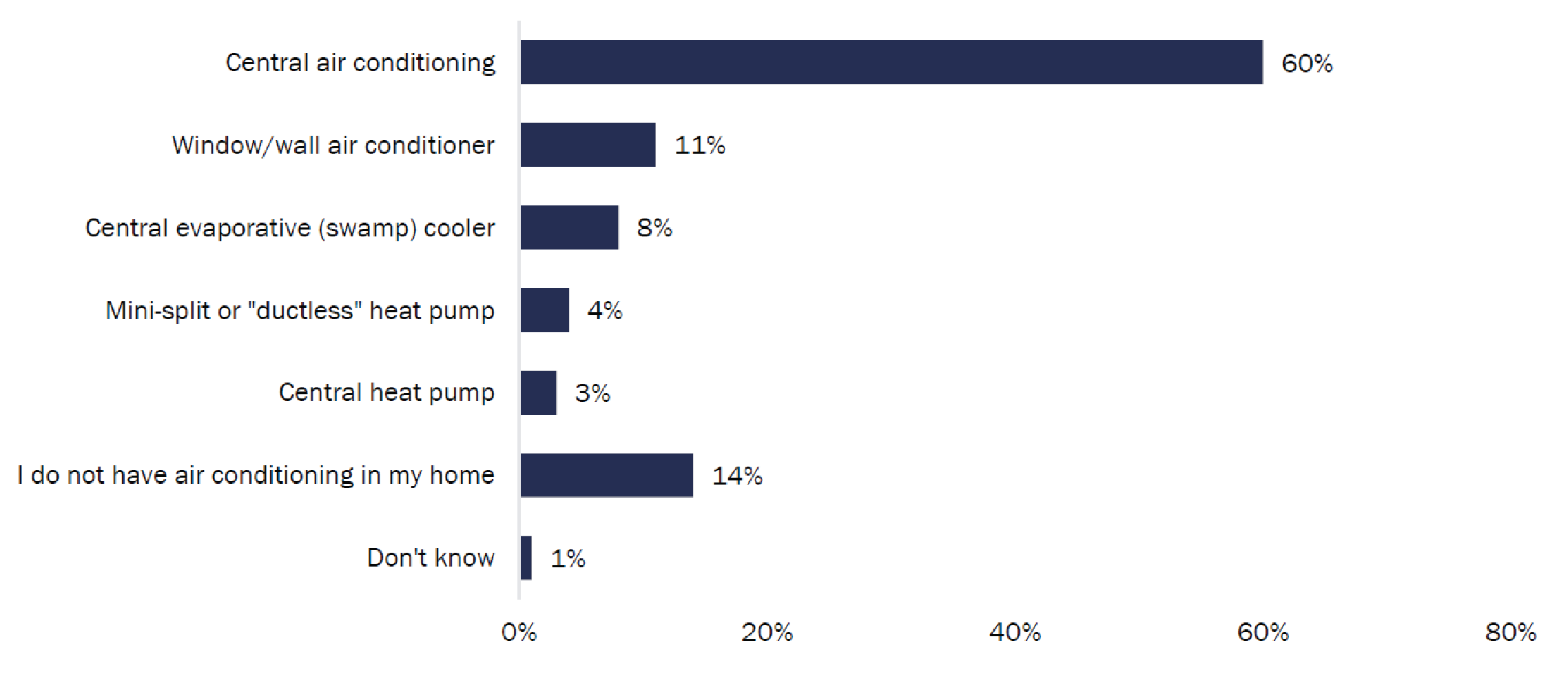
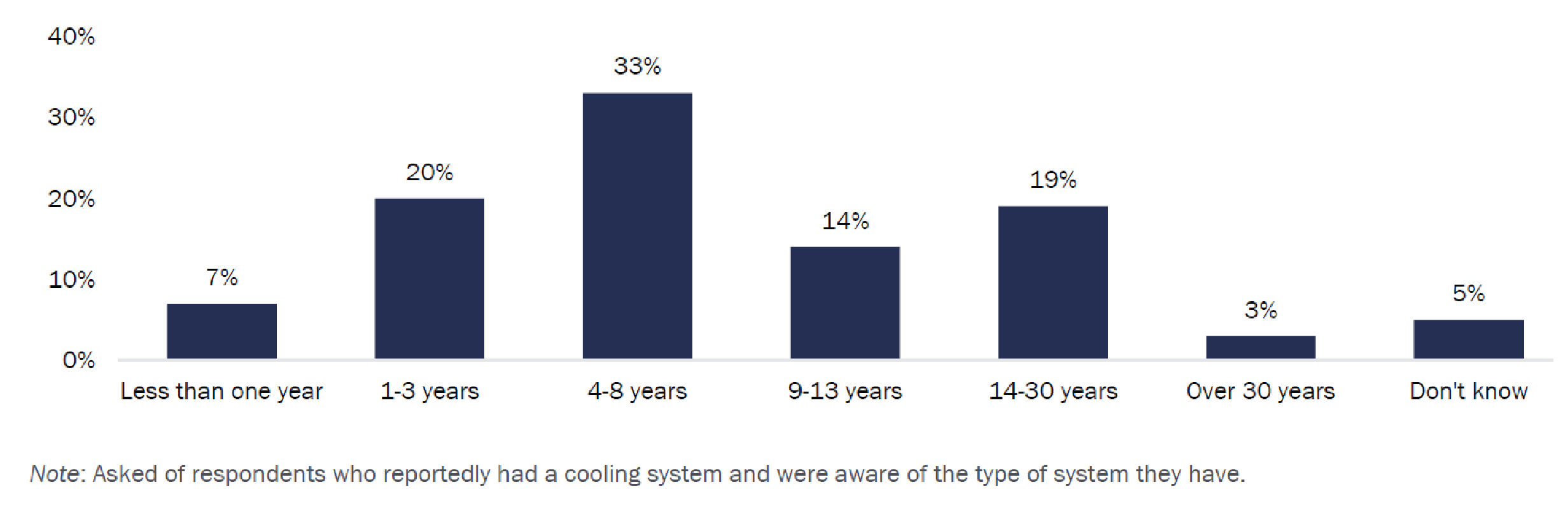
Central air conditioning was overwhelmingly the most common primary cooling system used by surveyed homeowners (Figure 8). A minority of respondents (32 of 500; 7%) said a heat pump, central or ductless, is the main cooling source in their home (five percent fewer than at baseline); slightly fewer than those who reported using a heat pump as their primary heating system. Additionally, 14% (69 of 500) reported they do not have air conditioning, four percent fewer than observed at baseline. The largest proportion of these respondents (30 of 69; 43%) receive their electric service through PG&E.
Figure 8. Primary Cooling System (n=500)
Three-fifths of respondents (257 of 429; 60%) primary cooling systems are less than nine years old (Figure 9). Moreover, over a quarter of surveyed homeowners (115 of 429; 27%) reported their cooling system is quite new, less than four years old (a four percent increase since baseline). Twenty-one percent (92 of 429) of respondents have older systems that were at least 14 years old, a two percent decrease from baseline. Primary cooling systems were, on average, significantly older in non-DACs (9 years) compared to those in DACs (7 years), respectively.
Key Finding
On average, homeowners who live in DACs have older heating systems, but newer cooling systems than homeowners in non-DACs.
Figure 9. Age of the Primary Cooling System (n=429)
4.3 Customer Awareness
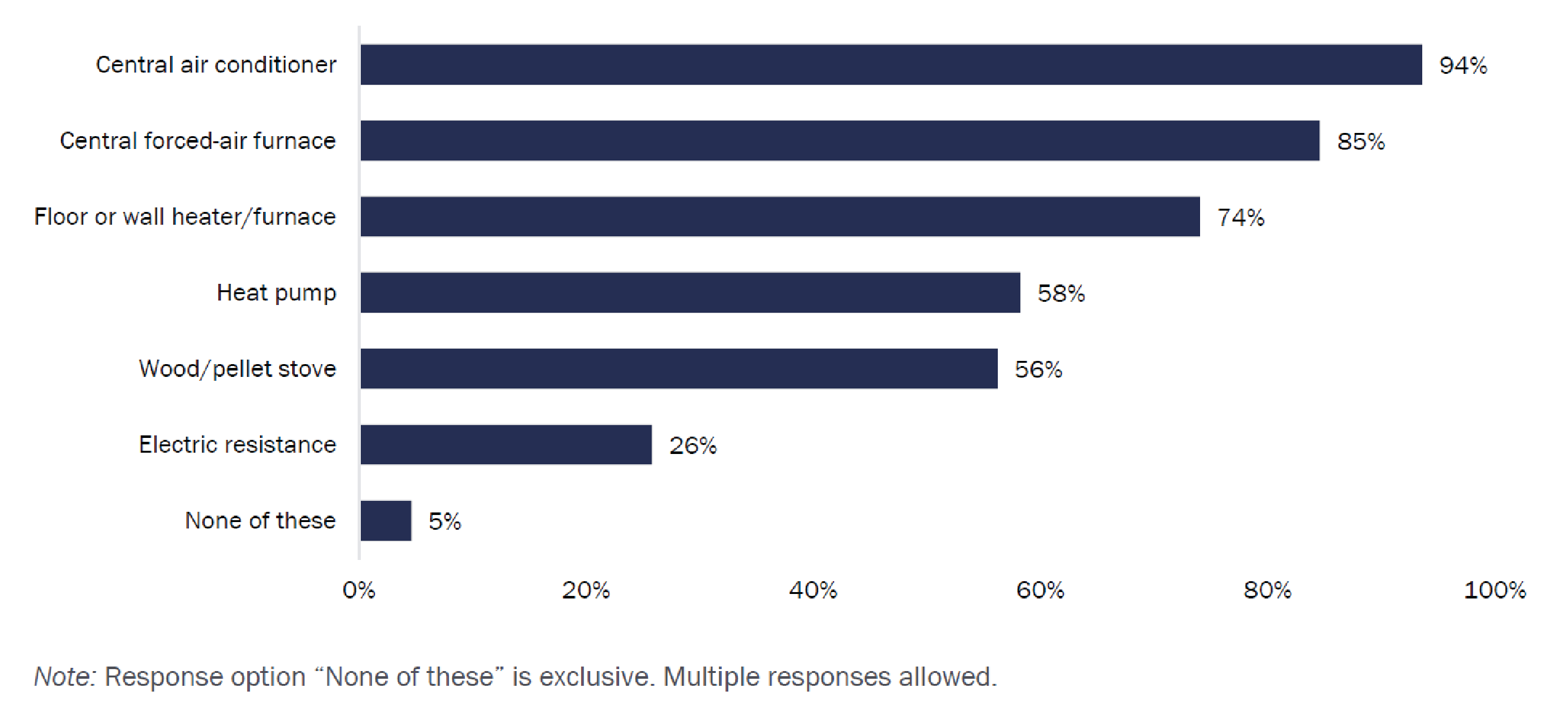
Surveyed homeowners’ awareness of HVAC heat pumps has increased since the baseline measurement in July of 2022. Nearly three-fifths of respondents (291 of 500; 58%) indicated they were aware of HVAC heat pumps in this survey conducted in July 2023 (Figure 10), representing a 9% increase. Respondents were most aware of central air conditioning (468 of 500; 94%) and forced-air furnaces (423 of 500; 85%), which is consistent with baseline measurements.
Figure 10. Awareness of Different Heating and Cooling Systems (n=500)
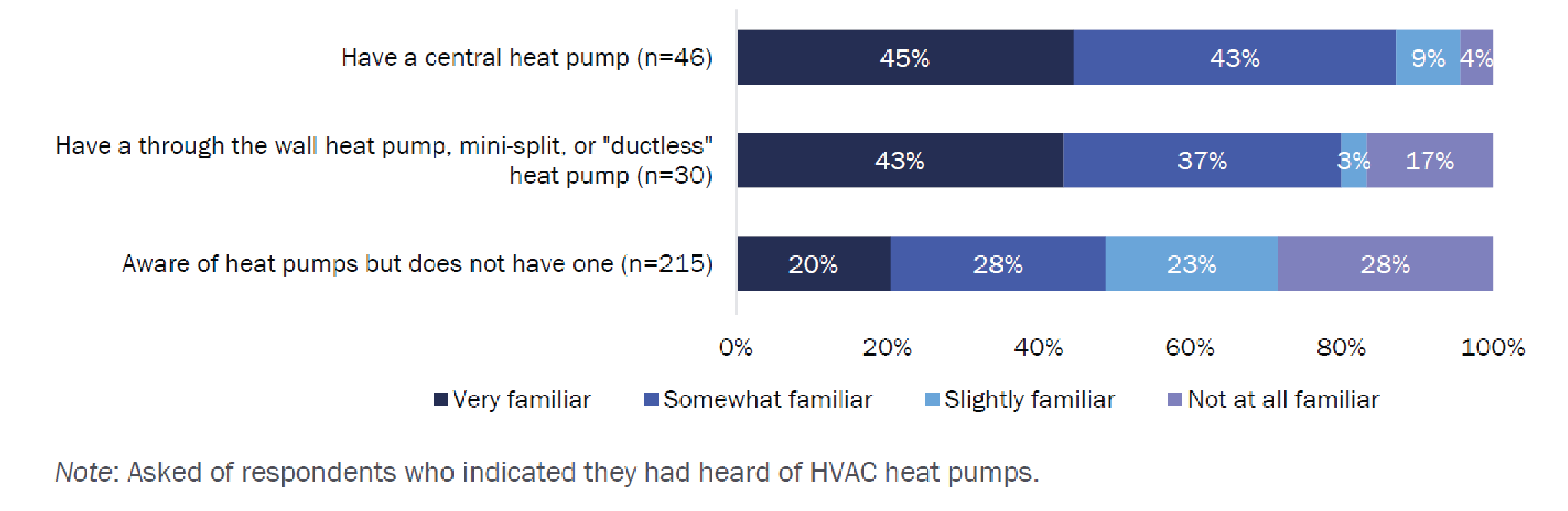
Among those who have heard of HVAC heat pumps, homeowners who have a central heat pump were most familiar with the equipment (Figure 11). Respondents who indicated they were aware of HVAC heat pumps but do not have one in their home were least familiar with the equipment, with less than half (105 of 215; 48%) very or somewhat familiar. Among those who had an HVAC heat pump in their home, respondents with a ductless system were four times as likely to be “not at all familiar” (5 of 30; 17%) with the equipment than those with a central heat pump (2 of 46; 4%). Familiarity with heat pumps, specifically the proportion who said they were very familiar, increased by seven percent in the last year among respondents who reportedly have a central heat pump, while familiarity for those with a ductless system increased by twice that (14%).
About a quarter of those who were aware of HVAC heat pumps (70 of 291; 24%) had heard of the equipment through word of mouth, while the second most common source of information was news articles (44 of 291; 15%), either on the internet or in a newspaper or magazine. More than a fifth (61 of 291; 21%) did not recall where they had heard about HVAC heat pumps.
Figure 11. Familiarity With HVAC Heat Pumps (n=291)
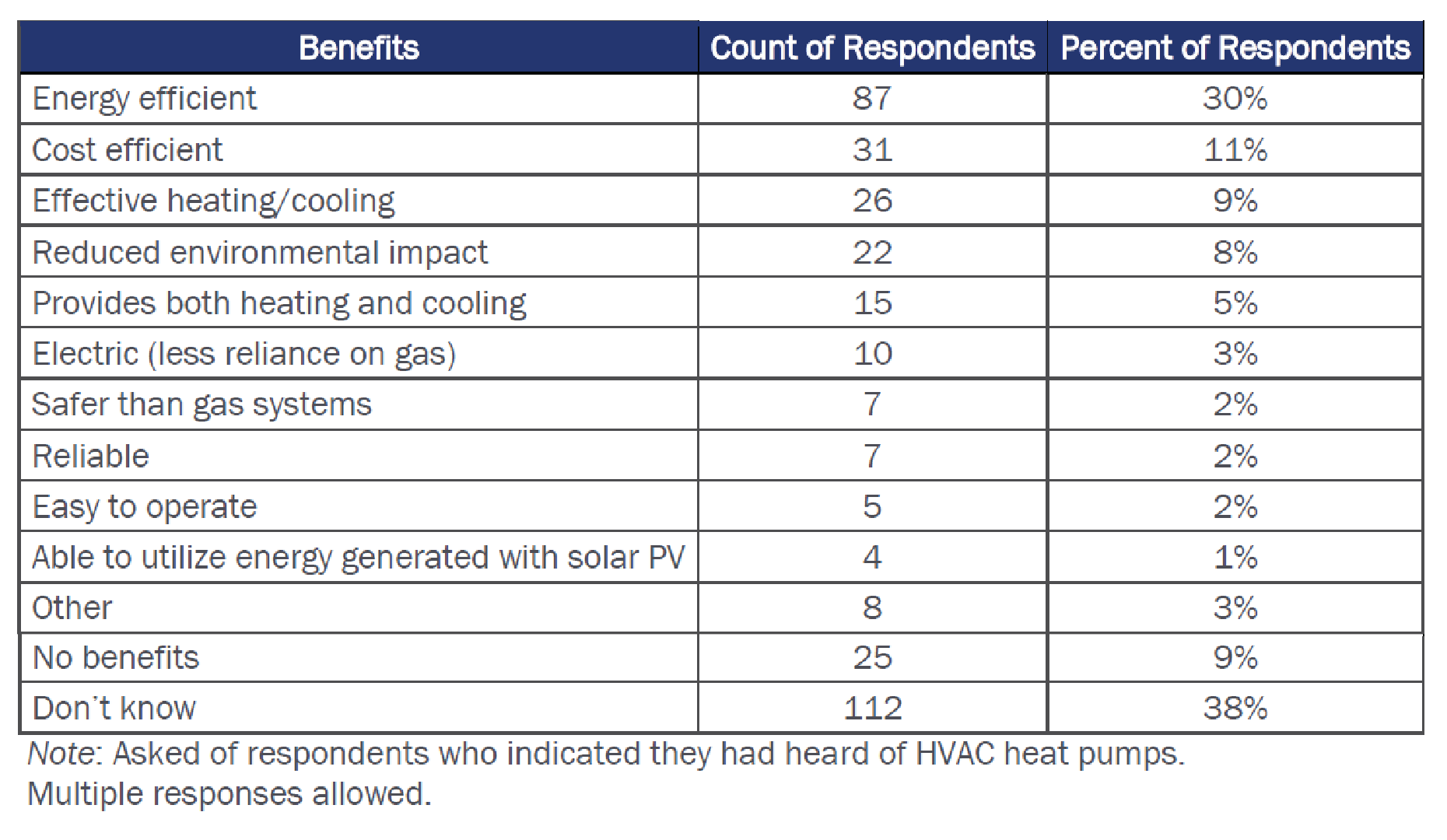
Although a large proportion of homeowner respondents did not know a lot about the benefits and drawbacks of HVAC heat pumps, we observed an improvement since the baseline survey. When we asked respondents to identify heat pump benefits in an open-ended, unaided question, 38% (112 of 291) said they did not know enough to even make a guess (Table 10), a decrease of 16% since baseline. In other words, the proportion of respondents who were able to identify at least one benefit of HVAC heat pumps increased by 16%, suggesting homeowner knowledge about heat pump equipment has improved in the last year.
Nearly a third (87 of 291; 30%) of survey homeowners believed heat pumps were more efficient (17% increase from baseline), while another 9% (31 of 291) reported they present no benefits (3% more than baseline). Below are some illustrative quotes from respondents, representing those three groups:
-
- Energy efficient: “Heat pumps can heat or cool a space with many different methods and varying effectiveness while using electricity more efficiently than resistive heat and central air.”
- No benefits: “No benefits…just really expensive to use.”
- Don’t know: “I have no idea as I don’t even know what they do.”
The following are the other heat pump benefits eight respondents mentioned: space efficient in home (3 responses), quiet (2 responses), require minimal upkeep (2 responses), easy to install (2 responses), and greater durability (1 response).
Table 10. Customers’ Perceived Benefits of Heat Pump Over Other HVAC Systems (n=291)
We also asked homeowners who were aware of heat pumps to select whether they agreed or disagreed with various statements about HVAC heat pumps. Figure 12 shows that for each statement, between 43% and 55% of respondents reported that they did not know, similar to that observed at baseline. The continued high rate of “don’t know” responses tell us that surveyed homeowners did not feel comfortable taking a side or even guessing an answer, thus demonstrating that despite being generally aware, many still do not understand the benefits and drawbacks of these systems.
Surveyed homeowners were most likely to agree that HVAC heat pumps use less energy than other electric heating and cooling options (140 of 291; 48%), are reliable systems (135 of 291; 46%) and offer better value than other systems (133 of 291; 46%). In contrast, respondents were most likely to disagree that heat pumps require less maintenance than other electric HVAC system options (49 of 291; 17%), suggesting this portion of respondents believe heat pumps require more upkeep than other electric heating and cooling systems.
Figure 12. Benefits and Drawbacks to HVAC Heat Pumps (n=291)
4.4 Customer Decision Drivers
For survey respondents who had replaced their heating or cooling system, we investigated what caused them to purchase new equipment, the factors that were important to them, their sources of information, and the reasons that led them to select their contractor.
Slightly more than half of respondents (261 of 500; 52%) either replaced their heating/cooling system or had a new one installed in their home, just three percent more than at baseline. Of these respondents, over two-thirds (181 of 261; 69%), the same proportion observed at baseline, said their prior equipment was not functioning properly (37%) or failed completely (32%) (Figure 13). A minority of respondents installed their new equipment for reasons outside of the existing system’s functionality, such as the desire to have newer technology (24 of 261; 9%), a desire to be more sustainable (12 of 261; 5%), or that the switch simply made sense financially (10 of 261; 4%).
Figure 13. Main Reason for Replacing Heating/Cooling Equipment (n=261)
The most common way respondents (137 of 258; 53%) found their contractor was through a personal referral or prior experience with them or their company (Figure 14). Nearly a third (29%) of surveyed homeowners found their contractor online, either through a general web-search such as Google or Yelp, their utility’s website, or by using The Switch is On “Find a Contractor” tool. Other ways respondents reported finding their contractor included through the yellow pages, a utility program, TV advertisement, referral from existing contractor, their insurance company, home warranty company, or an ad in local newspaper.
Figure 14. How Customers Found Contractor Who Installed Heating/Cooling Equipment (n=258)
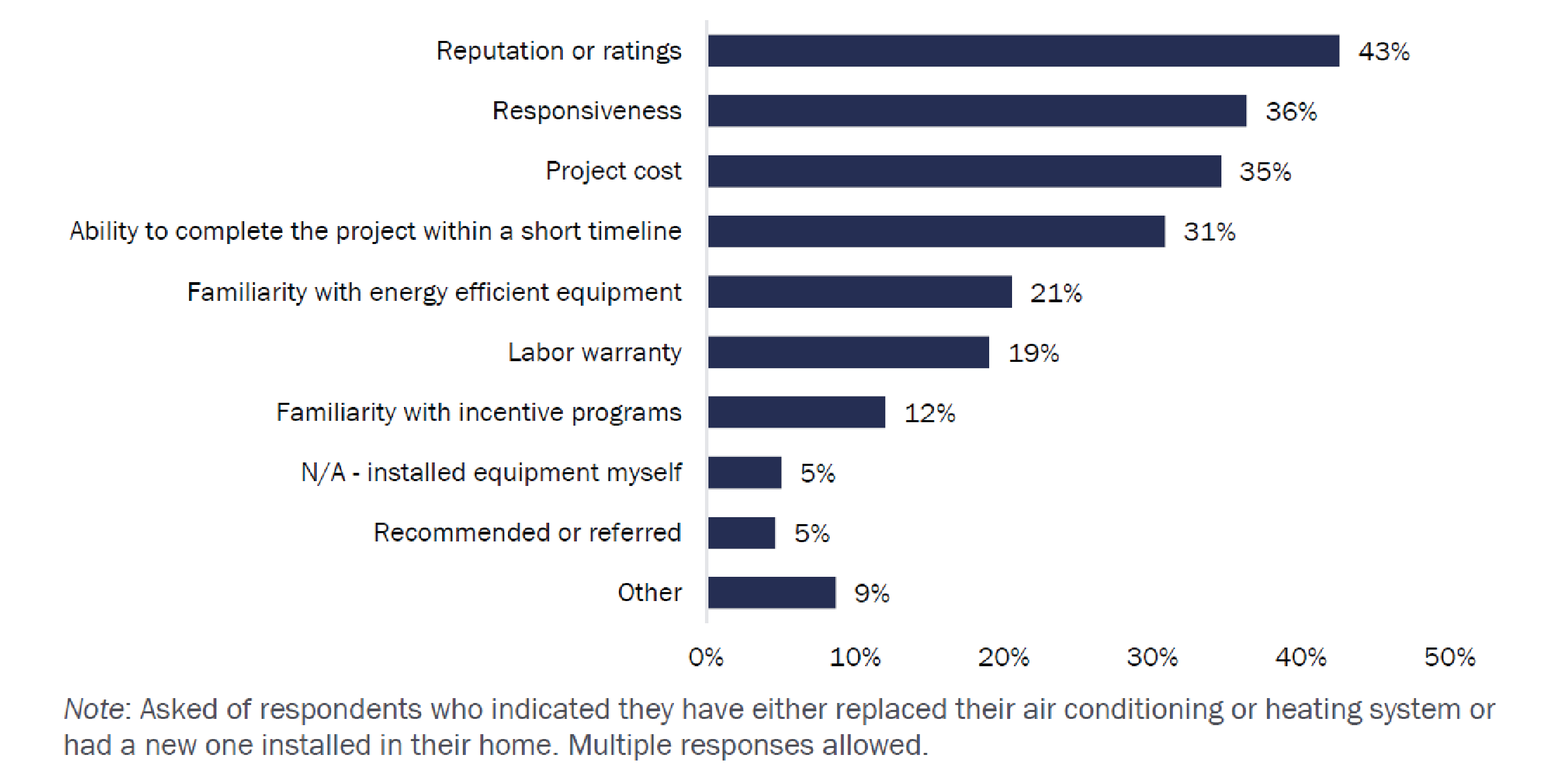
A contractor’s reputation or customer ratings were the most common reason surveyed homeowners selected them to install their HVAC equipment (Figure 15). Other common reasons respondents reported for hiring their contractor included the contractor’s responsiveness (95 of 258; 36%), project cost (90 of 258; 35%), and their ability to complete the project quickly (80 of 258; 31%). Only about a fifth of respondents (53 of 258; 21%) chose their contractor because of their familiarity with energy efficient equipment, while even fewer (31 of 258; 12%) said their choice was based on the contractor’s familiarity with incentive programs. A small proportion of respondents (13 of 258; 5%) installed the equipment themselves rather than hiring a contractor, a couple of which noted the cooling equipment they installed was either a portable or window air conditioner.
Figure 15. Reason For Choosing Contractor Who Installed Heating/Cooling Equipment (n=258)
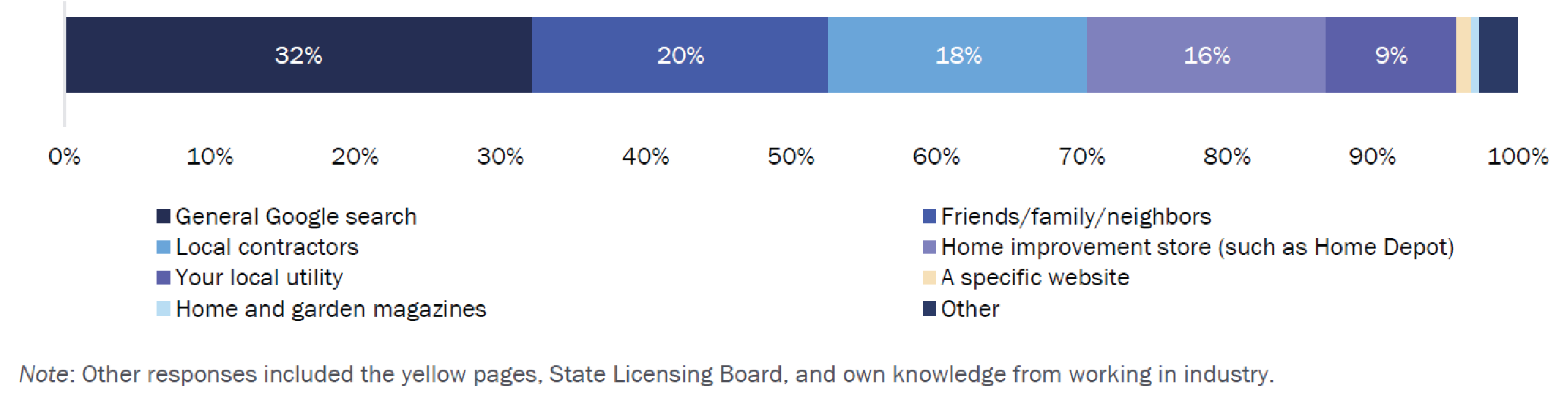
If they were to consider upgrading their space heating or cooling system, surveyed homeowners were more likely to begin looking for information through their own online research and personal relationships rather than through industry professionals. Just over half (263 of 500; 53%) of respondents shared they would first do a general google search (32%) or converse with friends, family, or neighbors (20%) if they wanted to upgrade the heating or cooling system in their home, while approximately two-fifths (216 of 500; 43%) would initially turn to an industry professional like a local contractor (18%), home improvement store (16%), or their utility (9%) (Figure 16). Those who said they would visit a specific website (7 of 500; 1%) provided the following sites they would visit: Yelp, NextDoor, GPN, Angi, and consumer reports.
Figure 16. Where Customers Would Begin Looking for Heating/Cooling System Information (n=500)
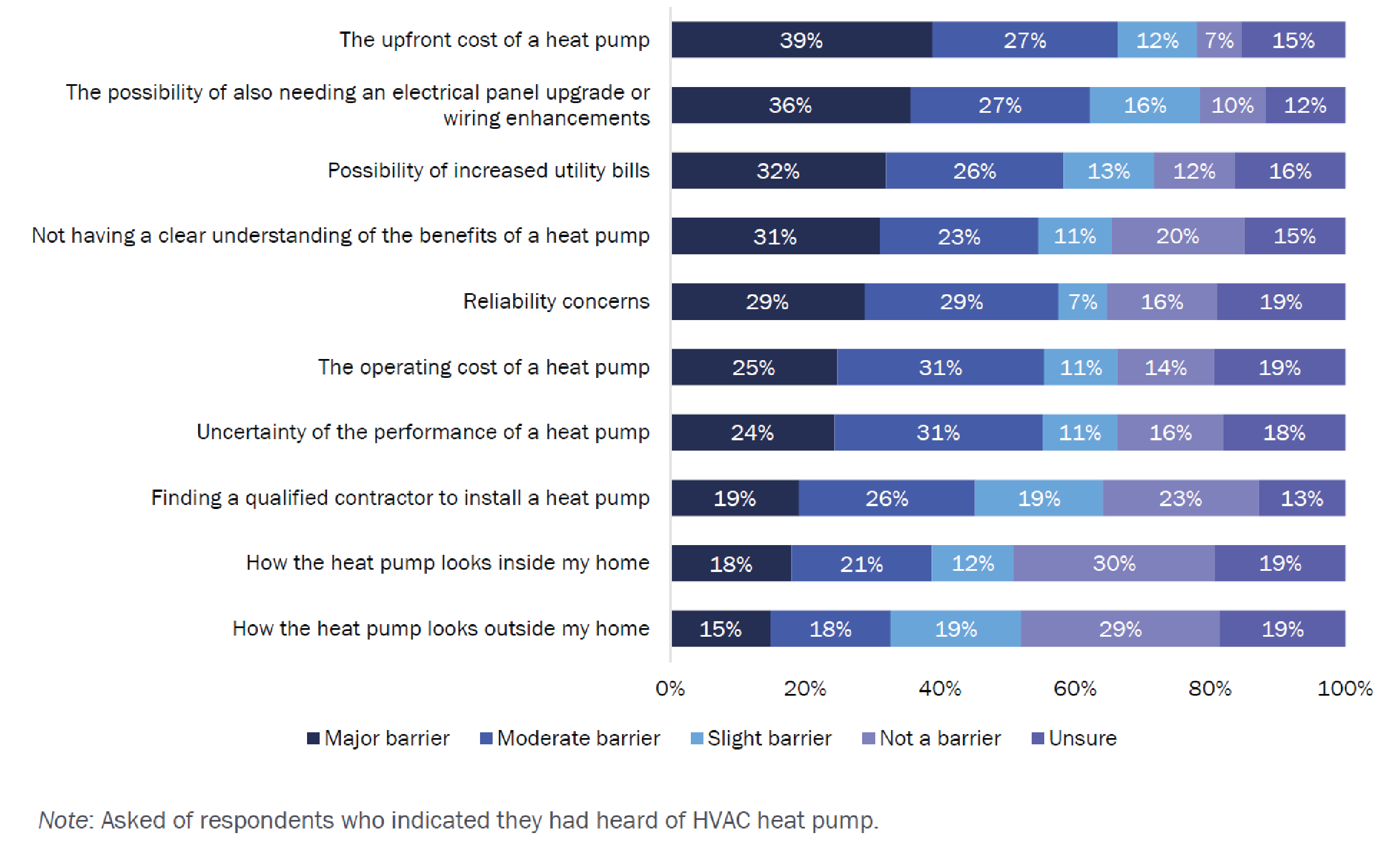
The upfront equipment costs and the possibility of required additional home upgrades were the primary barriers for surveyed homeowners to purchase an HVAC heat pump. Similar to baseline, respondents most commonly cited the upfront cost of equipment, the possibility of needing an electrical panel upgrade or wiring remediation, and the possibility of increased utility bills as the top barriers for them if they were to consider purchasing a heat pump (Figure 17). Surveyed homeowners were least concerned about the look of the heat pump, both inside and outside of their home, and their ability to find a qualified contractor to install the equipment (same as observed at baseline).
Figure 17. Barriers to Purchasing HVAC Heat Pumps (n=292)
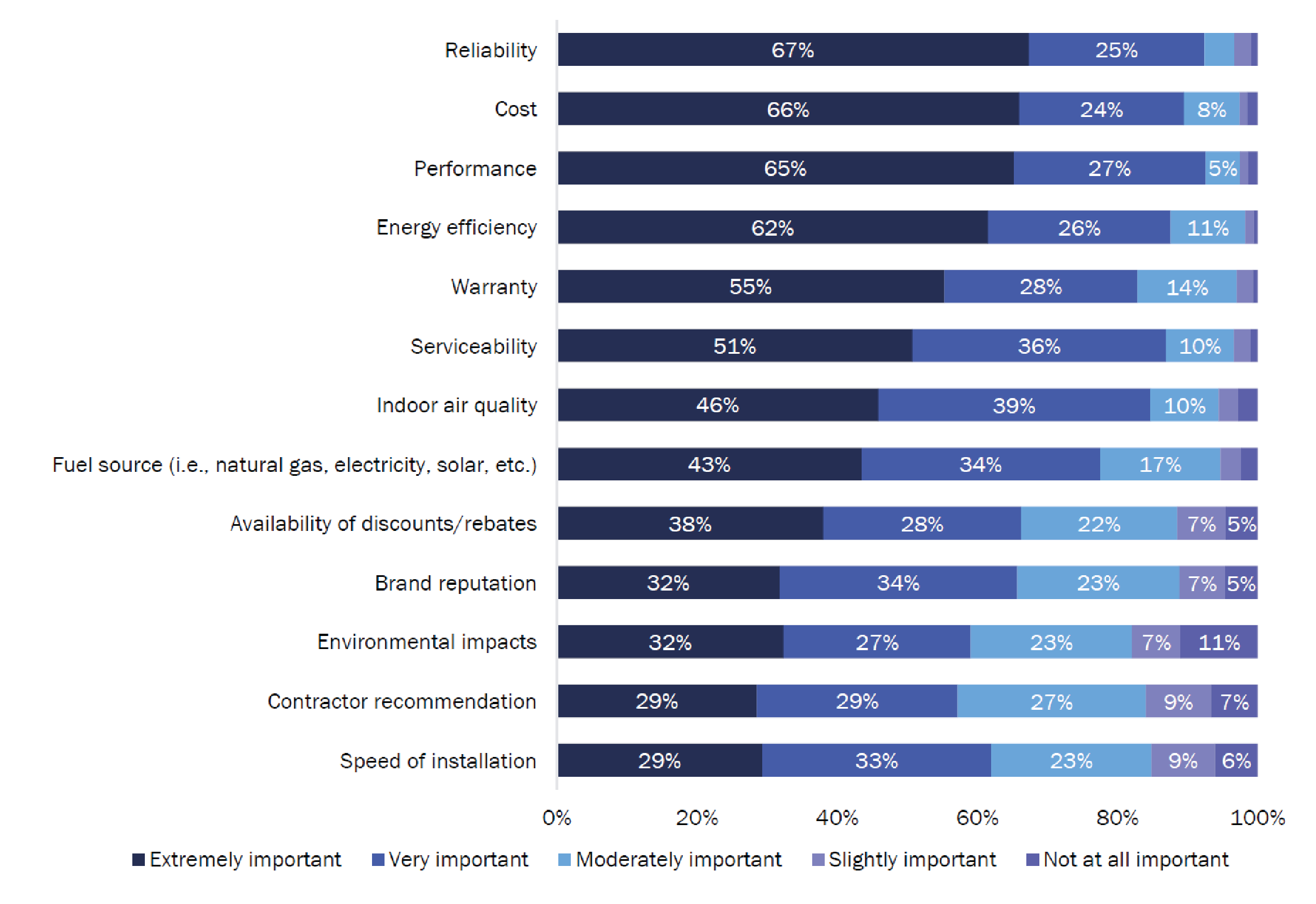
Like we observed at baseline, surveyed homeowners rated equipment reliability, cost, and performance were rated as the most important factors in their purchasing decision if they were to replace their HVAC equipment (Figure 18). Energy efficiency was also rated as a highly important factor for respondents when considering purchasing new HVAC equipment, while environmental impacts were among the least important factors. This suggests that although energy-efficient equipment is likely to have a smaller impact on the environment by decreasing energy use and thus producing fewer emissions, respondents were more focused on the potential monetary savings that may result from higher efficiency. Looking across communities, respondents in DACs were significantly more likely to rate cost as an extremely important factor (238 of 331; 72%) if they were to replace their heating/cooling equipment than non-DAC homeowners (92 of 170; 54%).[13]
[13] Statistically significant difference identified at p < .05.
Figure 18. Importance of Factors When Replacing Heating and Cooling Equipment (n=500)
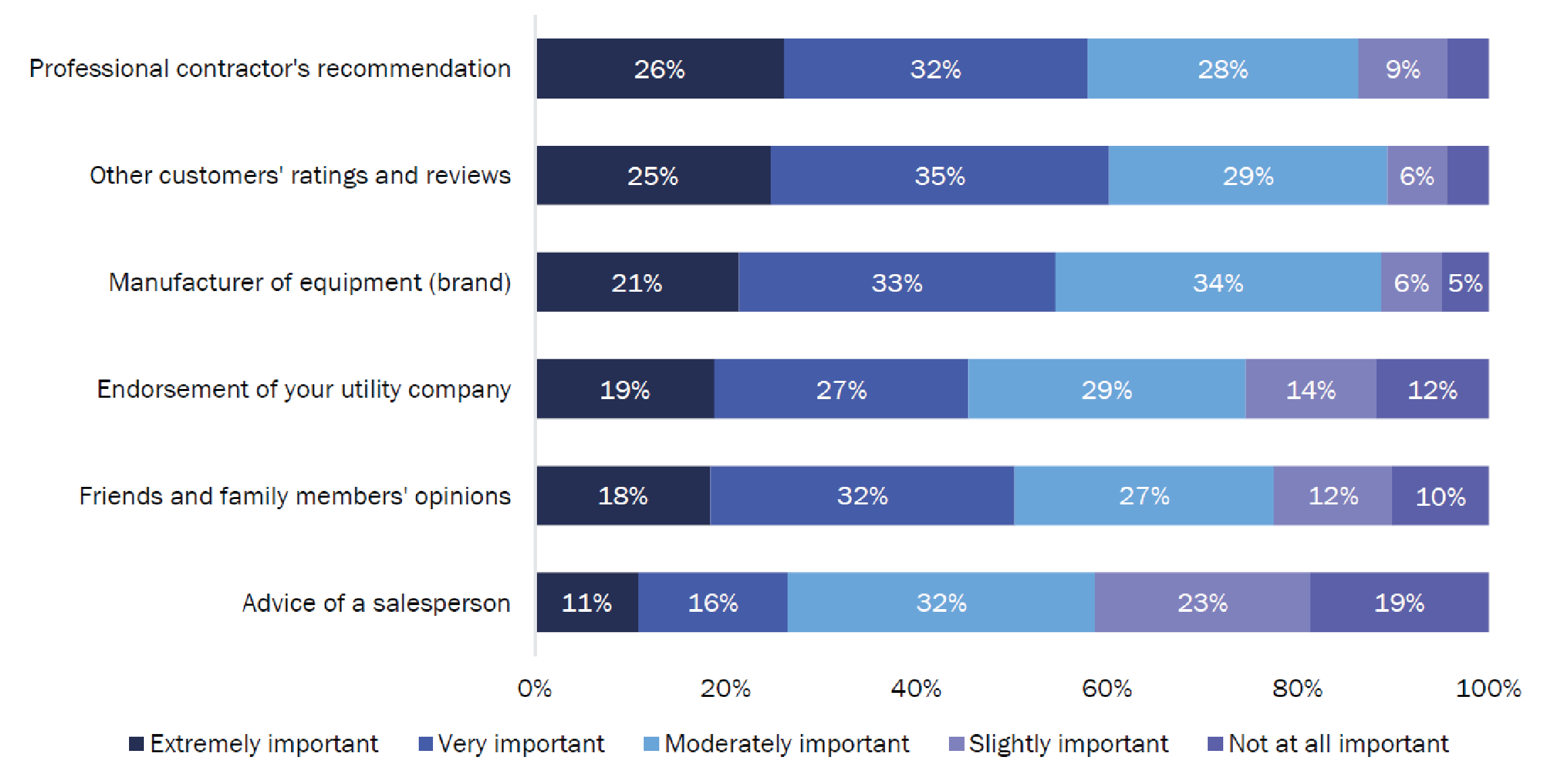
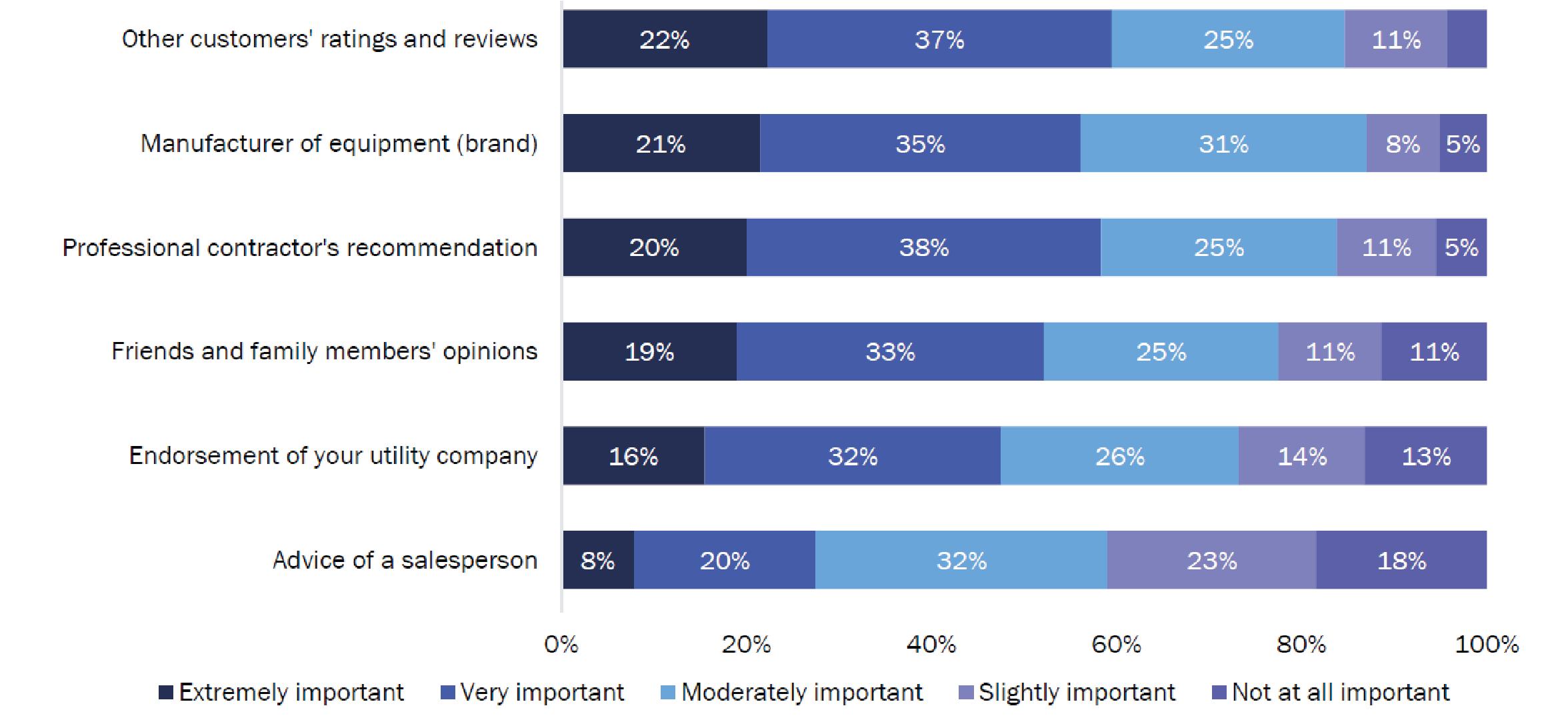
A recommendation from a professional contractor and other customers’ reviews were rated as the most influential sources to surveyed homeowners when considering purchasing a new heating system (Figure 19). We asked respondents how important a variety of sources would be in influencing their decision about a new primary heating system. Same as observed at baseline, more than half of respondents rated a professional contractor’s recommendation, other customers’ ratings and reviews, and the equipment manufacturer as extremely or very important in influencing their decision. Similarly, advice from a salesperson was again ranked as the least important source, with only about a quarter (27%, one percent increase from baseline) rating it extremely or very important, and a much larger proportion (42%, same as baseline) sharing it was slightly or not at all important to them. Non-DAC respondents were significantly more likely to rate an endorsement from their utility provider as not at all important (27 of 169; 16%) in their decision compared to those who live in a DAC (32 of 331; 10%).[14]
[14] Statistically significant difference identified at p < .05.
Figure 19. Influential Sources When Considering a New Primary Heating System (n=500)
We also asked respondents how important the same sources would be in influencing their decision to purchase a new cooling system. Again, we found other customers’ equipment reviews, the equipment manufacturer, and a recommendation from a professional contractor to be the most important sources of information to surveyed homeowners (Figure 20). Although we found reviews and ratings from other customers to be a top influential source overall, non-DAC respondents were significantly more likely to rate other customers’ reviews as not at all important in their decision compared to DAC respondents. Similar to heating equipment and baseline observations, the advice of a salesperson was rated as the least important source of information in influencing respondents’ decision when considering a new cooling system.
Figure 20. Influential Sources When Considering a New Primary Cooling System (n=500)
4.5 Incentive and Tax Credit Awareness
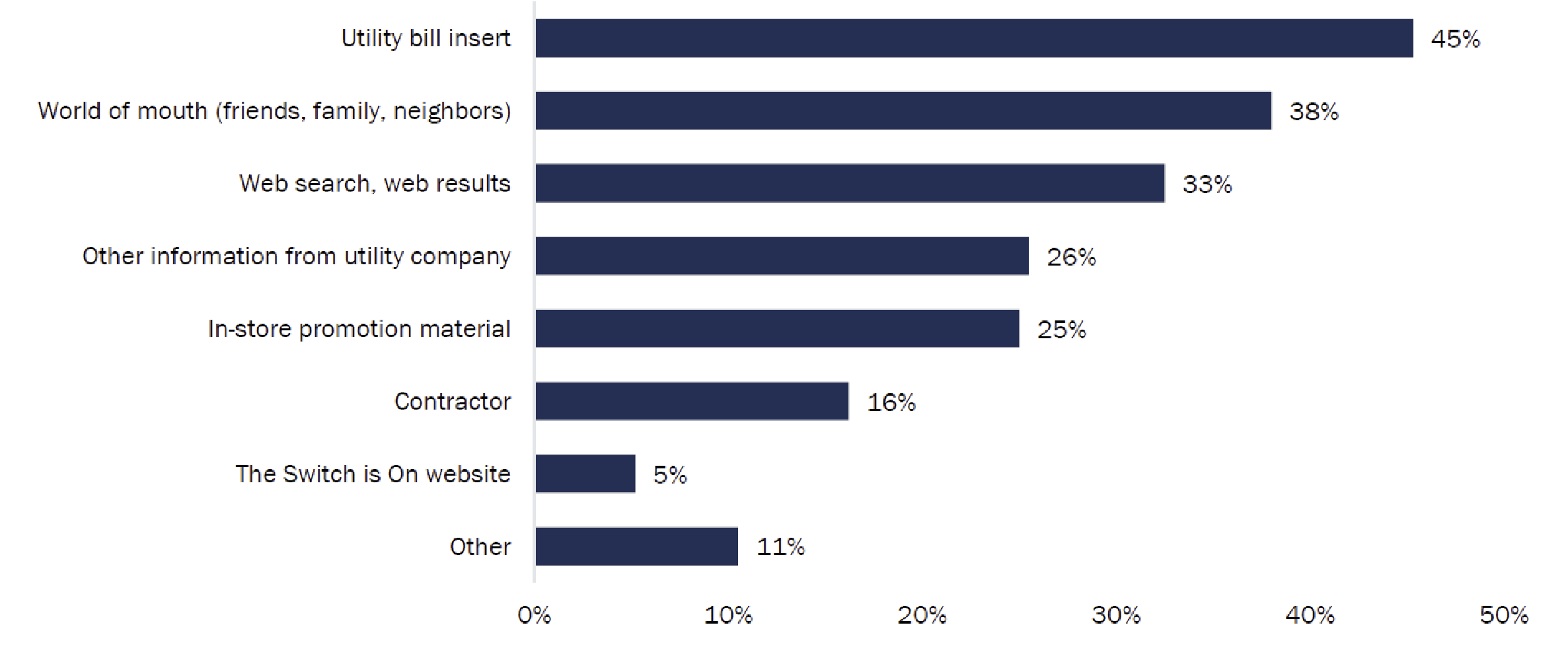
Among homeowners who were aware of HVAC heat pumps, half of them (144 of 291; 49%) were also aware that some organizations offer financial incentives for installing an HVAC heat pump; an increase of 10% from baseline. Nearly half (65 of 144; 45%) of those who knew of incentives heard about them from utility bill inserts (11% increase from baseline), while around one-third said they had heard about incentives through word of mouth (55 of 144; 38%, a 12% increase from baseline) or through a web search (47 of 144; 33%, a 4% decrease from baseline) (Figure 21).
Figure 21. Where Homeowners Heard About Financial Incentives for Installing HVAC Heat Pump (n=144)
We also asked homeowners who were aware of HVAC heat pumps if they knew they may be eligible for up to a $2,000 tax credit from the federal government for purchasing a heat pump for space heating/cooling. Just over one-quarter of these respondents were aware of their eligibility.
Figure 22. Surveyed Homeowners’ Awareness of HVAC Heat Pump Incentives and Tax Credits
4.6 Labor market
4.6.1 Availability of Qualified Trade Allies
The CSLB, under the Department of Consumer Affairs, protects California consumers by licensing and regulating the state’s construction industry. The CSLB was established in 1929 and today licenses about 290,000 contractors in 44 different licensing classifications. All businesses or individuals who construct or alter any building, highway, road, parking facility railroad, excavation, or other structure in California must be licensed by the CSLB if the total cost (labor and materials) of one or more contracts on the project is $500 or more. Licenses are issued to individuals, partnerships, corporations, joint ventures, and limited liability companies (LLCs). Each license requires a “qualifying individual” who must undergo a background check and meet experience and exam requirements. In addition, the licensee must submit documentation to prove they meet insurance and bond requirements. CSLB licenses are separated into three classifications: Class A (General Engineering Contractor), Class B (General Building Contractor), and Class C (Specialty Contractor). Within the Class C license classification, there are 42 Class C licenses for work that requires specialized skills. Installing HVAC heat pumps requires specific knowledge and licenses. See Appendix A for a description of licenses. This section presents findings about the workforce who installs HVAC heat pumps.
According to the US Energy and Employment Report 2023, the number of clean energy jobs increased from 2021-2022 by 3.6% in California, resulting in 13,116 more clean energy jobs.[15]
In 2023, there were 136,225 licensed contractors in California that held at least one of the CSLB specialty licenses necessary to replace a gas appliance with a heat pump. This is a decrease of 2,755 licensed contractors compared to 2021 data. The licenses potentially needed for the replacement of gas appliances with electric appliances include a B-General Building Contractor license, a C-20 HVAC license, a C-36 Plumbing license, a D-34 Prefabricated Equipment license, and a C-10 Electrical License. As observed in the baseline assessment, contractors with Class B licenses continue to outnumber the other licenses. Additionally, licensed contractors with a business address outside of DACs outnumbered contractors with a business address inside of DACs (Table 11).[16]
[15] https://www.energy.gov/policy/2023-us-energy-employment-jobs-report-useer
[16] The definition of a DAC is a census tract within the top 25% of census tracts most burdened by pollution per the CalEnviroScreen 4.0 scoring tool.
Table 11. Count of Licensed Contractors by DAC Classification
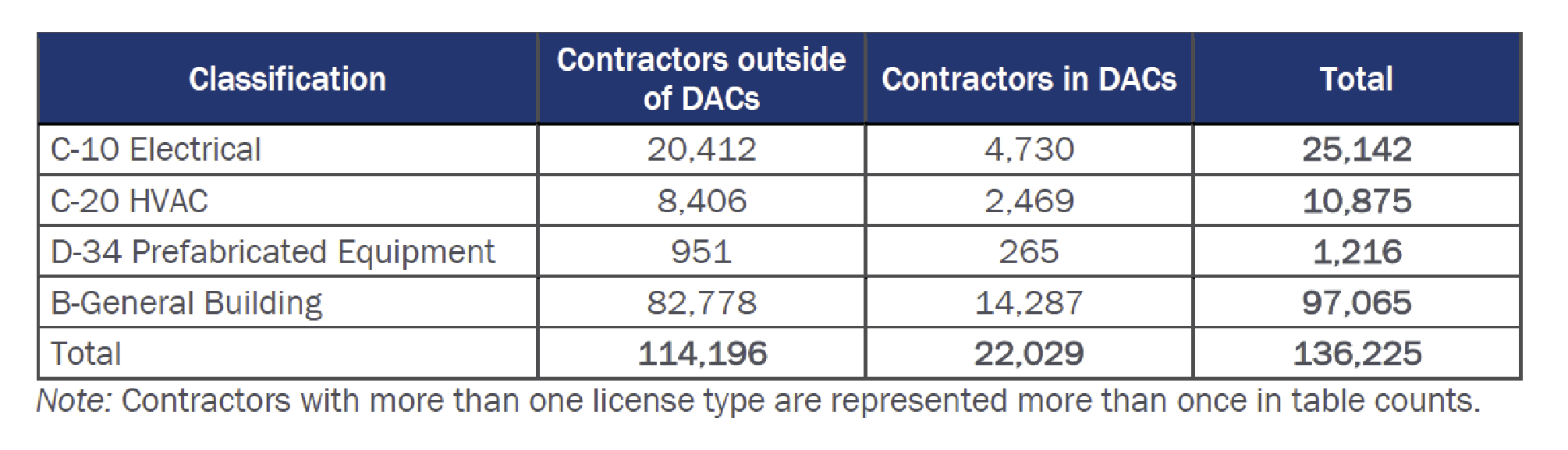
Climate zone 9 near Los Angeles had the most contractors with at least one of the licenses in Table 11 at 22,727 contractors, followed by climate zone 12 in the Central Valley which had 17,391 licensed contractors. Climate zone 1 had the fewest (1,157). The number of licensed contractors by climate zone can be found in 0
4.6.2 Contractor Heat Pump Experience
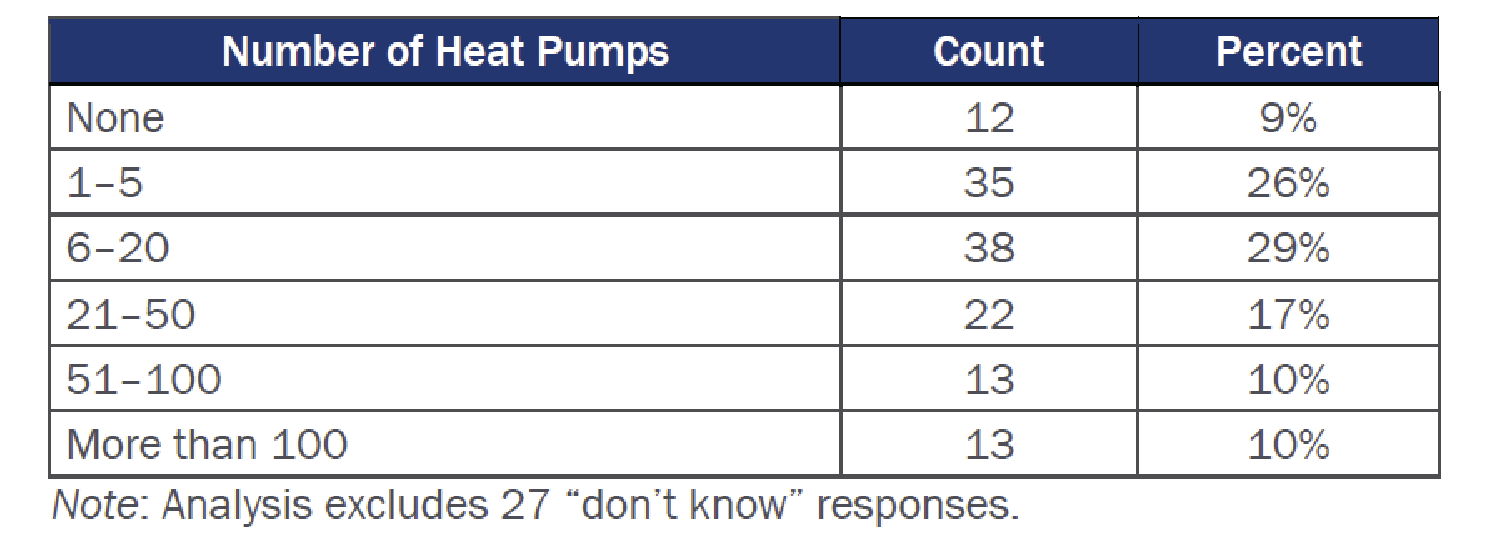
Contractors sold fewer HVAC heat pumps in the past year compared to annual sales reported at baseline. Most HVAC contractors’ (85 of 133; 64%) firms sold 20 or fewer heat pumps in the past year, a 10% increase compared to baseline. Additionally, more than one-third of respondents sold fewer than five HVAC heat pumps in the past 12 months (Table 12). In contrast, a fifth of respondents’ firms (26 of 133; 20%) sold 50 or more heat pumps in the past year. Compared to baseline, we see more firms reporting small numbers of heat pump sales and fewer firms reporting bigger numbers of heat pump sales.[17] Yet, on average, respondents reported that 42% of jobs completed by their company in the last year involved heat pumps (n=152), which was a 6% increase from baseline.[18] According to these findings, contractors have sold fewer heat pumps in the past year, although heat pump sales represented a greater proportion of contractor sales than observed at baseline; this suggests contactors’ total sales (i.e., heat pumps and non-heat pump equipment) were lower over the past year than reported at baseline. In interviews we conducted with TECH contractors about their sales in 2023, contractors indicated the milder weather conditions in 2023, particularly over the summer months, prevented them from seeing the normal seasonal uptick in HVAC replacements. Furthermore, AHRI data indicated a decrease in residential HVAC heat pump shipments at the national level in 2023, suggesting fewer customers purchased a heat pump than in 2022.
[17] Those reporting selling 50 or more heat pumps in the last year decreased by 3%, and those reporting selling 20 or fewer heat pumps in the past year increased by 10% since baseline.
[18] Eight “don’t know” responses excluded from average.
Table 12. Number of HVAC Heat Pumps Sold by Firms in Past Year (n=133)
Contractors seem to be installing HVAC heat pumps with Time-of-Use controls more often. Approximately half of HVAC contractors whose firm sold at least one heat pump last year (57 of 121; 47%) said that at least 50% of their heat pump sales included Time-of-Use controls, a 21% increase since baseline. A minority of contractors (20 of 121; 17%) reported none of their sales included these controls. Enrollment in demand response programs was less common, with fewer than 10% of respondents’ customers enrolling in a demand response program at the time of their heat pump purchase.
The median and average length of time needed to complete an HVAC heat pump installation was similar to the baseline, at two days. Although the majority of responses ranged from one to five days to complete an installation, two respondents reported the average length of time their firm needed was 10 days. Both of these two respondents work for firms that serve large, multifamily properties and are comprised of only two to four employees; the combination of more complex projects at large properties and limited staff likely contributed to the longer timeline.
Like observed at baseline, surveyed HVAC contractors had more experience with heat pump installations for single-family and smaller, in-unit multifamily properties than with centralized heat pump systems for larger multifamily properties. Nearly all respondents (54 of 59; 92%) said their company has experience installing HVAC heat pumps for single-family residential, low-rise multifamily, and in-unit multifamily properties (6% decrease from baseline). In contrast, fewer than half (27 of 59; 46%) reported their company has experience with HVAC heat pump installations in large, centralized systems like those existing in high-rise multifamily buildings (4% increase from baseline).[19]
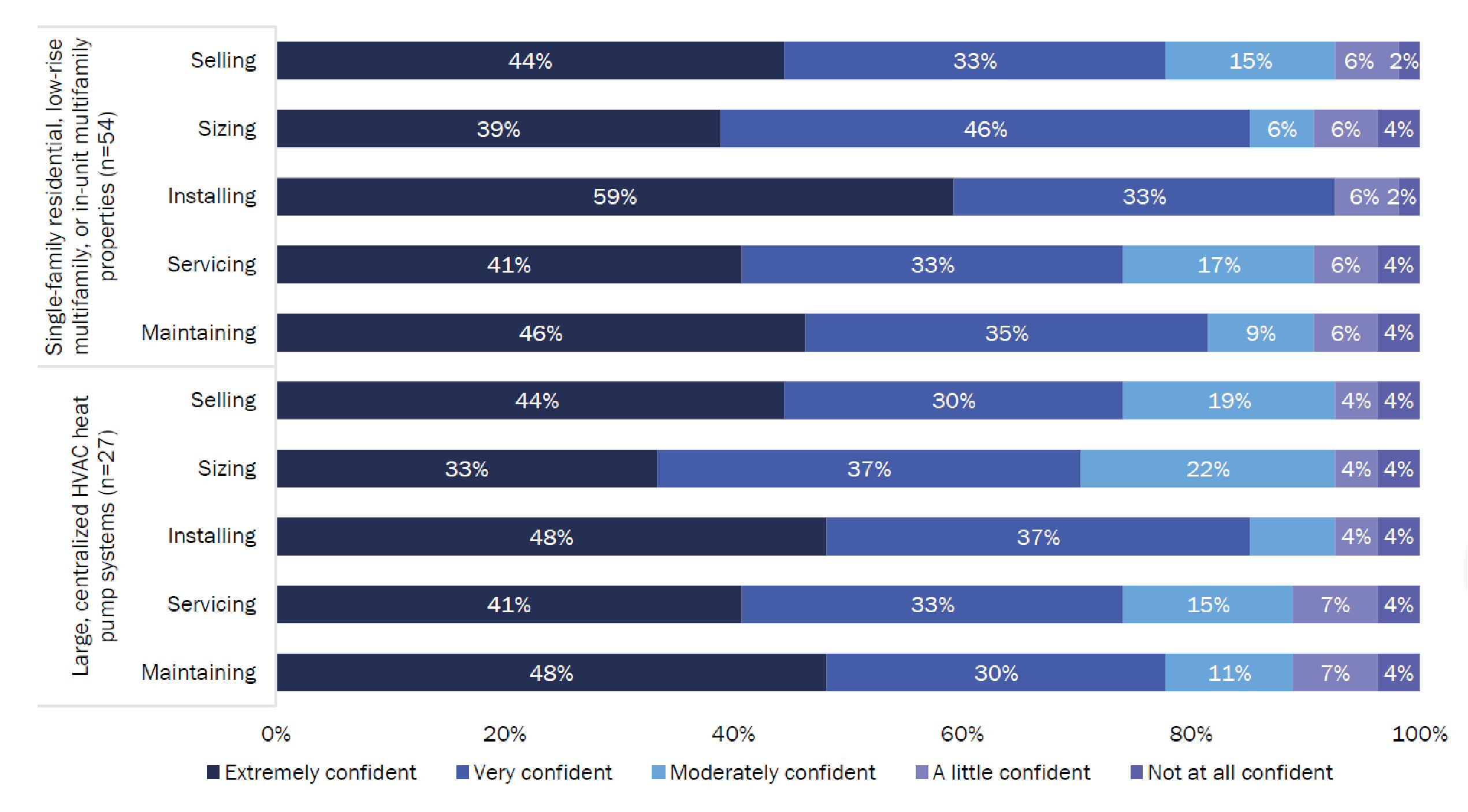
Unsurprisingly, surveyed contractors were more confident in their ability to install HVAC heat pumps in single-family residential, low-rise multifamily, or in-unit multifamily properties compared to large, centralized system installations in high-rise multifamily buildings. While contractors reported similar levels of confidence selling, servicing, and maintaining HVAC heat pump equipment in single-family homes and high-rise multifamily buildings, they were more confident in their ability to install them in single-family homes than in high-rise multifamily buildings (Figure 23). Regardless of property type, contractors were least confident in their ability to size and service HVAC heat pumps. Other than installing HVAC heat pumps in single-family homes, fewer than half of contractors were extremely confident in selling, sizing, servicing, and maintaining heat pumps.
[19] These findings come from companies that get more than half their business from completing HVAC installations.
Figure 23. Confidence in Ability to Install, Sell, Size, Service, and Maintain HVAC Heat Pumps
On average, respondents’ firms that were not sole proprietors reportedly hire two installers or technicians in a typical year (two fewer than baseline). Most contractors (92 of 135; 68%) reported their firm typically hires between one and four installers annually, although the typical number of hires ranged between zero and 30 hires per year. Approximately one-quarter of respondents (33 of 135; 24%) reported zero hires in a typical year at their firm.
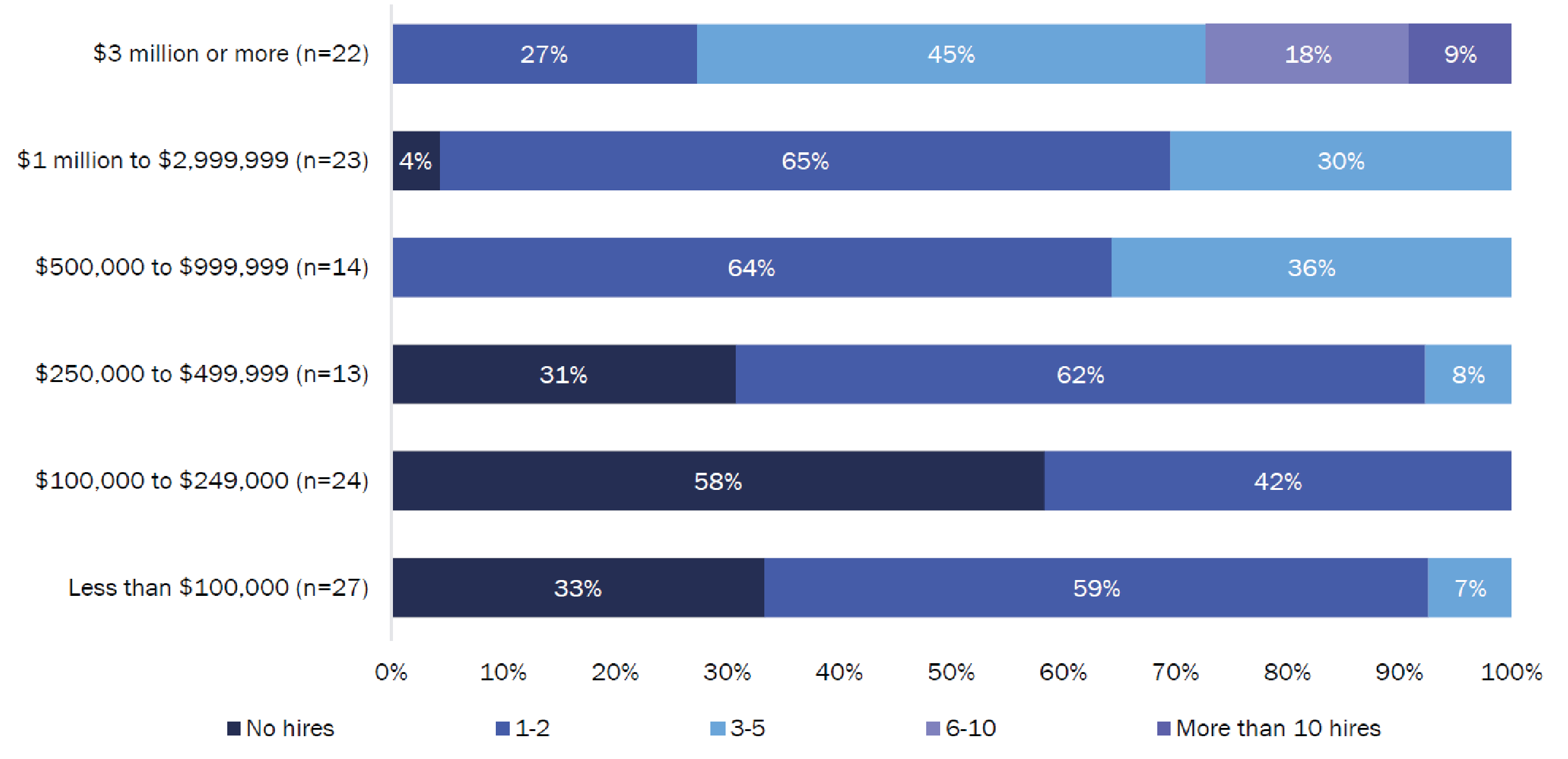
We noticed a relationship between the number of new hires per year and annual revenue. In Figure 24, we see that nearly half of firms with an annual revenue of less than $250,000 (23 of 51; 45%) hire zero installers per year, while all of those with a revenue of $3 million or more hire at least six installers annually. Firms with a higher annual revenue likely complete a greater number of projects, and thus have a greater need for additional staff than those with lower revenue streams.
Figure 24. Annual Revenue by Number of Hires Per Year
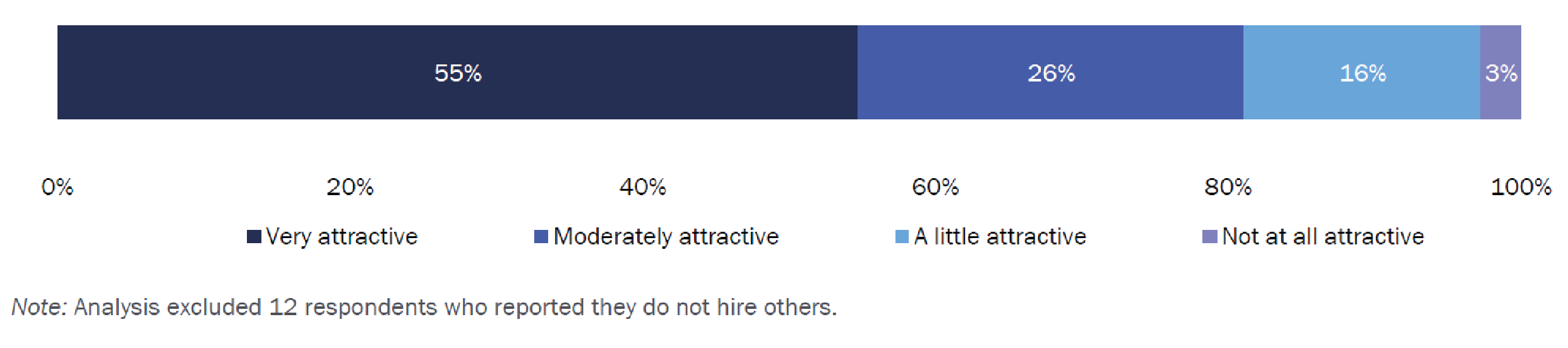
Heat pump experience is desirable when hiring new installers and/or technicians. Three-quarters of respondents who sell HVAC equipment (120 of 148; 81%) reported heat pump experience is at least moderately attractive when looking to hire a new installer or technician (6% decrease since baseline) (Figure 25). More than half said it was very attractive. A minority of surveyed contractors (28 of 148; 19%) found heat pump experience to be minimally important to them when hiring.
Figure 25. Attractiveness of Heat Pump Experience When Hiring (n=148)
Most respondents (71 of 114; 62%) said at least 50% of their staff have installed or worked on HVAC heat pumps in the past year (Figure 26). Contractors who worked for a company with at least two employees were asked what percentage of technicians at their firm have installed or worked on HVAC heat pump equipment in the past year. Almost half of respondents (53 of 114; 46%) shared that all of their staff had experience working with heat pumps, while a minority (22 of 114; 19%) reported less than 5% of their staff had worked with the equipment. In the baseline survey, 70 of 97 (72%) contractor companies reported at least 50% of their staff installed or worked on HVAC heat pumps in the past year.
Figure 26. Proportion of Contractors’ Staff with HVAC Heat Pump Experience (n=114)
4.6.3 Contractor Heat Pump Training
Most surveyed contractors have received heat pump training, most commonly while on the job. Nearly three-quarters of HVAC respondents (119 of 160; 74%) received heat pump training (4% increase since baseline), while the remaining quarter (41 of 160; 26%) had not. Over half who had received training did so either while on the job, through a distributor, or through a manufacturer (Figure 27). Similar to baseline, most contractors who received heat pump training did so while on the job (69 of 119; 58%), although only about a quarter (44 of 160; 28%) preferred this source of training. Respondents preferred to receive heat pump training through a manufacturer or distributor.
Figure 27. Sources of Heat Pump Training Versus Preferred Sources for Training
(Multiple Responses Allowed)
Most contractors (124 of 160; 78%) valued in-person education, preferring training either fully in-person or through a hybrid online or in-person model. A minority of respondents mentioned they prefer online training (25 of 160; 16%) or said they have no preference about the training mode (11 of 160; 7%). Two respondents noted other ways they would prefer to receive training, including through Electrify My Home (one mention) and at conferences (one mention), while three others said they had no need for additional training.
5. HPWH Market Detailed Findings
In this section we review the water-heating market and present findings about surveyed water-heating contractors’ experience with HPWHs, their heat pump training, and the perceived value of training. We also discuss findings about California homeowners’ familiarity with HPWHs, their decision drivers for water-heating equipment, and their awareness of incentives for heat pumps.
5.1 Market Overview
AHRI reports roughly 5 million residential electric storage water heaters and 4.3 million residential gas storage water heaters were shipped in the United States in 2023. Electric storage water heater shipments grew 7.4% between December 2022 and December 2023. Gas storage water heaters showed slower growth at 3.9% between December 2022 and December 2023. Unfortunately, AHRI does not make California-specific data available and Opinion Dynamics has not found a source for California-specific residential water-heater shipment data.
5.2 Current Water-Heating Systems
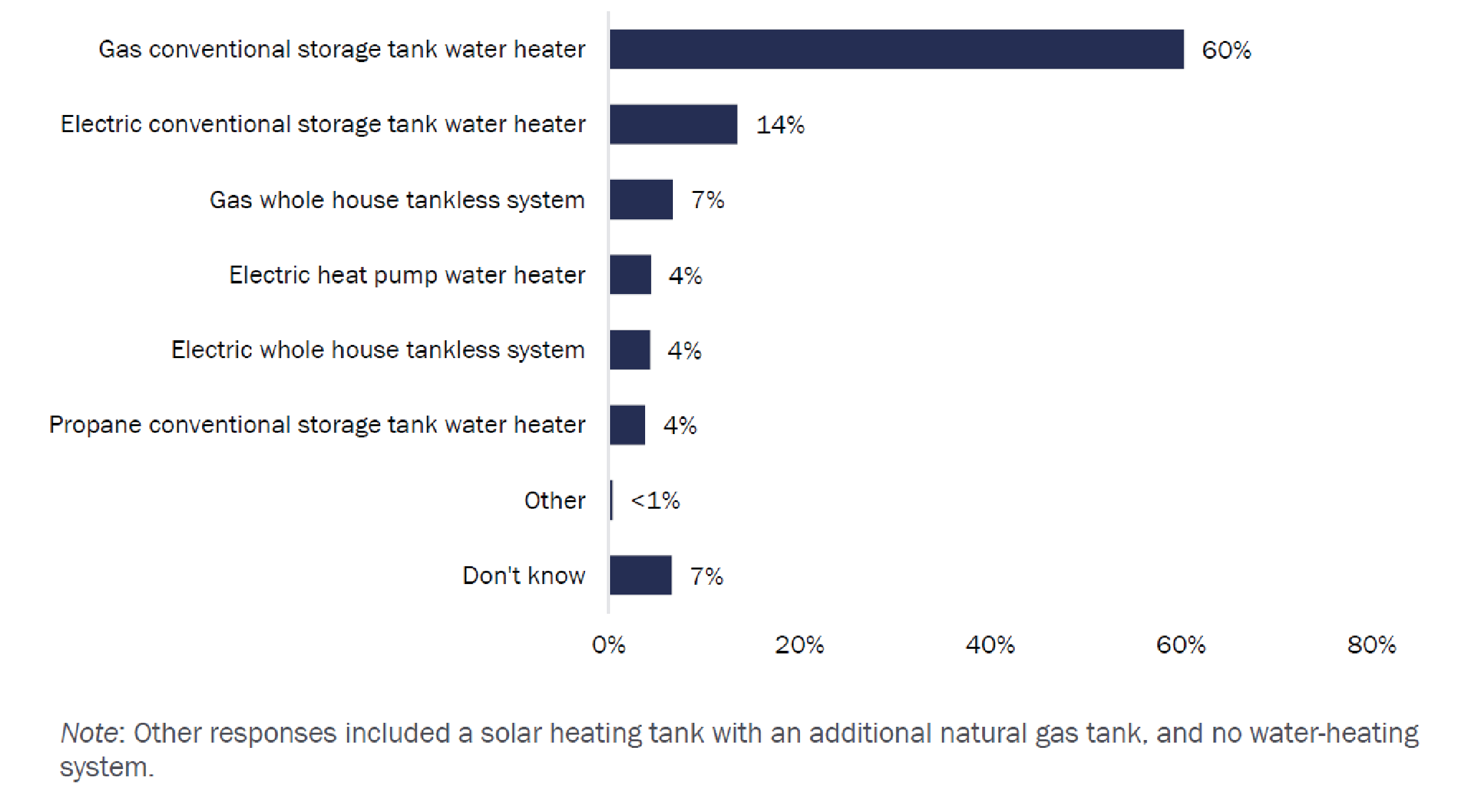
Over two-thirds (354 of 500; 71%) of surveyed homeowners had a gas-powered water-heating system in their home; a five percent decrease since baseline. Most respondents (302 of 500; 60%) reported having a gas conventional storage tanked water-heating system (Figure 28). A minority of respondents (110 of 500; 22%) had an electric water-heating system, and 4% of all surveyed homeowners (22 of 500) reported that a HPWH serves their home (same as baseline).
Figure 28. Water-Heating Systems (n=500)
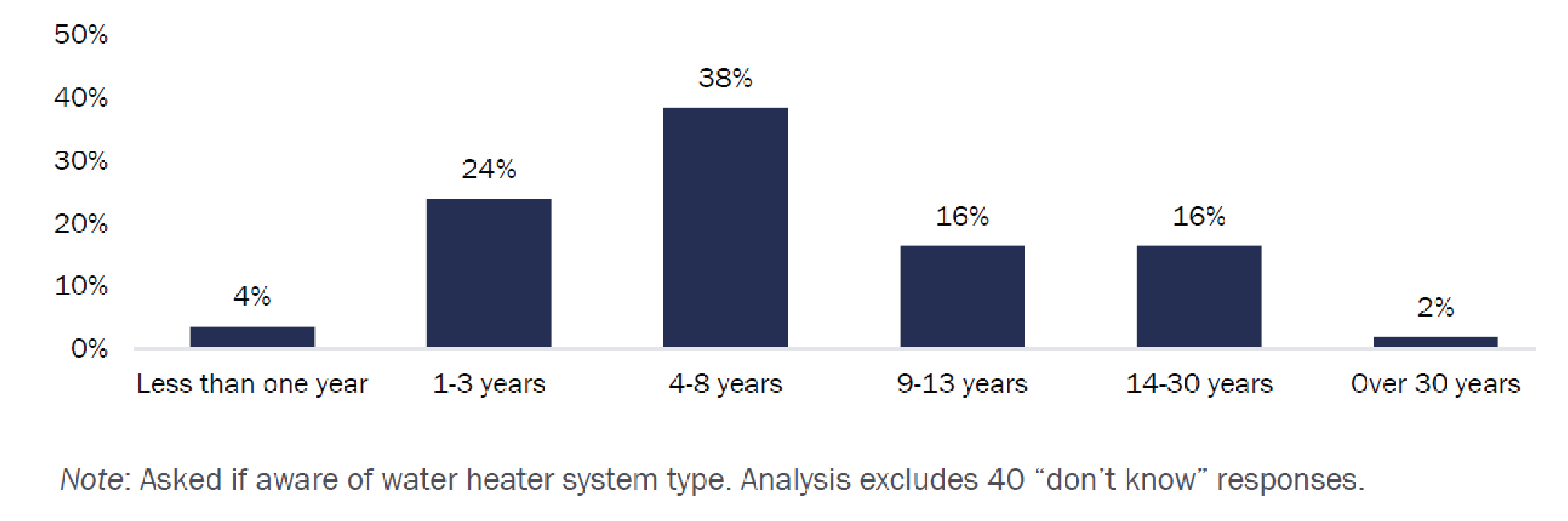
Most respondents’ (280 of 428; 65%) water-heating system were less than nine years old (Figure 29). A quarter (116 of 428; 28%) of surveyed homeowners’ water-heating systems were fairly new – under four years old (2% fewer than at baseline), while less than a fifth (78 of 428; 18%) were more than 14 years old (1% fewer than at baseline). In addition to these respondents, 40 homeowners reported they did not know the age of their water heater.
Figure 29. Age of Water-Heating System (n=428)
We noticed that gas water heaters were older, on average, than electric water heaters. More than one-third (126 of 354; 36%) of gas water heaters were nine years or older, indicating a significant proportion of California’s water heaters will need to be replaced in the next few years.
5.3 Customer Awareness
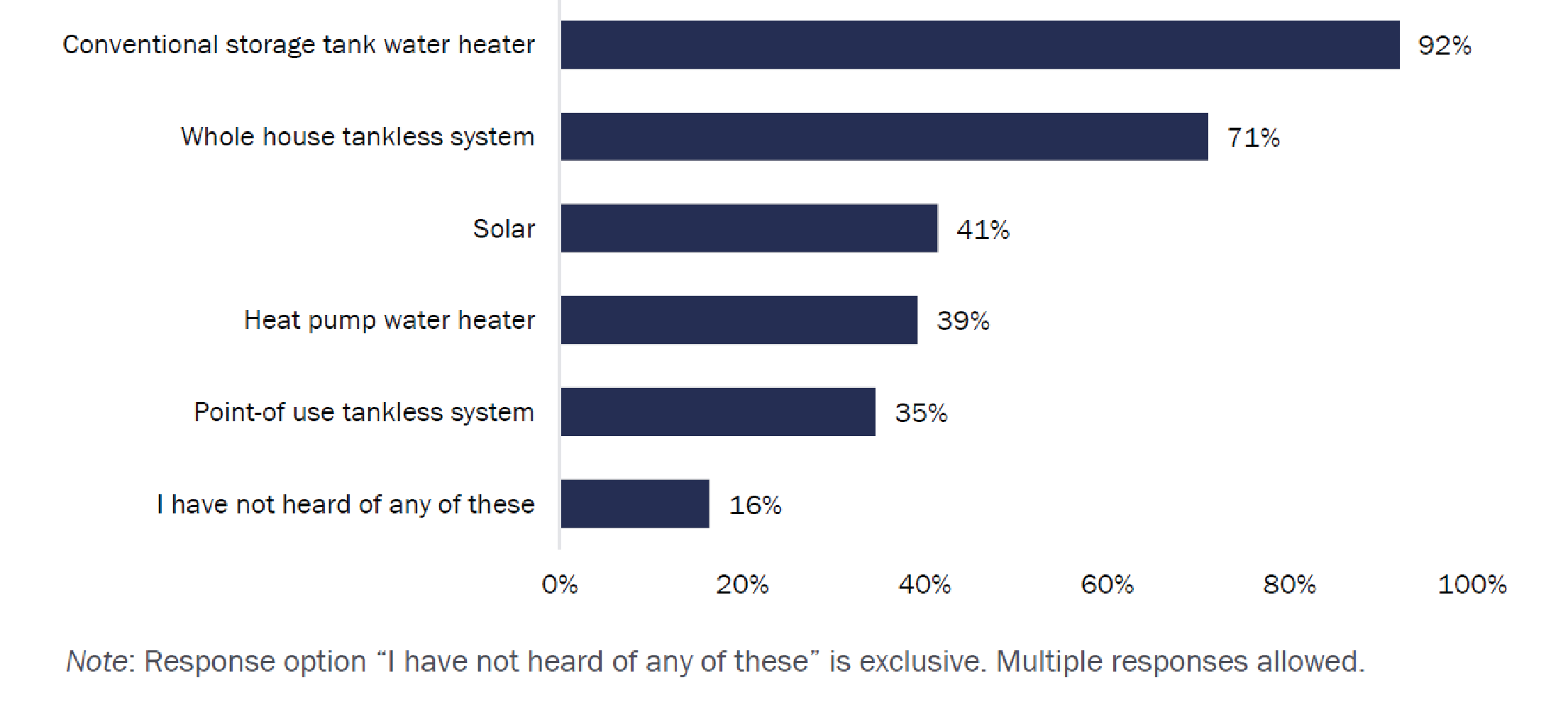
In this Time 1 market survey conducted in 2023, we found that 39% of California homeowners were aware of HPWHs, a 7% increase from the baseline survey conducted one year prior. The awareness of HPWHs is, though, notably lower than the 58% who had heard of HVAC heat pumps. Figure 30 presents water-heating systems of which respondents were reportedly aware.
Figure 30. Awareness of Different Water-Heating Systems (n=500)
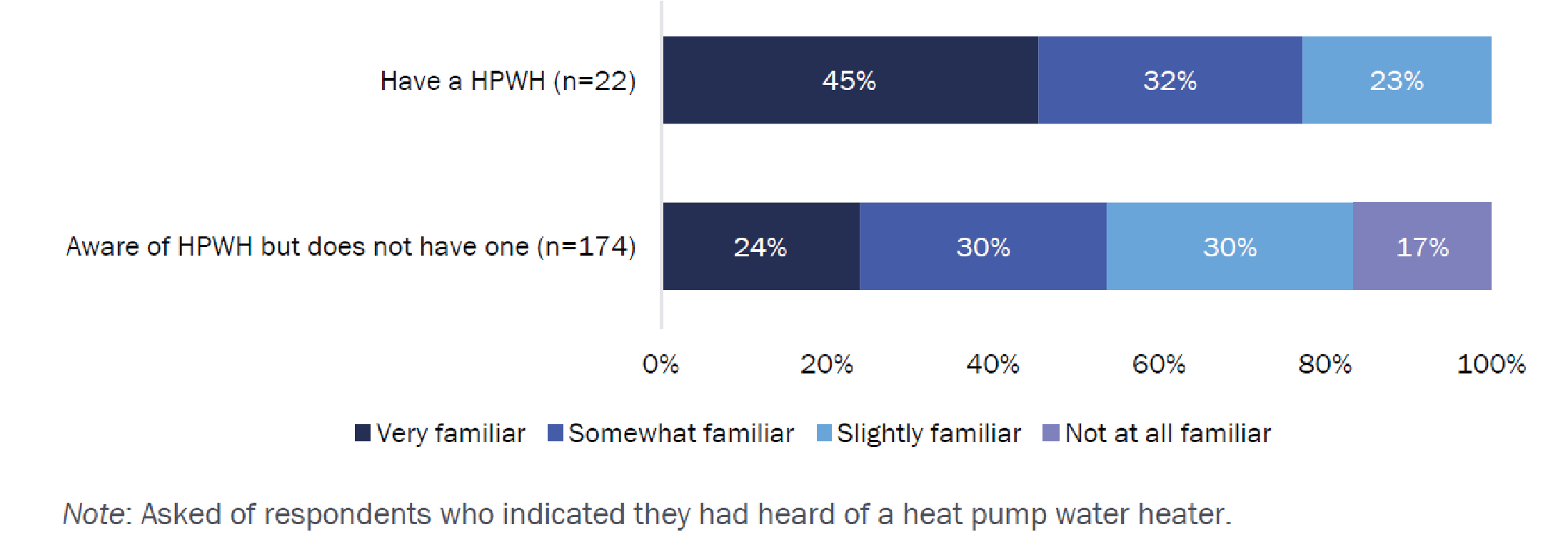
Of the 196 respondents who were aware of HPWHs, more than half (111 of 196; 57%) were very or somewhat familiar with the equipment (7% increase from baseline). Over three-quarters of those who reported they have a HPWH (17 of 22; 77%) were very or somewhat familiar with the equipment, while nearly half of those who were aware but did not have a HPWH (81 of 174; 47%) in their home were only slightly or not at all familiar. Same as observed in the baseline study, the most common source for how respondents had heard about HPWHs (64 of 196; 33%) was word of mouth. News articles (33 of 196; 17%) and advertisements (30 of 196; 15%) were among the other top sources from where homeowners had heard about HPWHs.
Figure 31. Familiarity of HPWHs (n=196)
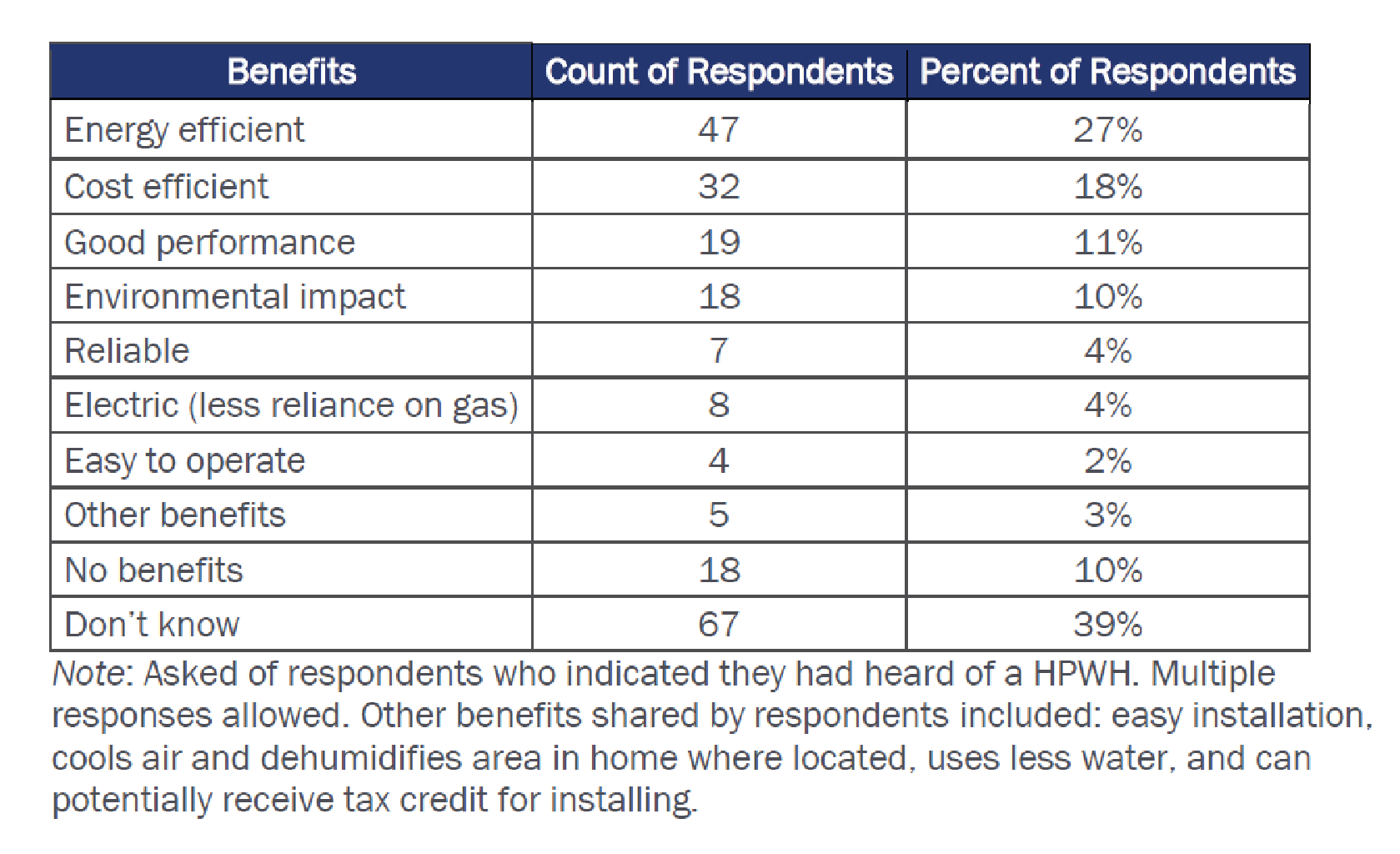
Homeowners had more knowledge about the benefits of HPWHs than we observed in the baseline survey one year prior. When the evaluation team asked the respondents who had heard of a HPWH, to identify benefits of the system in an open-ended, unaided question, the largest proportion (39%) reported that they did not know what benefits they offered (Table 13). This difference represents a 44% decrease from baseline and suggests a large increase in homeowner knowledge about HPWH equipment. Approximately one-quarter of respondents (47 of 174; 27%) believed HPWHs were more efficient than alternative water heaters (20% more than baseline) and nearly one-fifth (32 of 174; 18%) thought they were cost efficient due to a decrease in operating costs compared to other water-heating systems.
Table 13. Customers’ Perceived Benefits of HPWH Over Other Water-Heating Systems (n=196)
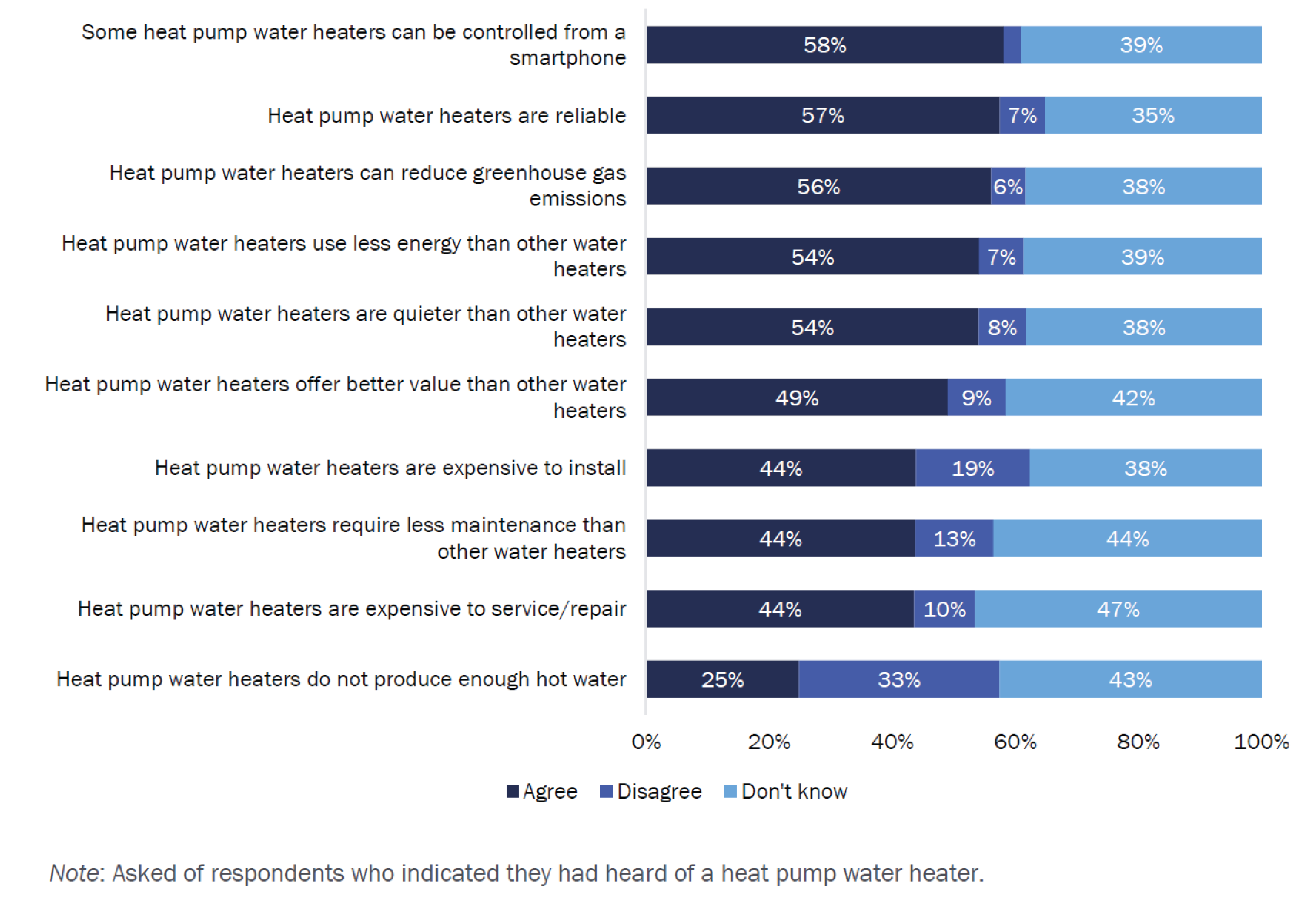
We then asked homeowners to agree or disagree with specific statements about HPWHs while offering a “don’t know” option. We again saw a high incidence of “don’t know” responses; between 35% and 50% of respondents for each question (same as baseline), as shown in Figure 32. The largest proportion of respondents (114 of 196; 58%) agreed that some HPWHs can be controlled from a smartphone and that they are reliable systems (12% increase from baseline).
There were conflicting responses for whether a HPWH was expensive to install, with 44% agreeing they are expensive and 19% disagreeing. For the statement, “Heat pump water heaters do not produce enough hot water, a greater proportion of respondents disagreed (33%) than agreed (25%), suggesting more respondents believe HPWHs are able to meet hot water needs.
Figure 32. Benefits and Drawbacks to Heat Pump Water Heaters (n=196)
5.4 Customer Decision Drivers
Most respondents (304 of 500; 61%) reported they had previously replaced their water-heating equipment or installed a completely new system. Of those who had installed a new water-heating system at some point in their home, most (247 of 304; 81%) did so because the equipment either failed completely (166 of 304; 55%) or did not function properly (81 of 304; 27%) (Figure 33). Ten percent or less reported replacing their water heater for reasons other than the functionality of the equipment, such as the desire for the latest technology, desire to be more sustainable, or because it made sense financially.
Figure 33. Reasons for Replacing Water-Heating System (n=304)
More than a third of surveyed homeowners who had installed a new water heater (110 of 304; 36%) either completed the installation themself (15%) or had a family or friend install the new equipment (21%). Among respondents who reported hiring a professional contractor to install their new water heater, most found their contractor through prior experience with them or a personal referral, similar to respondents who had a new HVAC system installed (Figure 34). Less than a fifth of respondents found their contractor through a retailer, such as Costco or Home Depot, or an online source, while two respondents found their contractor through The Switch is On “Find a Contractor” tool.
Figure 34. How Customers Found Contractor Who Installed Water-Heating Equipment (n=192)
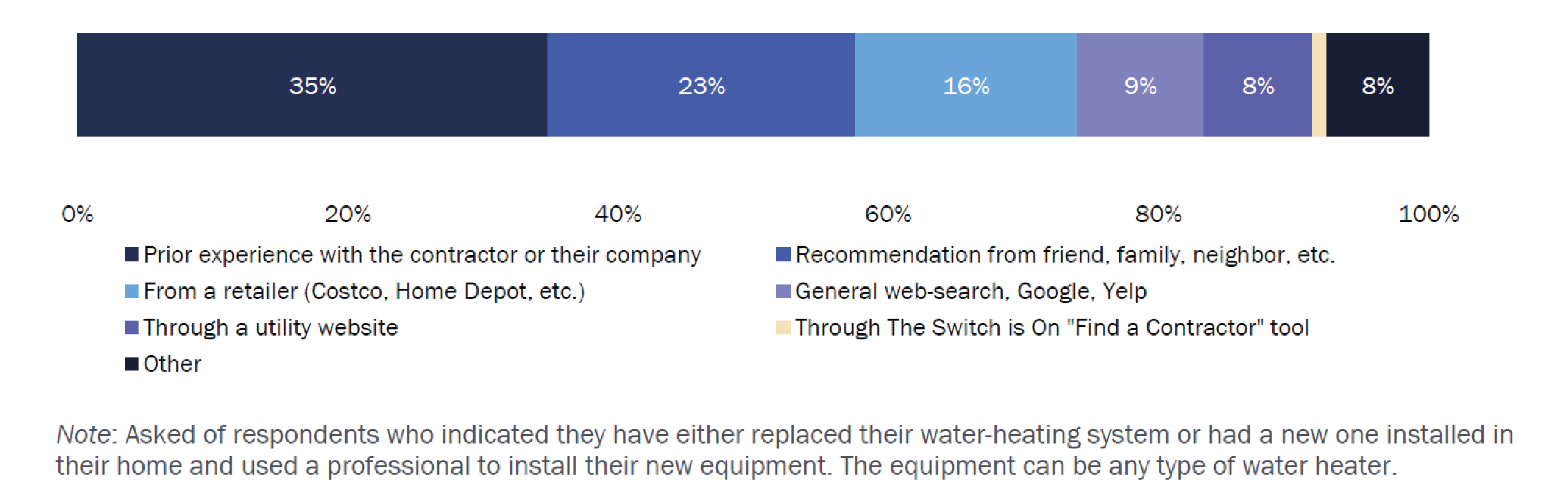
Figure 35. Who Installed Customers’ New Water-Heating Equipment (n=304)
Similar to an HVAC heat pump, respondents’ largest concerns with purchasing a HPWH were the associated costs and the possibility of additional home upgrade requirements. Respondents most commonly identified the possibility of needing an electrical panel upgrade or wiring enhancement, the possibility of increased utility bills, and higher upfront cost of equipment as top barriers for them if they were to consider purchasing a HPWH. Surveyed homeowners were least concerned about their lack of knowledge about benefits of a HPWH and the space requirements to install the equipment. Previously at baseline, respondents had rated lack of knowledge about equipment benefits and uncertainty about the performance of a HPWH as more prominent barriers to purchasing. Respondents’ recent ratings suggest homeowners are becoming more knowledgeable about the benefits HPWHs offer and more accustomed to the performance they can expect from the equipment.
Figure 36. Barriers to Purchasing Heat Pump Water Heaters (n=196)
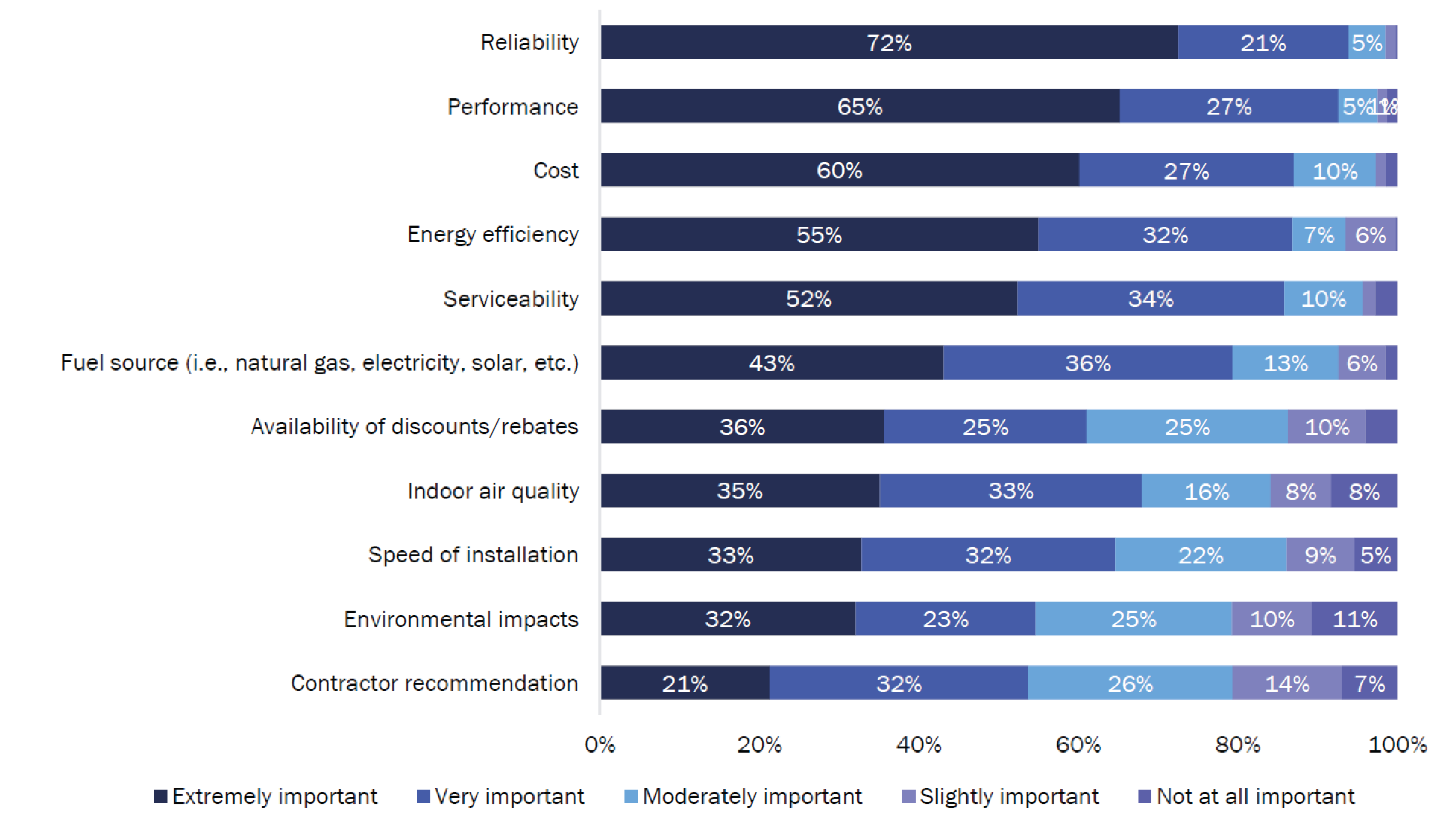
As we observed at baseline, the most important factors to respondents when considering replacing their water heater were the reliability and performance of the system (Figure 37). Most surveyed homeowners also rated the cost and energy efficiency level of the equipment as extremely or very important factors. Environmental impacts and a recommendation from a contractor were the two least important factors to respondents if they were to replace their water-heating system, with 21% of respondents rating each of these as slightly or not at all important. Respondents who lived in a DAC were significantly more likely than non-DAC respondents to rate cost, equipment longevity, performance, and the availability of discounts as extremely important to them when considering purchasing a new water heater.
Figure 37. Importance of Factors When Replacing Water-Heating Equipment (n=500)
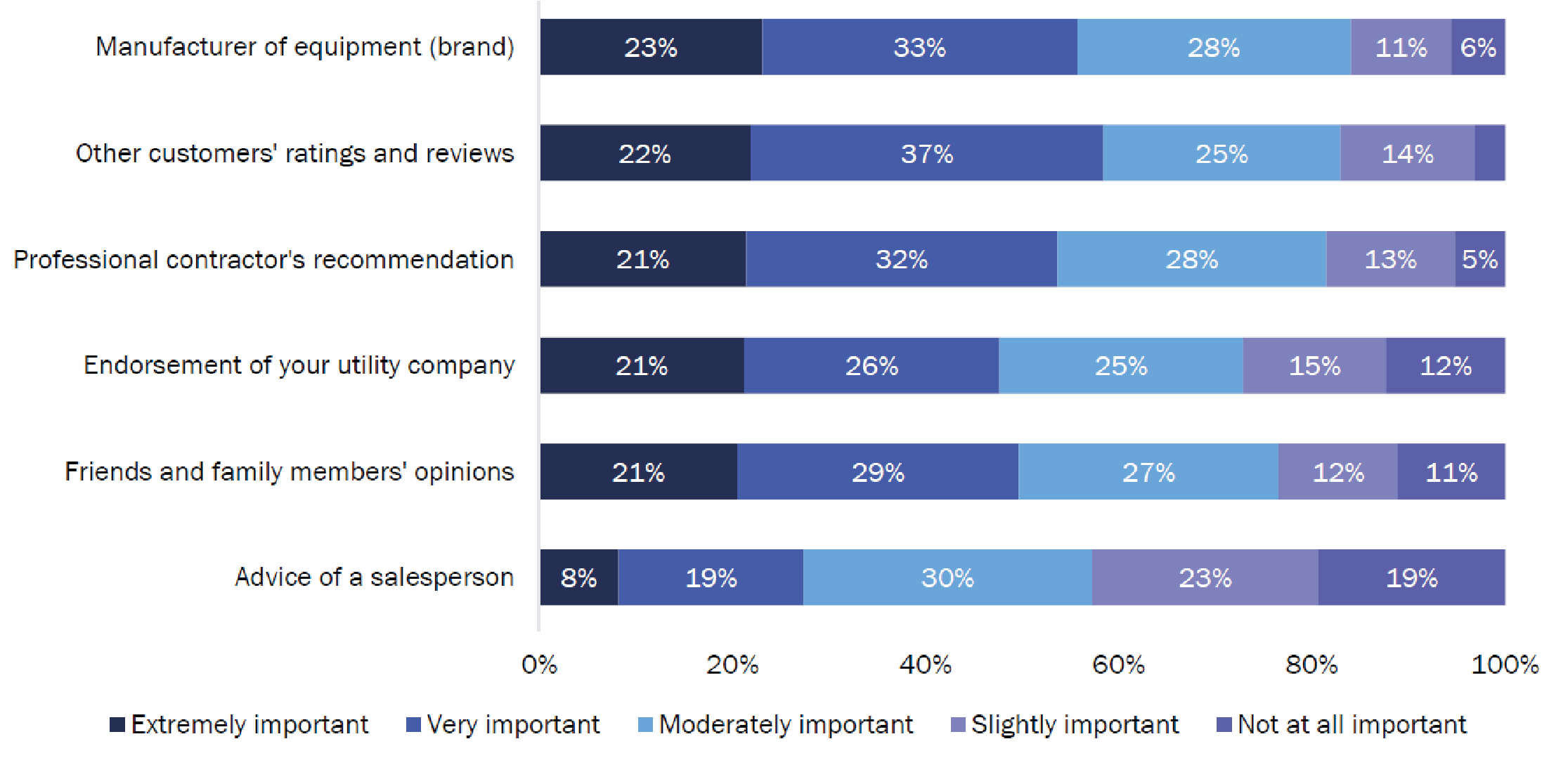
We also asked respondents how important a variety of sources would be in influencing their decision about a new water-heating system. The equipment manufacturer and other customers’ reviews were the top two most influential sources, though nearly all sources we asked about were rated similarly (Figure 38). Both of these top two sources were also those rated as most important to respondents in the baseline survey. Similar to both space heating and cooling equipment, when considering new water-heating equipment, the advice of a salesperson was rated least important to surveyed homeowners, with over two-fifths (214 of 500; 43%) rating it as slightly or not at all important to them (same as baseline).
Figure 38. Influential Sources When Considering New Water Heater Equipment (n=500)
5.5 Incentive and Tax Credit Awareness
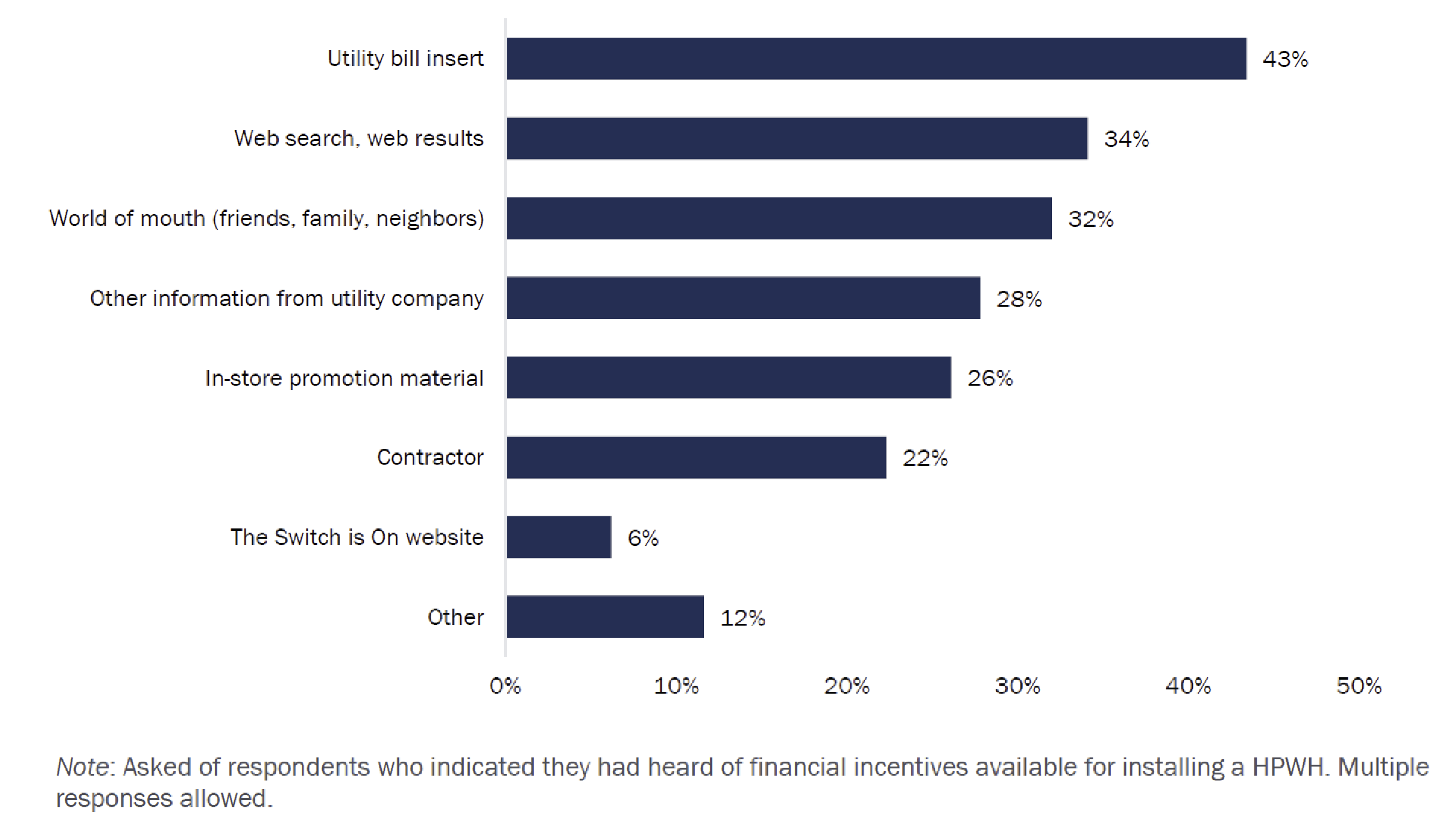
We asked homeowners who indicated they were aware of HPWHs if they were aware of financial incentives some organizations offer for installing a HPWH. Nearly half of these respondents (90 of 196; 46%) reported they were aware of the incentive offerings, a 6% increase since last year. The most common ways respondents heard about the availability of HPWH incentives was through their utility bill inserts (39 of 90; 43%, 19% increase from baseline), a web search (31 of 90; 34%, 4% increase from baseline), and word of mouth (29 of 90; 32%, five percent increase from baseline); the same three top sources respondents reported hearing about incentives for installing an HVAC heat pump (Figure 39).
Given the newly available tax credits for HPWHs, we also asked those who were aware of HPWHs if they knew they may be eligible for up to a $2,000 tax credit from the federal government for purchasing a HPWH. More than a third (74 of 196; 38%) of these respondents said they were aware of their eligibility.
Figure 39. Where Homeowners Heard About Incentives for Installing HPWH (n=90)
5.6 Labor Market
5.6.1 Availability of Qualified Trade Allies
The most appropriate CSLB licenses for stand-alone installation of HWPH are C-20 HVAC or C-36 Plumbing. If electrical upgrades are required as part of the HPWH installation, C-20 HVAC and C-36 Plumbing contractors can self-perform, or subcontract out, any electrical work required to accommodate the HPWH, including installing a dedicated circuit for the water heater. General B Building Contractors are allowed to perform a HPWH installation only when the installation is part of a larger project involving two unrelated trades.
There were 15,746 contractors in California with a C-36 Plumbing license in 2023, per the CSLB; 3,230 of those were in DACs. There were 10,875 C20-HVAC contractors in California in 2023 and 2,469 of those were in DACs. Manufacturers and distributors have anecdotally estimated that at least half of residential water heaters are installed by handymen as opposed to licensed contractors.
5.6.2 Contractor HPWH Experience
Surveyed contractors had more experience with unitary HPWH installations in single-family or in-unit multifamily properties compared to centralized systems in large multifamily properties (among those for whom at least 50% of their business came from installation jobs; Table 14). As observed at baseline, over a quarter (13 of 81; 27%) of survey respondents whose firms sell water-heating equipment and who attributed at least half of their business to water-heating installation jobs had no HPWH experience.
Table 14. Experience in HPWH Installations (n=81)
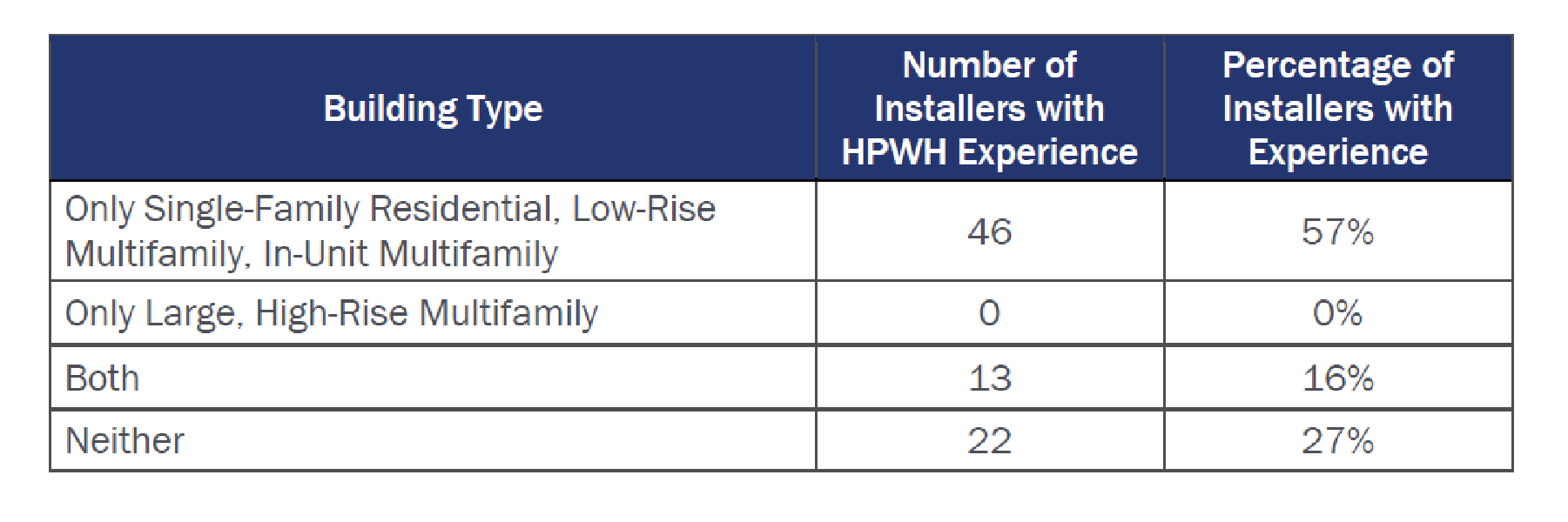
Of all water-heating installations completed by surveyed contractors in the last year, on average, 20% were HPWHs (4% increase since baseline). Just over a quarter of respondents (40 of 143; 28%) had not installed any HPWHs in the past twelve months (4% decrease since baseline). A minority of contractors (22 of 143; 15%) reported at least half of the installations they completed last year were HPWHs.
Half of surveyed contractors’ firms (66 of 127; 52%) sold between one and 20 HPWHs in the past year (Table 15). As shown in Table 16, the majority of these firms sold five or fewer HPWHs. Very few respondents’ firms sold more than 20 HPWHs within the past 12 months, while over a third (47 of 127; 37%) sold zero (1% increase since baseline).
Table 15. Number of HPWHs Sold by Firms in Past Year (n=127)
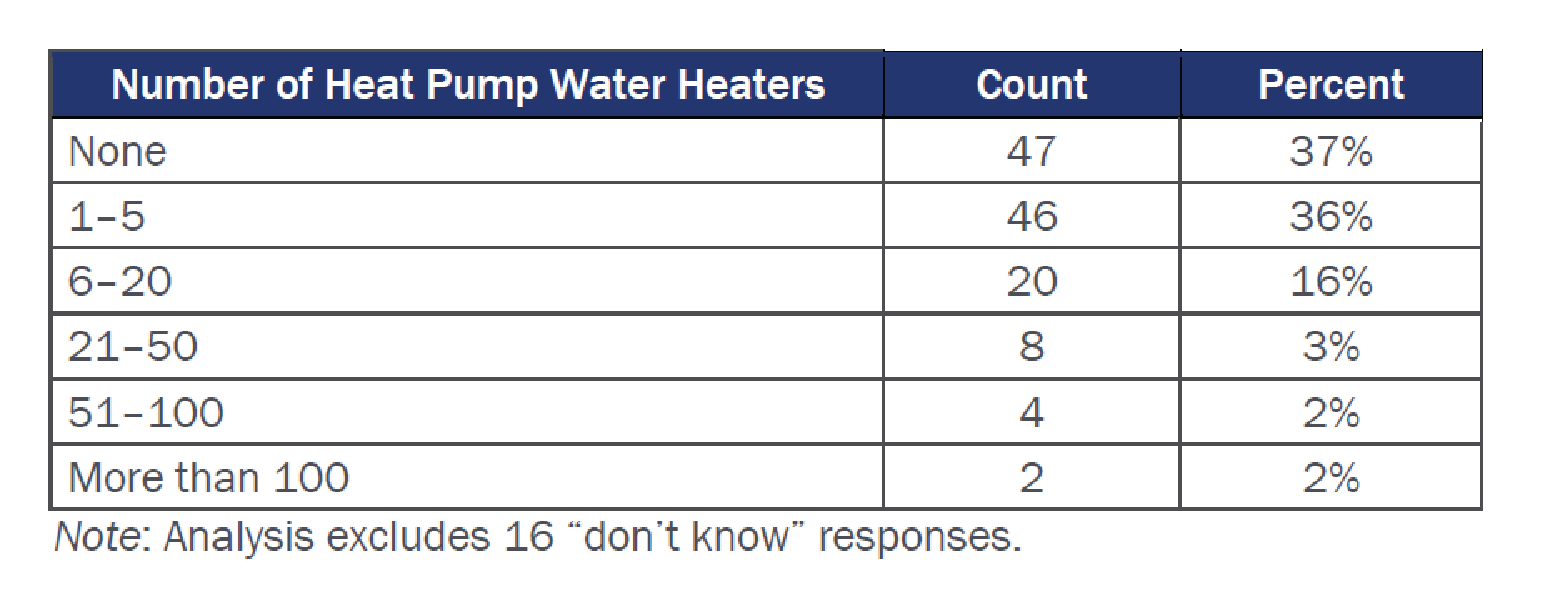
We also asked the same sample of respondents about whether their equipment came with a few specific features, listed in Table 16. We provide a description of each of these features below.
-
- Thermostatic Mixing Valves: TMVs are HPWH features used to increase usable hot water. The tank stores water at higher-than-normal temperatures, then the valve automatically mixes the very hot water with cold water to deliver water at the desired temperature.
- Connectivity: Internet connectivity allows for greater control over a system’s operation. Connectivity can enable greater savings if the end-user is enrolled in specific programs their electric provider may offer, such as a demand response program.
- Time-of-Use Controls: Time-of-Use controls enable customers to set a schedule for their water heater so that water heats during off-peak times when the lowest electricity rates are available.
On average, 43% of HPWH installations completed by surveyed contractors’ firms included a thermostatic mixing valve (TMV), the most common feature added during installation (Table 16). Notably, almost a third of contractor respondents (24 of 80; 30%) reported they were unsure or did not know what a demand response program was. The average percent of installations that included these actions were similar to those reported at baseline.[20]
[20] Averages exclude “Unsure” responses. Since baseline, the average reported percentage of HPWH installations that included a 1) thermostatic mixing valve, increased by 1%; 2) connectivity, decreased by 5%; and 3) Time-of-Use controls, remained the same. Enrollment in a demand response program was not asked in the baseline survey.
Table 16. Heat Pump Water Heater Actions
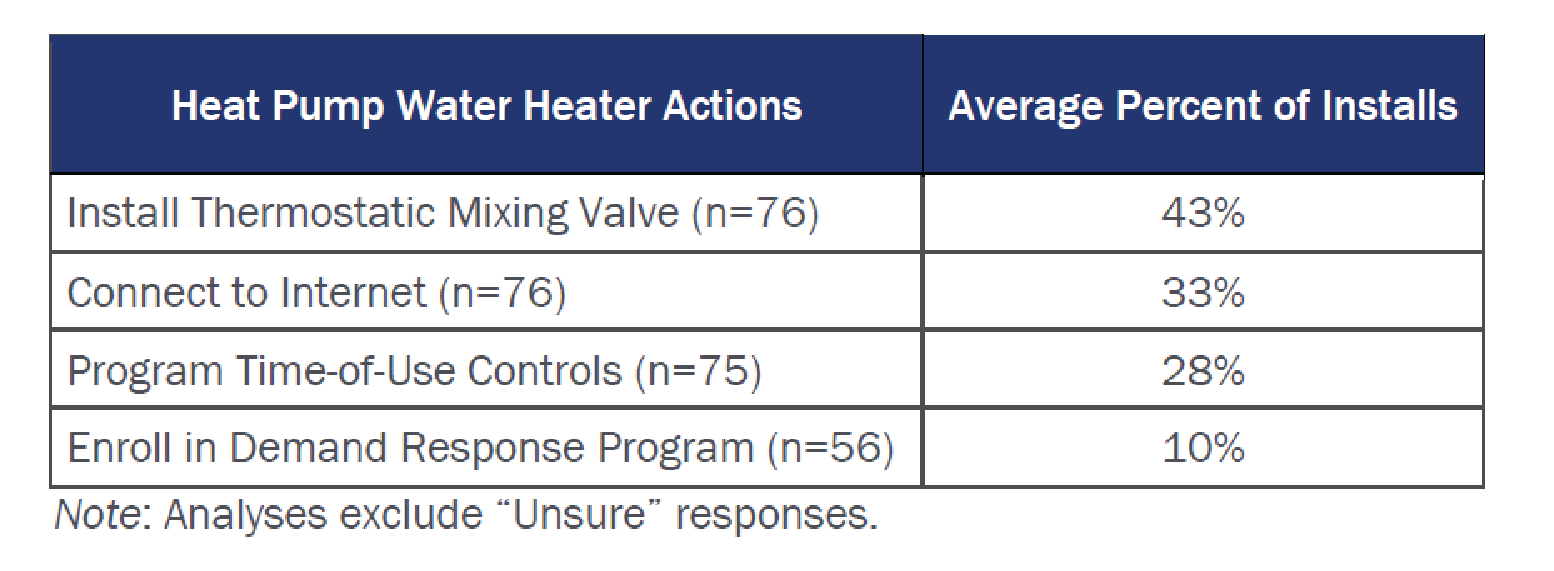
Nearly a third of respondents (24 of 80; 32%) reported all HPWH installations their firm completed in the past year included a TMV, while about a quarter (18 of 80; 24%) said internet connectivity was setup during all installations (Table 17). Almost two-thirds of contractors (34 of 56; 61%) had no customers enroll in a demand response program over the past year, while 14% (8 of 56) said at least quarter of their customers enrolled.
Table 17. Proportion of Surveyed Contractors Who Reported None or All of Firms’ HPWH Installations Included Actions
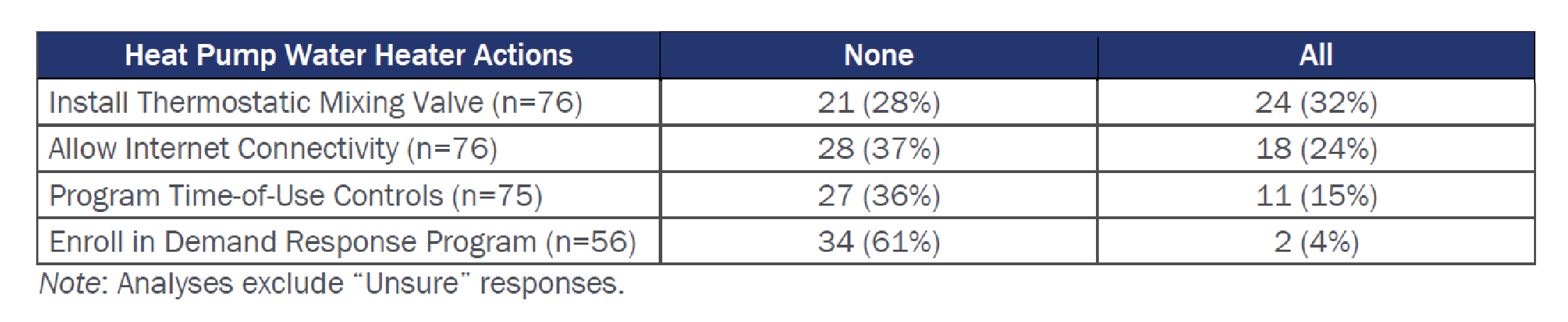
Most contractors have discussed the benefits of upsizing the system’s tank with at least some of their HPWH customers. Over three-quarters (46 of 59; 78%) of surveyed contractors whose firm had installed at least one HPWH in the past year in a single-family residential or low-rise, in-unit multifamily property discussed the benefits of upsizing water-heating tank size with at least some of their HPWH customers, while about half of these contractors (21 of 46; 46%) discussed benefits with all of their customers. This is a promising finding for the adoption of HPWHs, as this discussion can greatly help to ensure a HPWH successfully serves a home as intended, creating a positive customer outlook on the equipment. This also potentially enables these HPWHs to provide grid benefits. The remaining 22% (13 of 59) never discuss these benefits with their customers.
Contractors have encountered situations where customers need panel upgrades to accommodate a HPWH. Over half of respondents (42 of 72; 58%) had at least one HPWH installation in the last year that required an electrical panel upgrade to accommodate the HPWH. In fact, 14% of those respondents (10 of 72) reported a panel upgrade was necessary in at least 50% of their HPWH installations. The remaining 42% (30 of 72) of respondents did not encounter a scenario that required an upgrade.
Figure 40. Percent of Contractors Reporting Whether a HPWH Installation Required a Panel Upgrade in Past Year (n=72)
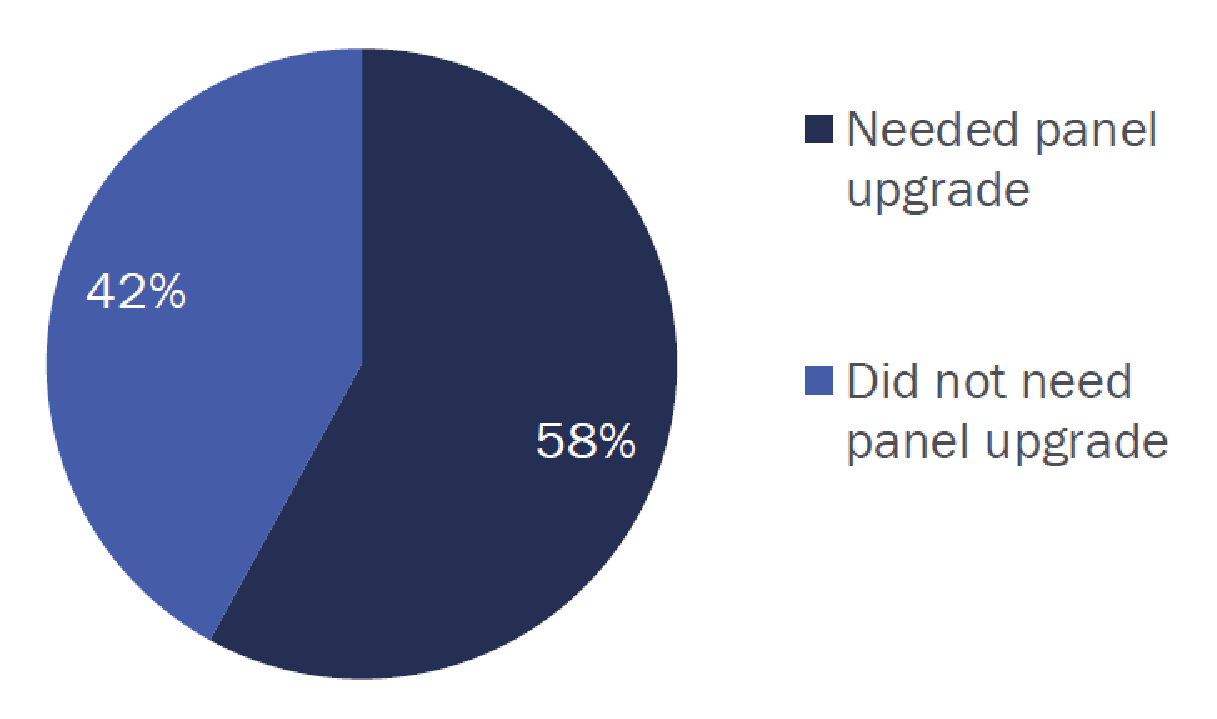
Surveyed contractors are more confident working with unitary HPWHs for single-family and low-rise or in-unit multifamily residential properties compared to centralized systems in large multifamily properties. Respondents were more than twice as likely to be extremely confident in their ability to sell, size, and install HPWH equipment in smaller, single-family residential property types than in larger properties with centralized systems (Figure 41). Among the various tasks we asked about, contractors were least confident in their ability to properly size HPWH equipment. Confidence in servicing and maintaining HPWH equipment was similar across different property types.
Figure 41. Confidence in Ability to Install, Sell, Size, Service, and Maintain HPWHs
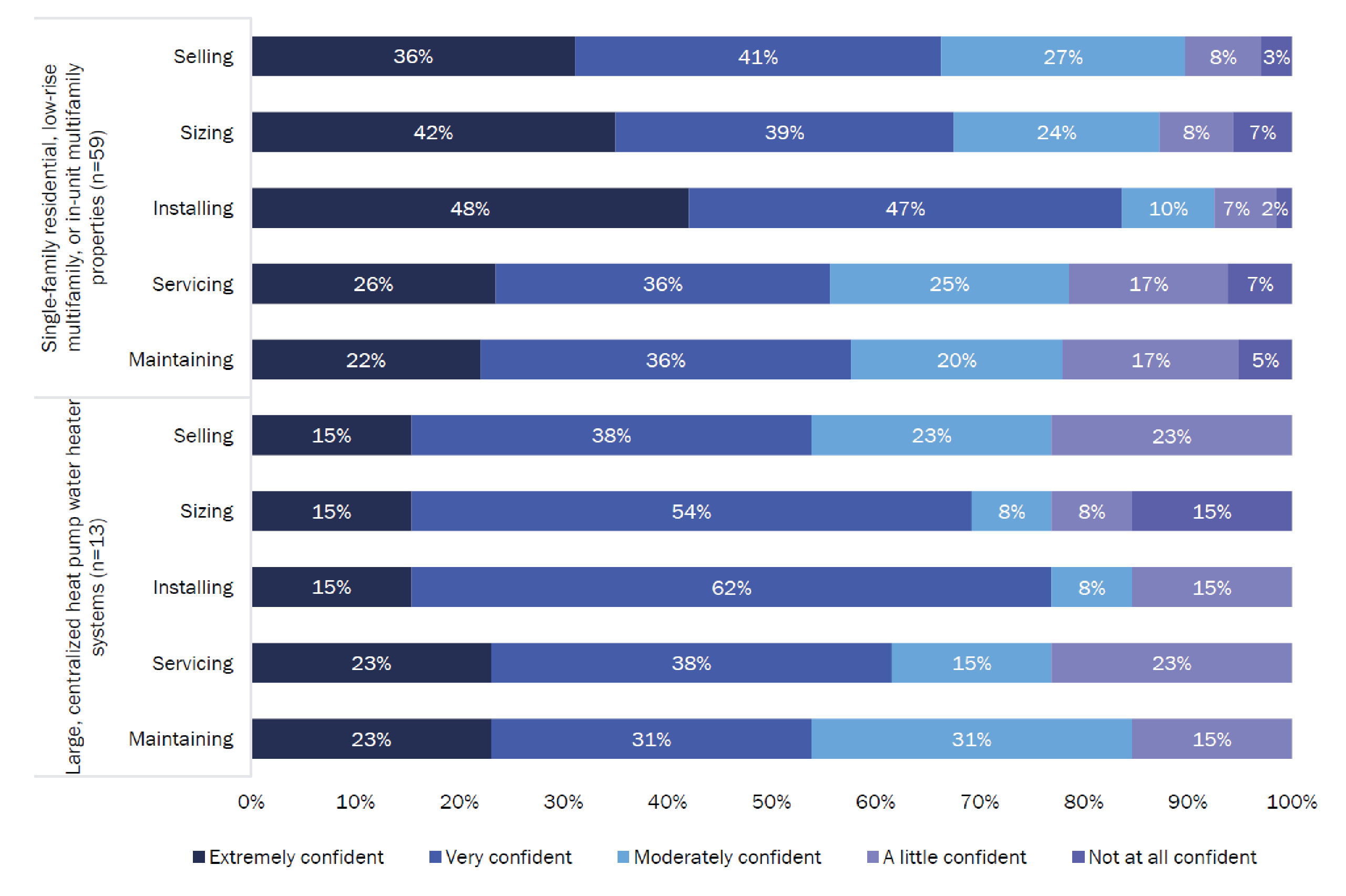
Surveyed contractors estimated the installation of a unitary HPWH system serving single-family residential, low-rise multifamily, or in-unit multifamily properties to take two days on average, although contractor responses ranged from one to 13 days (n=52). Similarly, on average, contractors said an installation of a larger, centralized system would take two days; one respondent noted it would take up to five days (n=8).[21]
On average, respondents’ firms that were not sole proprietors hired two installers/technicians annually, although responses ranged from one to 20 hires. Over a quarter of respondents who worked for these firms (34 of 122; 28%) said their firm hires zero new installers or technicians in a typical year. We noticed another relationship between the number of new hires per year at water-heating firms and annual revenue. In Figure 42, we see that all firms with an annual revenue of less than $250,000 typically hire two or fewer installers per year, while all of those with a revenue of $3 million or more hire at least six installers annually.
[21] Three “don’t know” responses excluded from average.
Figure 42. Annual Revenue by Number of Hires Per Year
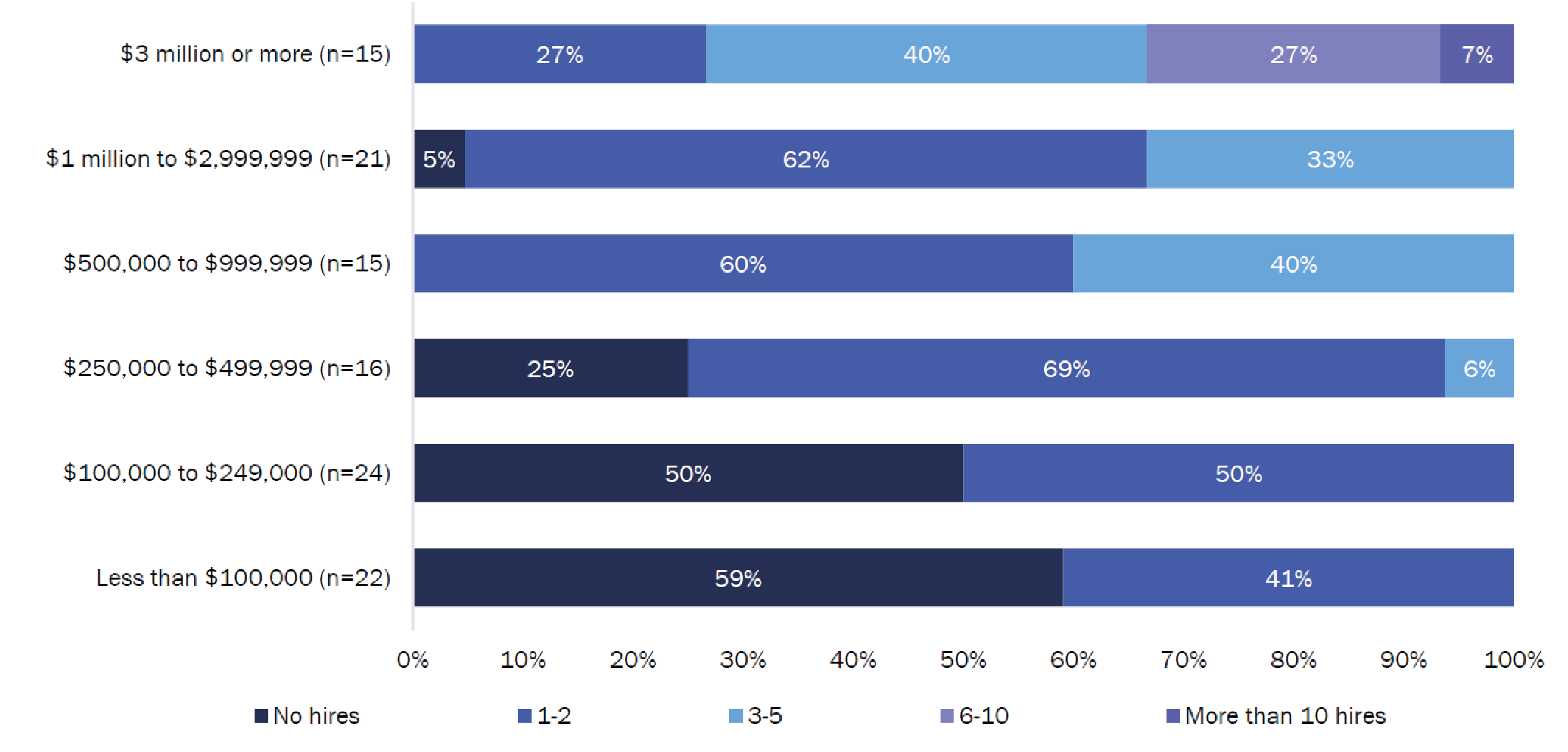
Heat pump experience is attractive when hiring a new water-heating installer or technician. Most surveyed water-heating contractors (88 of 123; 71%) indicated heat pump experience is at least moderately attractive when hiring installers and/or technicians (Figure 43). In contrast, approximately a quarter of respondents (35 of 123; 29%) said heat pump experience is either a little or not at all attractive in an installer/technician candidate.
Figure 43. Attractiveness of Heat Pump Experience When Hiring (n=123)
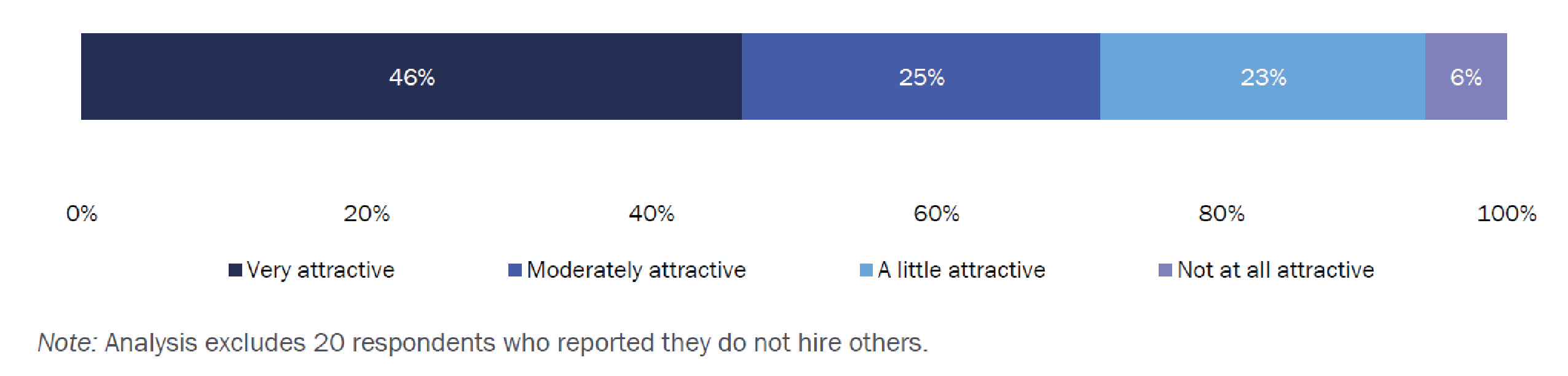
On average, a third of respondents’ colleagues have worked with HPWH equipment in the past year (n=95). [22] Despite this, nearly half of water-heating contractors who worked for a company with two or more employees (47 of 104; 45%) said five percent or less of their colleagues worked with HPWH equipment in the past year. About a fifth of these respondents (20 of 104; 19%) said none of their staff worked with HPWH equipment in the past twelve months (6% decrease since baseline).
[22] Nine “don’t know” responses excluded from average.
5.6.3 Contractor Training
As observed at baseline, about half of surveyed water-heating contractors (70 of 143; 49%) had received heat pump training. Water-heating respondents received their heat pump training most commonly through a manufacturer, while training through a distributor or while on the job were also among the top training methods (Figure 44). Almost a third of respondents (45 of 143; 31%) received training from more than one source.
Same as observed at baseline, respondents continue to prefer to receive heat pump training through a manufacturer (Figure 44). Although half of contractors received training through a distributor or while on the job, only about a third of respondents expressed preference for these options. Like HVAC, water-heating contractors also indicated a preference for attending in-person training, with about half (70 of 143; 49%) preferring to participate in in-person trainings, while another quarter (35 of 143; 24%) preferred a hybrid approach of in-person and online.
Figure 44. Sources of Heat Pump Training Versus Preferred Sources for Training (Multiple Responses Allowed)
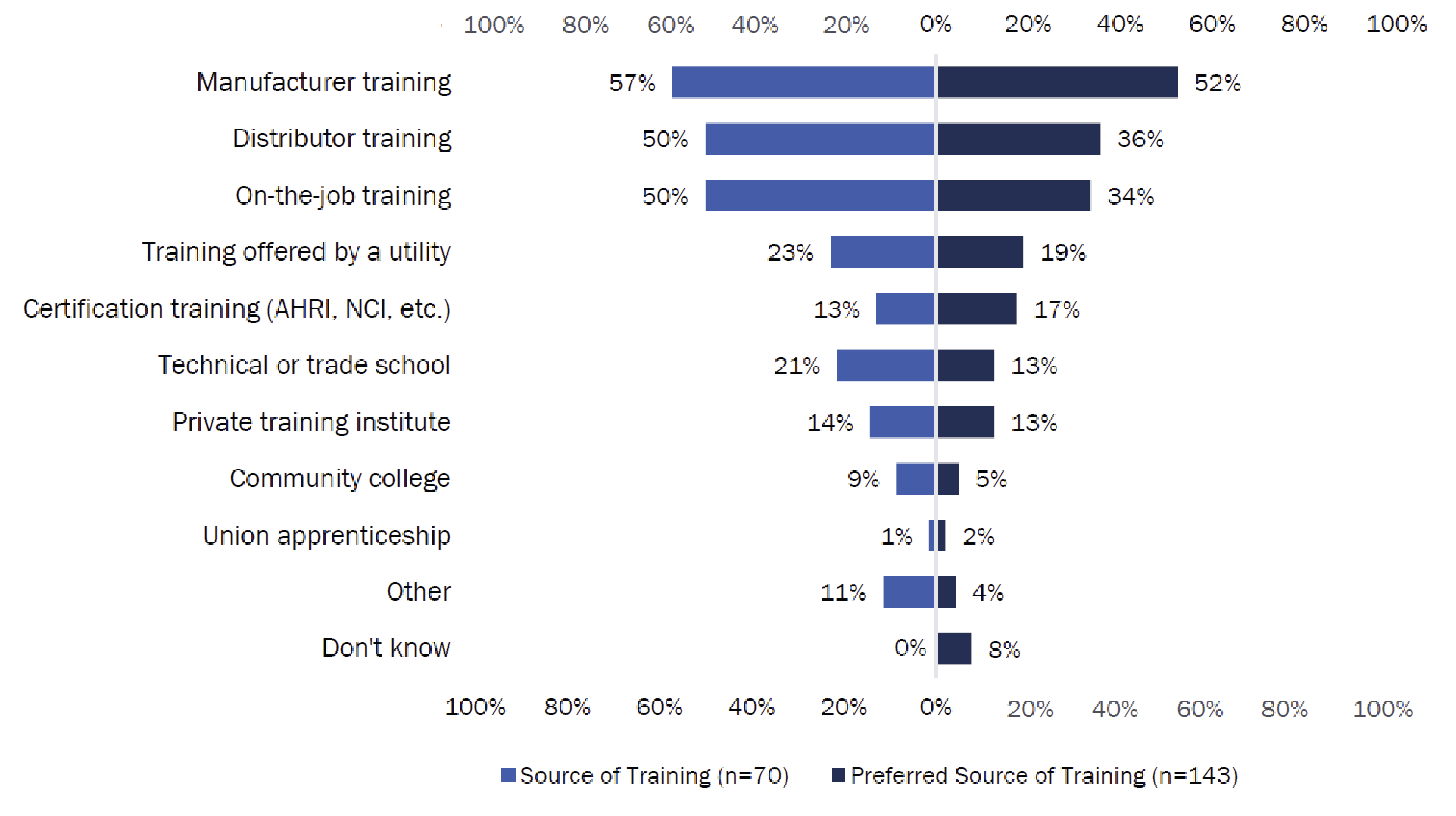
6. Heat Pump Incentives and Financing Availability and Awareness
In this section, we review residential heat pump incentive offerings in California and present survey findings related to contractor heat pump financing offerings and homeowner awareness of available financing options.
6.1 Retrofit Incentive Programs
As of January 2024, there were 69 programs in California offering HVAC heat pump incentives for residential retrofit projects, nearly 10 times as many as observed two years ago at baseline, which was 7. These programs primarily incentivized central ducted and ductless mini-split heat pumps, although a minority had offerings for Packaged Terminal Heat Pumps (PTHP) and ground source heat pumps (Table 18). Available for both multifamily and single-family projects, the offerings spanned 35 cities in California. Incentive amounts ranged from $120 to $3,500, although most offerings were between $500 and $1,500. According to Title 24, the minimum efficiency requirement for heat pumps is 14 SEER. Across incentive programs, the minimum efficiency requirement was commonly 15 SEER, while a few mandated at least 16 SEER (four programs) or 18 SEER (two programs).
Table 18. HVAC Heat Pump Incentive Programs by Equipment Type
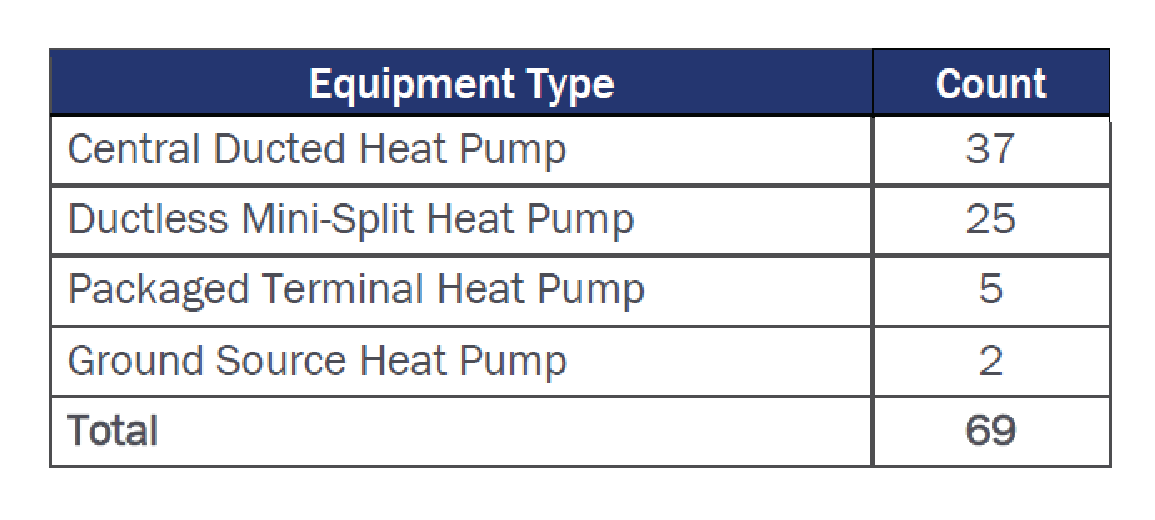
There were 38 programs that offered incentives for retrofit HPWH installations as of January 2024; nearly twice as many than existed at baseline, which was 18. These programs were offered across 28 cities, mostly in the northern and central regions of California. Incentive amounts ranged from $120 to $10,385, while the most common rebate amount was $1,000. As of January 2024, there were also 13 programs in California offering incentives for electrical or panel upgrades to support a later installation of a heat pump. These incentive amounts ranged from $250 to $2,500.
Most surveyed contractors (136 of 229; 59%) were aware of rebates or incentives available in California for space-conditioning and/or water-heating heat pump installations, although this was 13% fewer than observed at baseline. Most contractors who were aware of incentives (111 of 136; 82%) said they promote them to their customers. Respondents who indicated working with both HVAC and water-heating equipment were most likely to promote incentives to their customers (45 of 47; 98%) compared to those who worked solely with HVAC (45 of 58; 78%) or water-heating equipment (21 of 31; 68%).
We wanted to know whether our homeowner survey respondents had heard of the TECH Clean California Initiative or The Switch is On website, which is designed to educate homeowners about home electrification. While most were unaware of both, a similar number had heard of The Switch is On and TECH Clean California (Figure 45). The Switch is On website and the TECH Clean California Initiative had been in the marketplace for about one year at the time of the survey.
Figure 45. Awareness of TECH Clean California and The Switch is On (n=500)
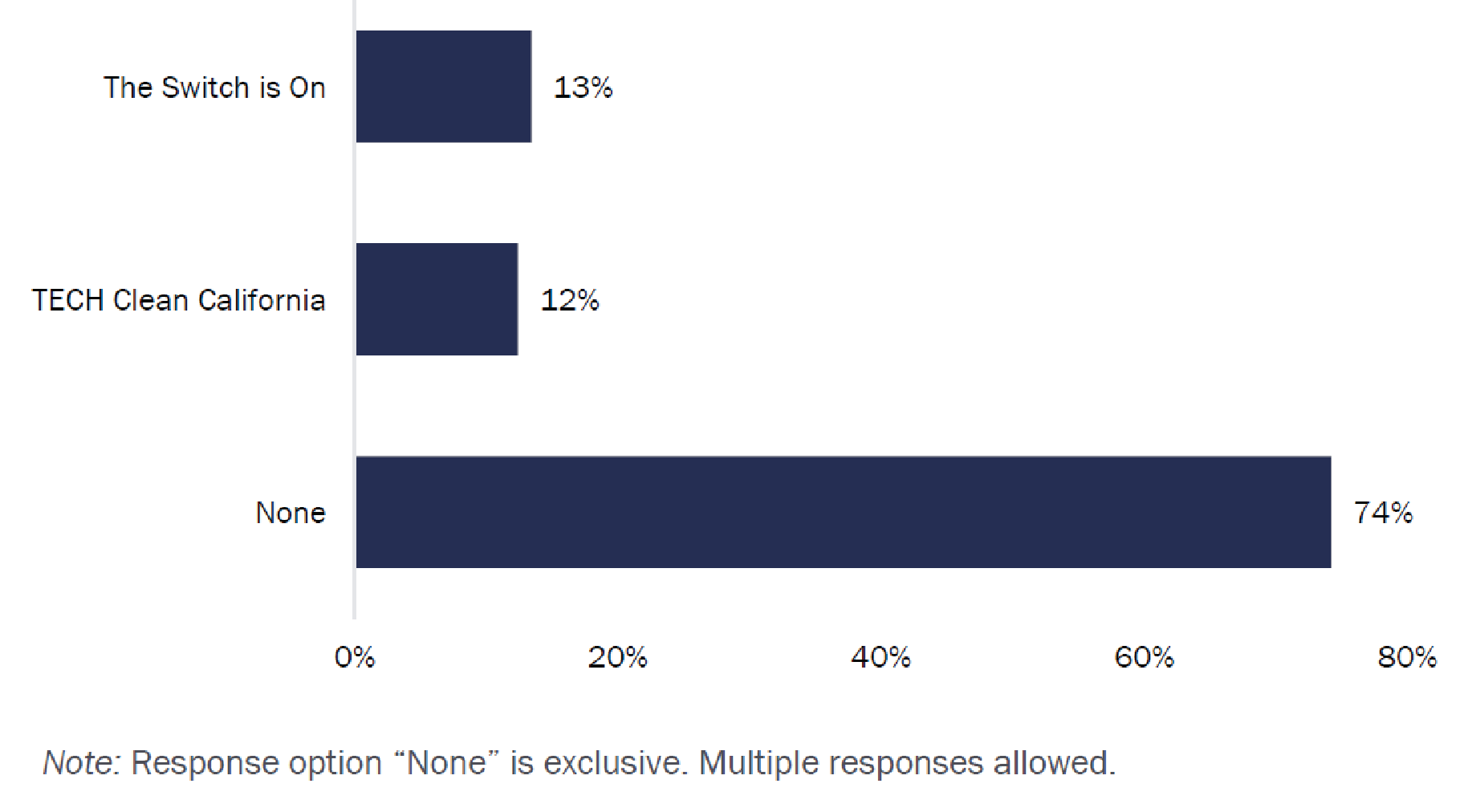
6.2 Financing Availability
As part of the TECH program, the implementation team formed a partnership with the California Alternative Energy and Advanced Transportation Authority (CAEATFA). The goal of this partnership is to expand and universalize CAEAFTA’s GoGreen Financing program. Funds invested by the TECH Initiative were used to create a loan loss reserve (LLR) to provide credit enhancement for loans to municipal utility customers who were formerly not eligible for GoGreen Financing and cover a portion of incremental costs associated with expanding GoGreen Finance program offerings. CAEAFTA began offering the expanded loan program on April 1, 2022.
As shown in Table 19, there has been an annual increase in the number of heat pump projects financed through the GoGreen program (either funded through TECH or through other GoGreen funding sources), but few of these were financed in DACs. The number of heat pump projects financed through GoGreen in 2021 (n=62) increased to 608 in 2023.
Table 19. Number of Financed Heat Pump Projects by Funding Source and DAC
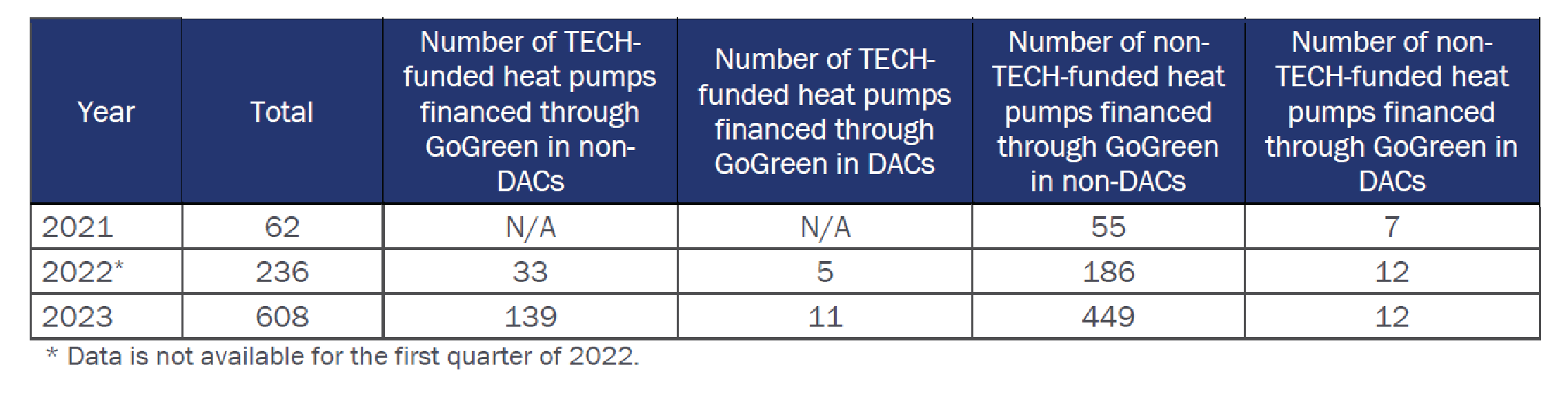
Fewer than half (91 of 229; 40%) of surveyed contractors’ companies offered financing to residential customers who purchase new HVAC or water heating equipment, a 10% decrease since baseline. Respondents who worked with HVAC equipment were more likely to offer financing options to their customers (79 of 160; 49%) compared to those who worked with water heating equipment (54 of 143; 38%).
As observed at baseline, regardless of the equipment they worked with, the most common type of financing surveyed contractors offer to their customers is through a private lender (Figure 46). Contractors who worked with both types of equipment were most likely to offer GoGreen Home financing to customers. Other types of financing contractors mentioned they offer include PACE (three mentions), Good Leap or Green Sky (two mentions), service financing (one mention), in-house offering (one mention), FTL financial (one mention), and Synchrony (one mention). One contractor mentioned they do not offer any type of financing to customers, and another was unsure of what financing options their firm provides.
Figure 46. Financing Offered to Residential Customers
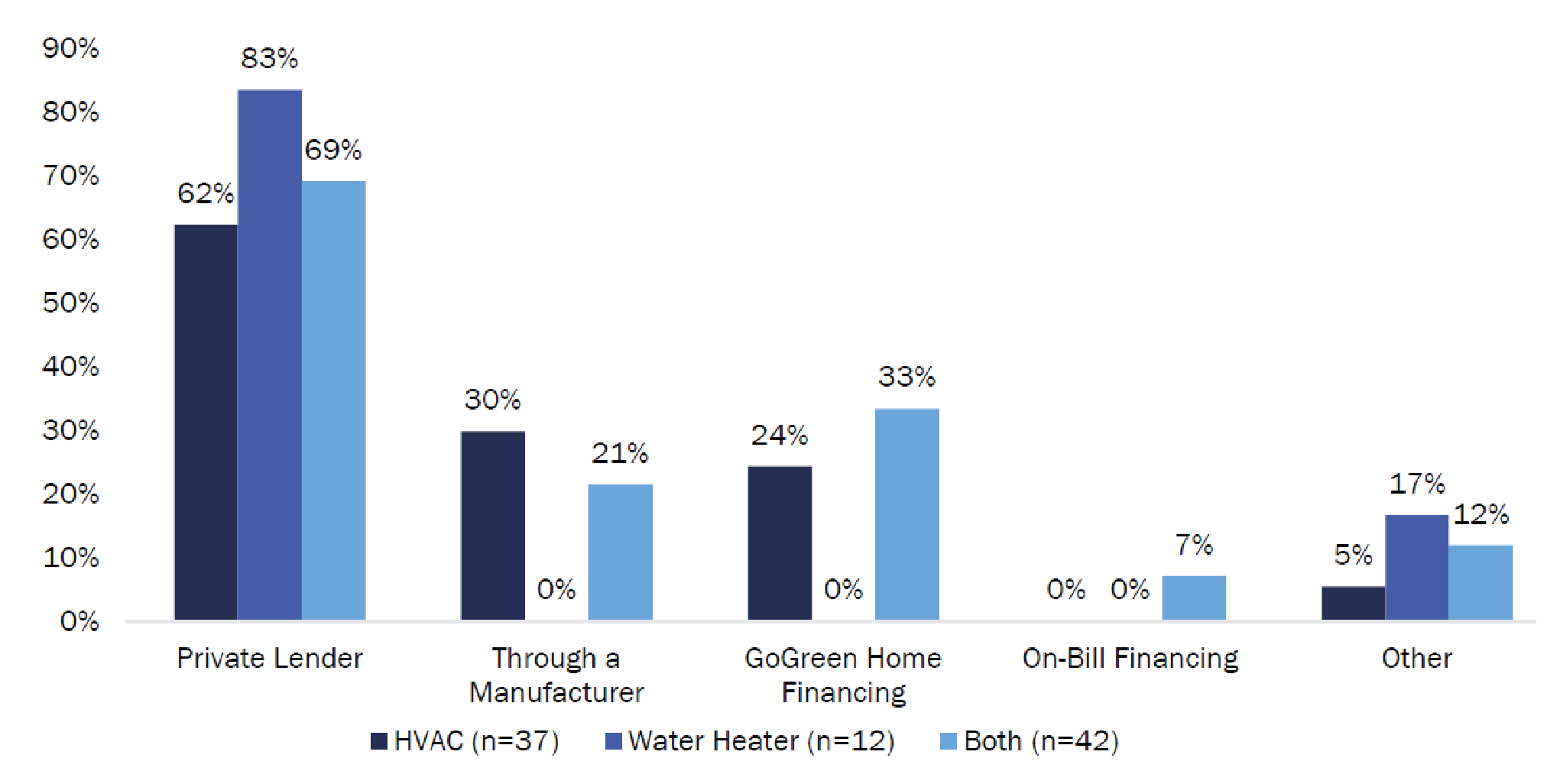
Heat pump customers most frequently utilized financing when purchasing equipment from a contractor who worked with both HVAC and water-heating equipment (Figure 47). Almost a third of contractors who worked with both HVAC and water-heating equipment and offer financing options (7 of 24; 29%) said 50% or more of their customers used financing to purchase their heat pump. Fewer customers used financing when working with a contractor who specialized in only one type of equipment, most of these contractors said 25% or fewer customers used financing to purchase their heat pump.
As observed at baseline, regardless of the equipment they worked with, the most common type of financing surveyed contractors offer to their customers is through a private lender (Figure 46). Contractors who worked with both types of equipment were most likely to offer GoGreen Home financing to customers. Other types of financing contractors mentioned they offer include PACE (three mentions), Good Leap or Green Sky (two mentions), service financing (one mention), in-house offering (one mention), FTL financial (one mention), and Synchrony (one mention). One contractor mentioned they do not offer any type of financing to customers, and another was unsure of what financing options their firm provides.
Figure 47. Proportion of Customers Who Use Financing When Purchasing Heat Pump Equipment
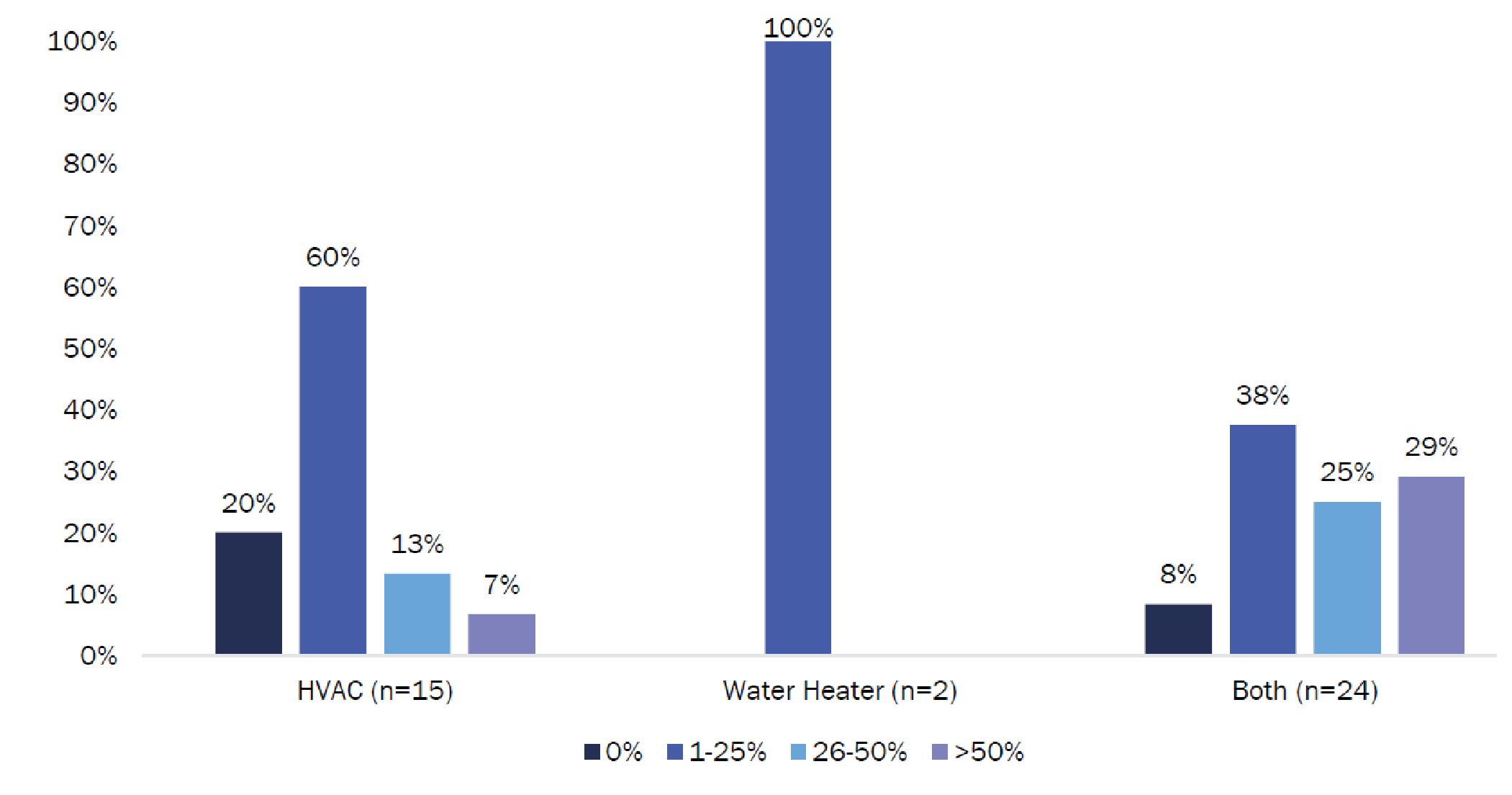
6.3 Customer Awareness of Financing Options
Although only a minority of customer respondents (182 of 500; 36%) were aware of financing options available to them to purchase new space heating/cooling or water-heating equipment, we observed a 4% increase since baseline. Surveyed homeowners who were aware of available financing were asked about what type(s) of specific financing options they were aware of (Figure 48). Respondents were most likely to be aware of general financing options, such as a credit card or a loan through a banking institution. Financing options through entities other than banking institutions or options specific to efficiency level or equipment selection were less commonly known by respondents. Additionally, of those who reportedly were aware of financing through their utility company, only about a third (37 of 117; 32%) had heard of on-bill financing. Overall, 46% (232 of 500) of respondents were unaware of financing options available to them, and the remaining 17% (86 of 500) were unsure whether they knew about these options.
Figure 48. Homeowner Financing Option Awareness (n=182)
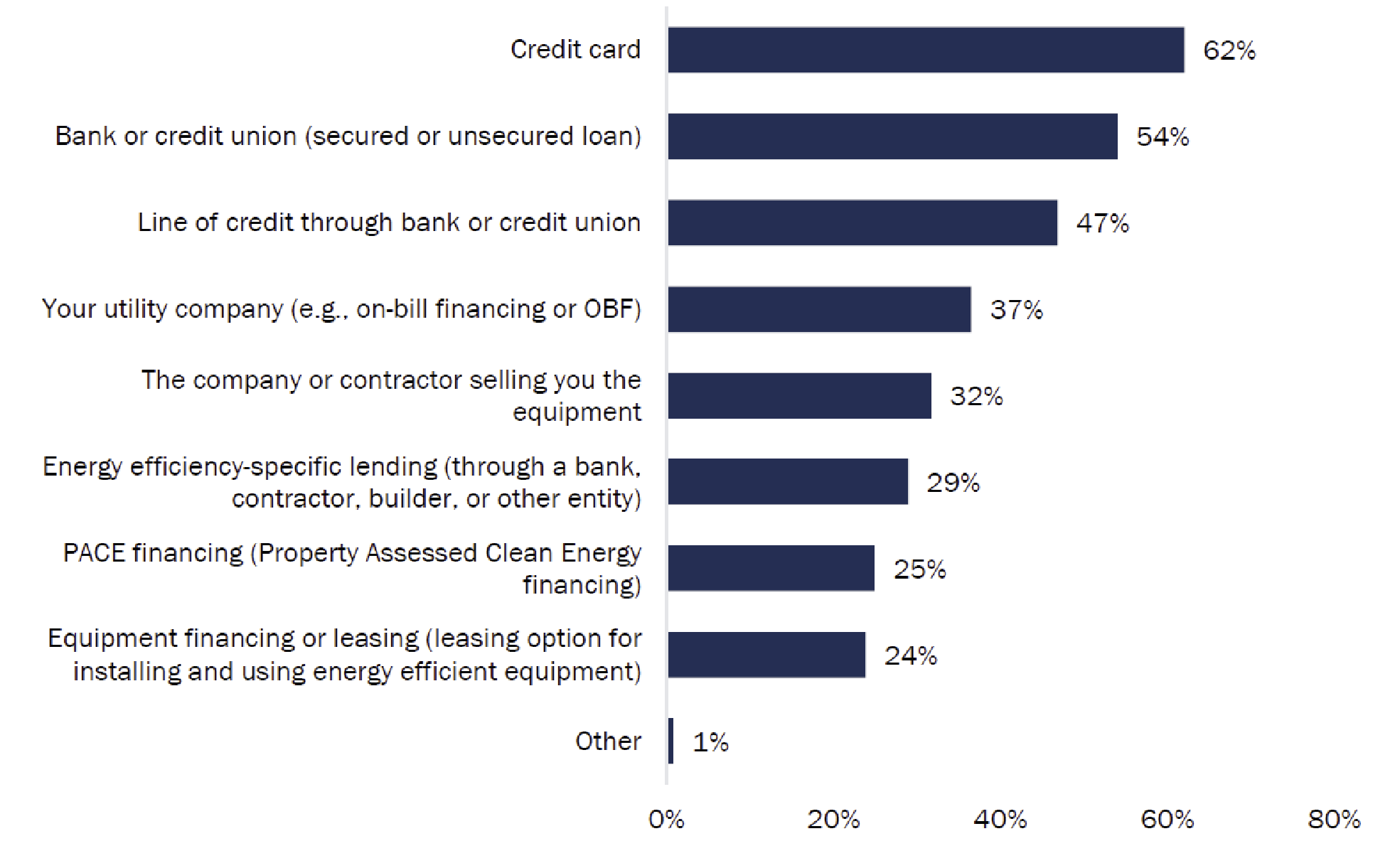
In summary, Figure 49 presents homeowner respondents’ awareness of financial options available to them when purchasing heat pump equipment.
Figure 49. Homeowners’ Awareness of Financial Resources for Heat Pump Purchases
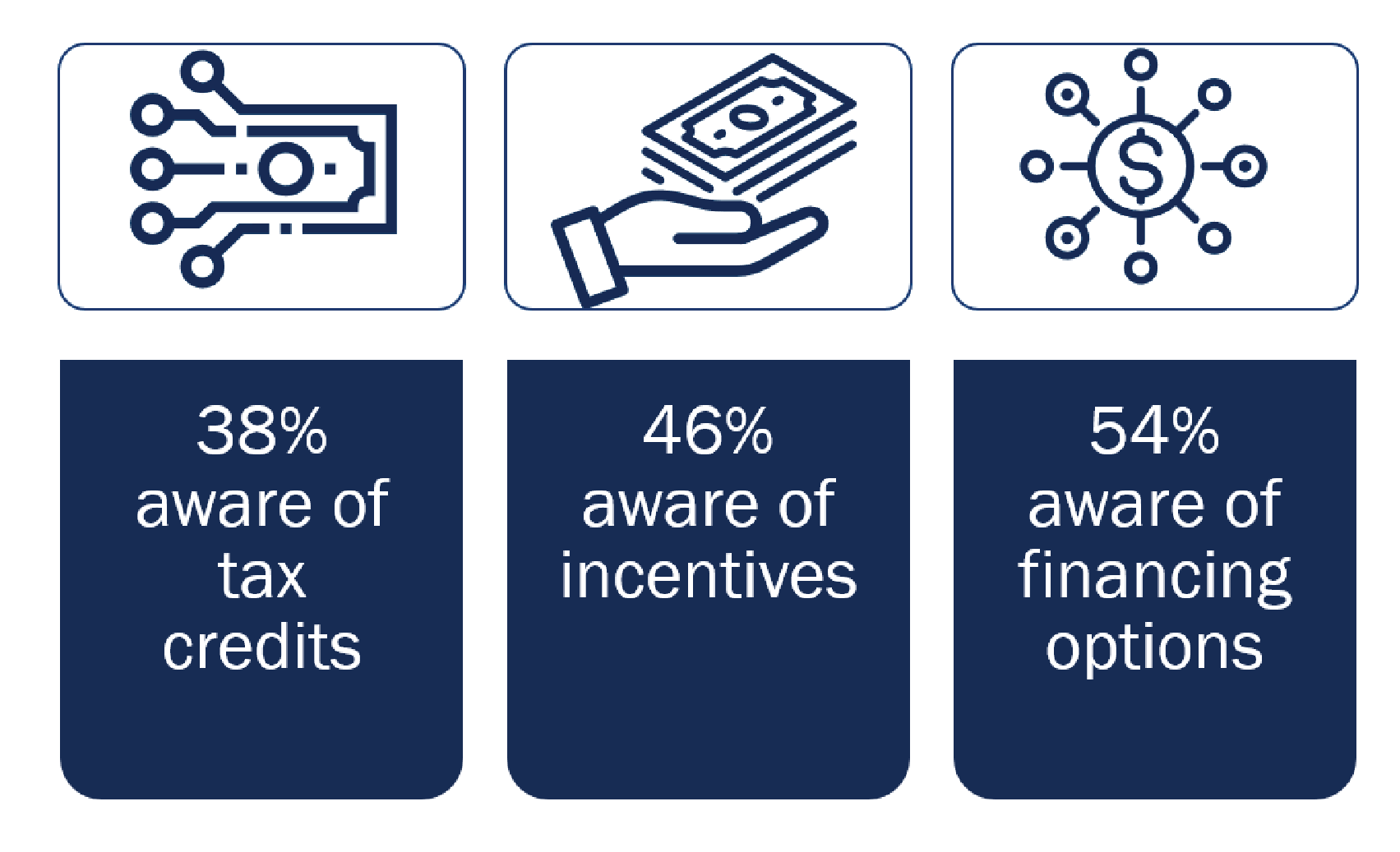
7. Heat Pump Promotion and Marketing
The majority of contractors whose firm sold at least one heat pump in the past year (128 of 161; 80%) promote heat pump equipment to some degree. Most firms that sell HVAC equipment promote heat pumps while water-heating contractors were less likely to promote them; more than two-thirds said their company puts minimal to no effort into heat pump promotions (Figure 50). Firms that provide both HVAC and water-heating services were most likely to promote heat pumps above and beyond other equipment options.
Key Finding
Contractors who work only with water-heating equipment are least likely to promote heat pump options to their customers.
Figure 50. Effort Surveyed Contractors’ Companies Put into Marketing Heat Pump Equipment Compared to Other Equipment
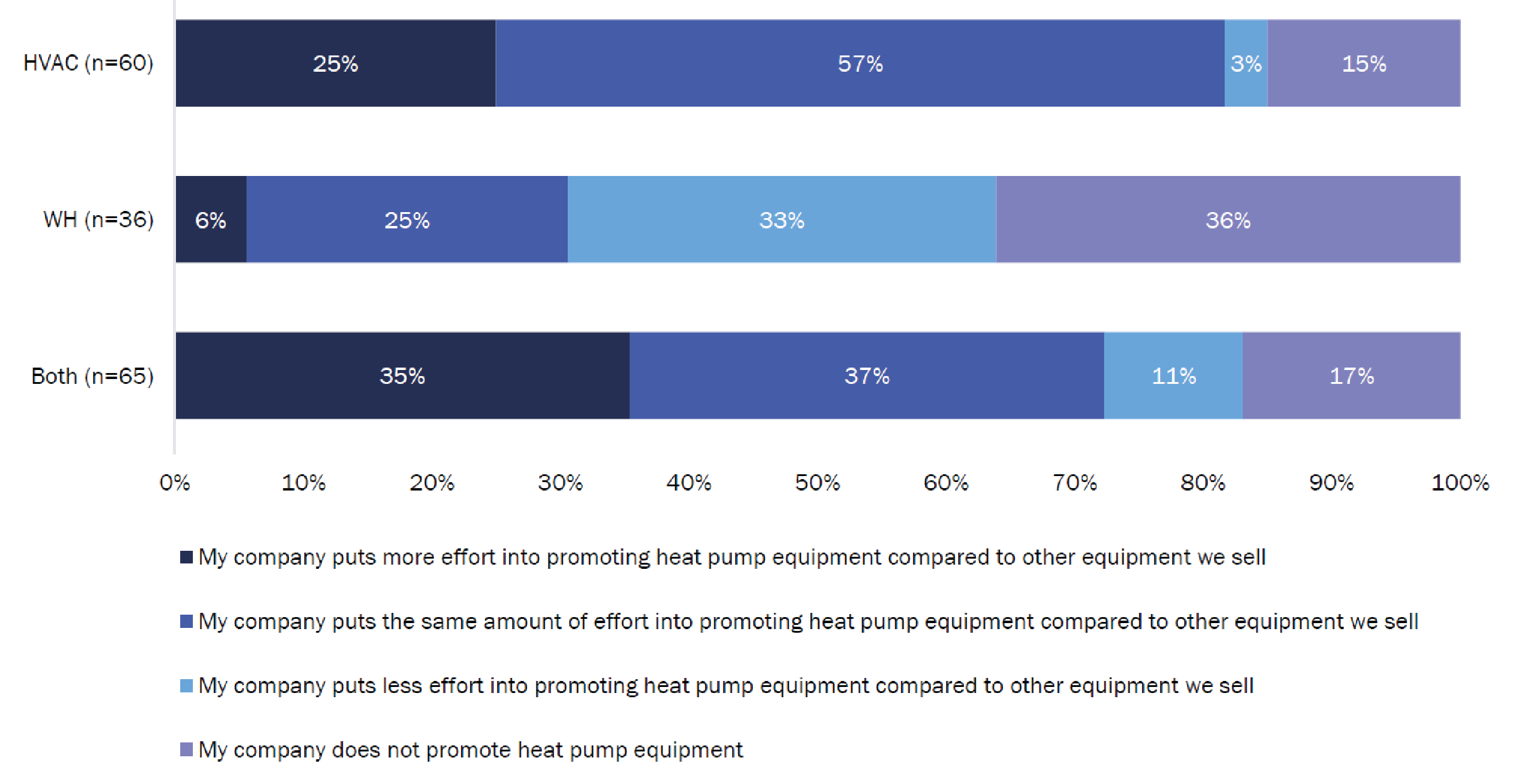
Regardless of the type of equipment they work with, surveyed contractors’ companies most commonly promote heat pumps while on-site at a customer’s property (Figure 51). The other two common channels contractors use to promote heat pumps were online sources or direct mail inserts, while the least common channels were TV, radio, or newspaper advertisements. Other ways contractors mentioned their company promotes heat pumps included word of mouth (five mentions), through incentive programs (two mentions), social media (one mention), and billboards (one mention).
Figure 51. Channels Surveyed Contractors’ Companies Promote Heat Pumps Through
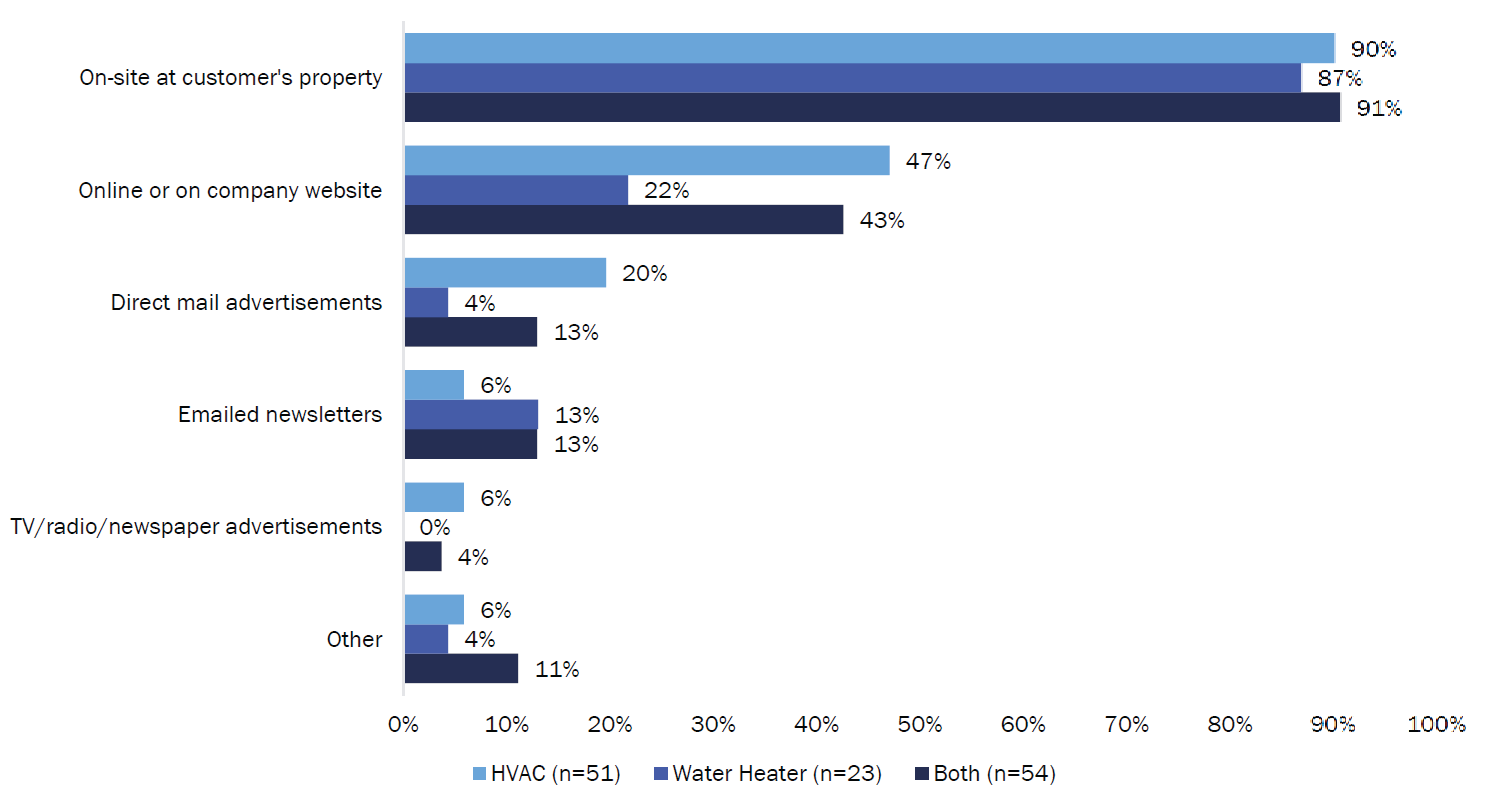
We saw a strong correlation between having heard of TECH or the Switch is On and interest in electric devices. Almost all surveyed homeowners aware of TECH Clean California or The Switch is On (100 of 105; 95%) expressed interest in purchasing at least one electric device (Figure 52). Homeowners who were aware of the TECH Initiative or The Switch is On website were significantly more likely to be interested in purchasing an electric device compared to those unaware.
Figure 52. Awareness of TECH Clean California and The Switch is On by Interest in Electric Devices
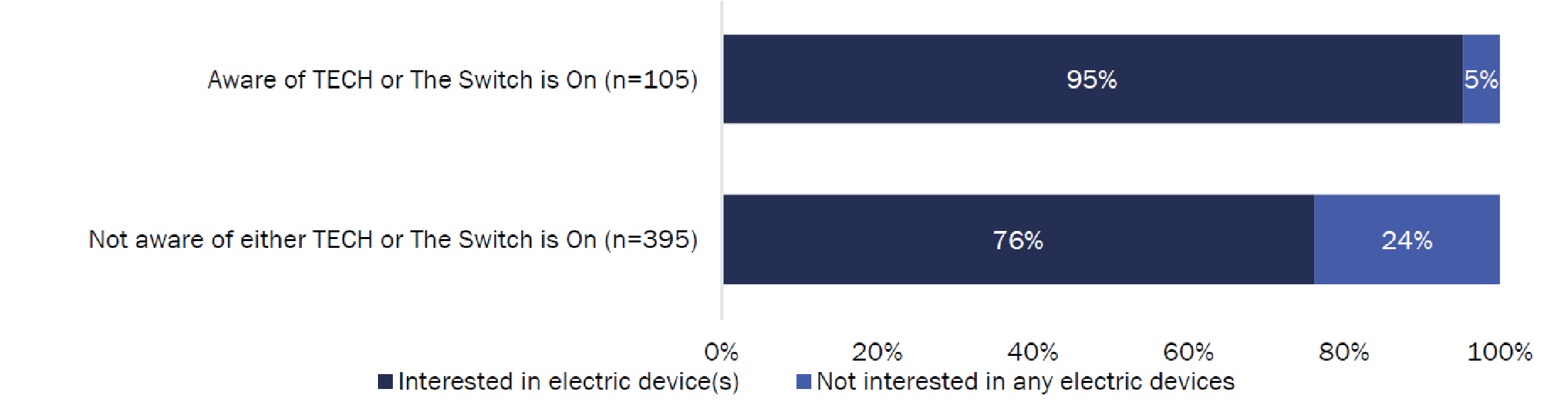
8. Conclusions and Recommendations
Based on the findings of this Time 1 Market Assessment, we offer the following conclusions and recommendations.
-
- Conclusion: Consumer marketing has been effective in increasing awareness, yet there is room to improve customers’ familiarity with heat pump benefits and financial assistance. We saw significant increases in the proportion of California homeowners reporting awareness and familiarity with HVAC heat pumps. Yet, half or less than half of homeowners are aware of incentives and financing for heat pumps. And, financing uptake in DACs has been slow. Awareness of financial support will be important to address the upfront cost barrier that consumers reported for both HVAC and water-heating heat pumps.
- Recommendation: TECH-sponsored marketing and education to consumers should more heavily promote financing opportunities related to heat pumps and can highlight the tax credits offered through federal programs. TECH should explore ways to promote GoGreen Home financing in DACs to spur the uptake of financing for heat pumps in those communities.
- Conclusion: Installation practices that allow heat pumps to serve as a grid resource are more common among HVAC contractors than HPWH contractors. Contractors are programming HVAC heat pumps with TOU controls more often than before, indicating they are gaining familiarity with techniques that allow heat pumps to be a grid resource. However, HPWH contractors are less familiar with demand response programs and TOU controls than HVAC contractors. HPWH contractors though, are commonly discussing the benefits of upsizing the HPWH tank with customers. However, this discussion may be designed to avoid the customer running out of hot water rather than providing storage as a grid resource.
- Recommendation: There is a need to augment training for water-heating contractors to highlight how heat pumps can be a grid resource. The SGIP program with its requirement for enrollment in a demand response program may naturally help fill this need.
- Conclusion: The HPWH market is developing slower than the HVAC heat pump market. Contractor firms report few sales and little experience with HPWHs, while customer awareness of HPWHs is less than that of HVAC heat pumps. A majority of water-heating contractors encountered at least one situation in the past year where the customer needed an electrical panel upgrade to accommodate the HPWH.
- Recommendation: Future research should be conducted to determine if there are regional differences in the development stage of the HPWH market in California. If the market is more developed in some areas, then the TECH implementers should conduct outreach to increase the number of water-heating firms enrolled in TECH and selling HPWHs in the less developed areas. TECH may need to review its value proposition aimed at water-heating firms to ensure TECH participation is enticing and attractive in the less active areas. For enrolled contractors, TECH should ensure its sponsored trainings emphasize lessons about panel optimization or panel upgrades to accommodate HPWHs.
- Conclusion: Even though HVAC heat pump sales declined in 2023 compared to 2022, they represent a higher proportion of overall HVAC sales, indicating some movement toward market transformation. While fewer heat pumps were shipped in 2023 than 2022 nationally, more heat pumps were shipped than gas furnaces in both 2022 and 2023. Lower HVAC heat pump sales by TECH contractors in 2023 was consistent with national trends and milder weather conditions in California for summer 2023. Despite this trend, heat pump sales represented a higher share of overall HVAC sales, indicating that market penetration increased despite an overall “down market.”
- Conclusion: Consumer marketing has been effective in increasing awareness, yet there is room to improve customers’ familiarity with heat pump benefits and financial assistance. We saw significant increases in the proportion of California homeowners reporting awareness and familiarity with HVAC heat pumps. Yet, half or less than half of homeowners are aware of incentives and financing for heat pumps. And, financing uptake in DACs has been slow. Awareness of financial support will be important to address the upfront cost barrier that consumers reported for both HVAC and water-heating heat pumps.
Appendix:
SLB License Descriptions
Summaries of the licenses relevant for the installation of a residential heat pump are in Table 20.
Table 20. Description of CSLB Licenses [23]
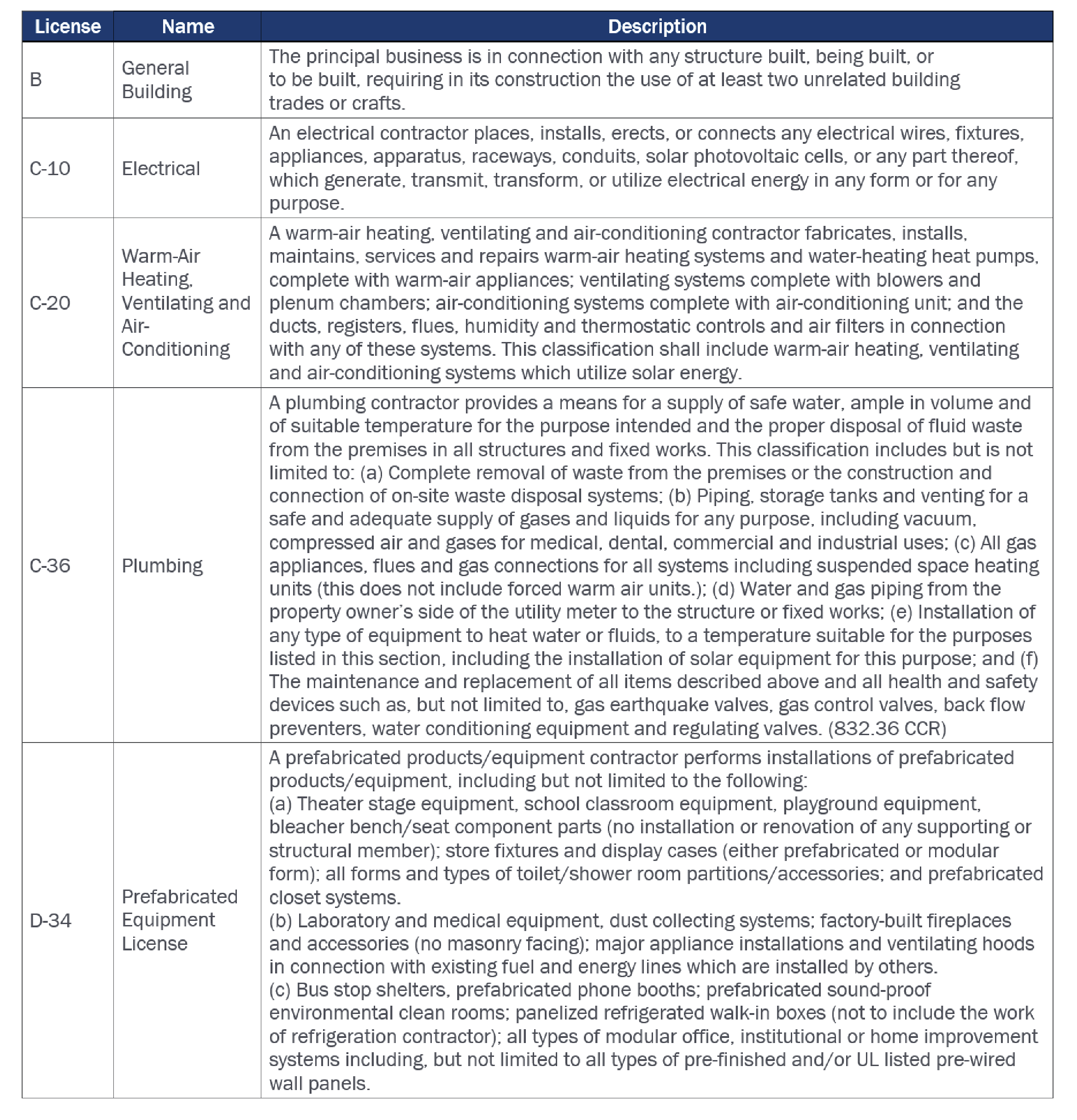
[23] California Contractors State License Board. Description of Classifications. 2021. https://www.cslb.ca.gov/Resources/GuidesAndPublications/DescriptionOfClassifications.pdf.
In 2021, a total of 138,980 California contractors held at least one of the five license types shown in Table 21. In 2023, there were 2,755 fewer contractors with these licenses relevant to heat pumps. Most of the reduction is attributed to a decline in C-20 contractors with HVAC licenses and General B contractors.
Table 21. Licensed Contractors by Climate Zone
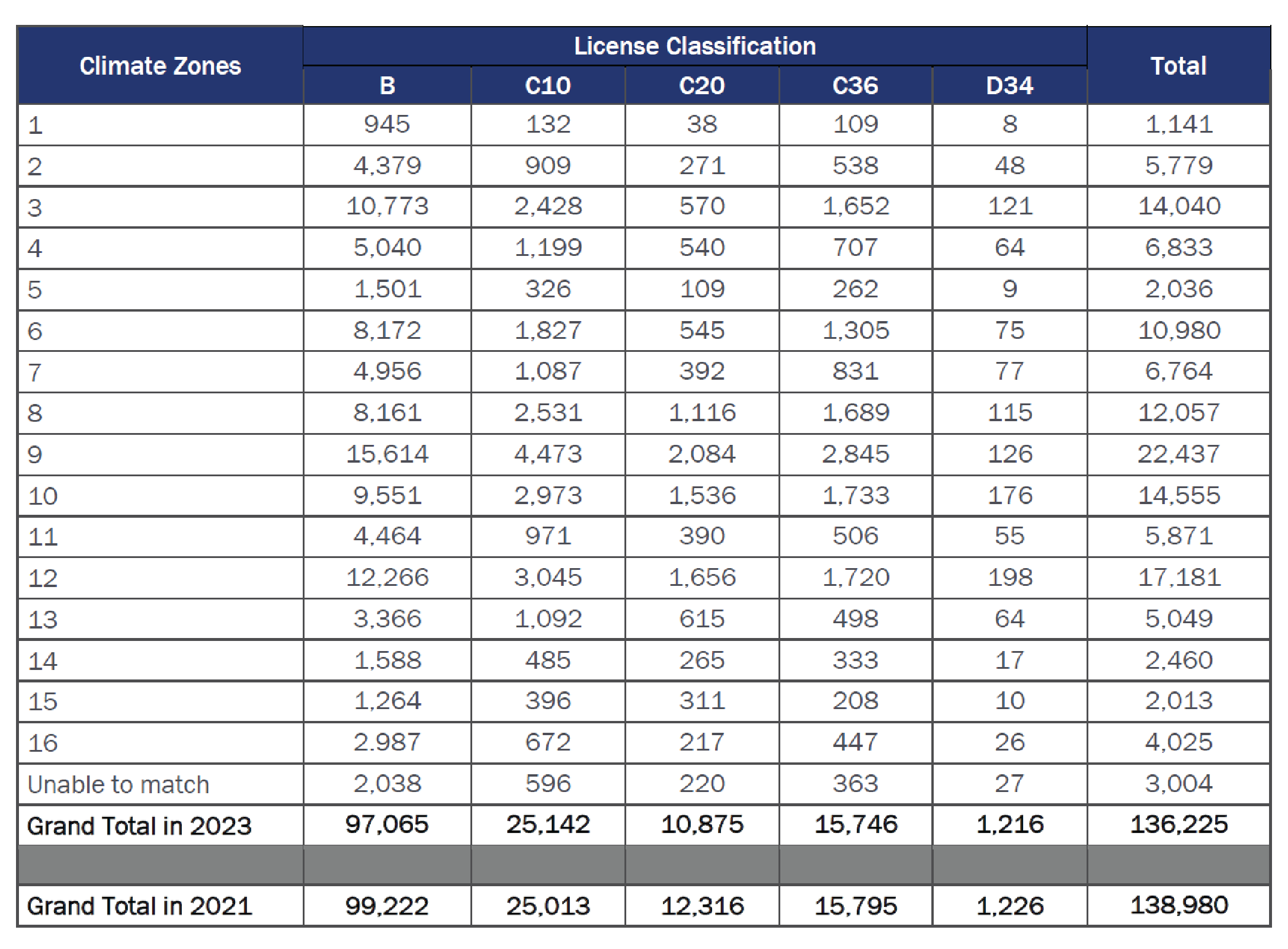
Data Collection Instruments
Click on PDF icon to view.

CPUC TECH Wave 2 Contractor Survey
CPUC TECH Wave 2 Homeowner Survey